Which Certifications Should a Commercial Laundry Hold?
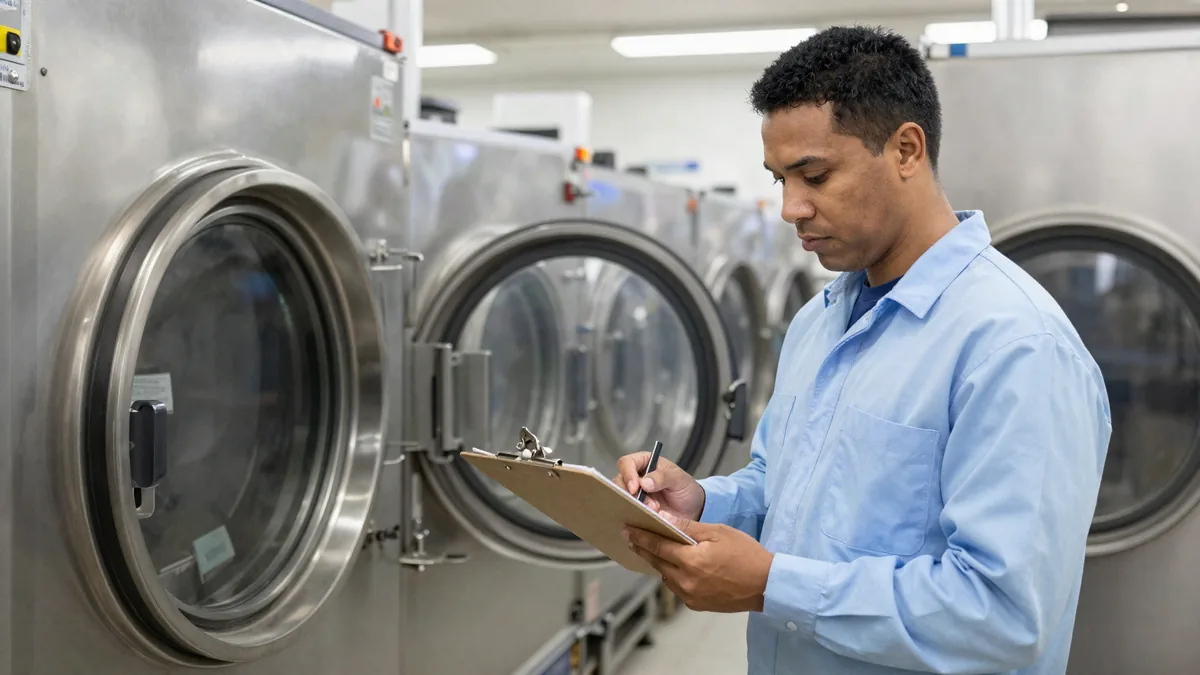
Certification in commercial laundry means different things depending on who is asking and why. A hospital procurement team needs HLAC accreditation or TRSA Hygienically Clean Healthcare because a state surveyor or the Joint Commission will ask for it by name. A restaurant owner buying apron and towel service mostly needs a provider that follows basic health department hygiene rules, which is a lower bar entirely. A uniform programme supplying flame-resistant garments to an electrical utility needs a documented NFPA 2112 care-and-retirement process, or the garment stops being a safety asset the day it is laundered incorrectly. This page works through which certifications matter for which industry, what each one actually covers, and how to verify a provider's claim before it goes into an RFP rather than after a contract is signed.
Why certification matters more in some industries than others
Certification exists to solve a specific problem: a buyer cannot personally inspect a laundry plant's wash process, water temperature logs or chemical handling, so a third-party standard substitutes for that inspection. That substitution matters enormously in healthcare, where an improperly processed load can transmit infection, and considerably less in, say, a gym towel programme, where the consequence of a below-standard wash is a customer complaint rather than a clinical incident. The right question for any buyer is not whether a provider holds a certification but whether the industry's actual risk justifies requiring one, and which one. Requiring HLAC accreditation from a bar-mop supplier accomplishes nothing except narrowing the vendor pool; skipping it for a hospital's surgical linen is a genuine compliance gap.
Healthcare
Healthcare carries the heaviest certification burden in the industry, and buyers frequently confuse the two dominant standards or assume they are interchangeable. HLAC and TRSA Hygienically Clean Healthcare both address laundry hygiene, but they differ in scope, audit method and who accepts which one — see TRSA vs HLAC: which certification should your RFP require for the direct comparison before writing either one into a contract requirement.
HLAC accreditation
HLAC (Healthcare Laundry Accreditation Council) accreditation certifies the entire laundry process — facility design, equipment, chemistry, handling of soiled and clean linen, and staff training — against a standard written specifically for healthcare textiles. It requires an on-site audit and renewal, not a one-time application. Hospitals and health systems increasingly name HLAC accreditation specifically in procurement requirements because it is the standard most closely aligned with infection-control expectations. See HLAC accreditation: what it covers and why hospitals ask for it for the full scope of what an audit examines.
TRSA Hygienically Clean Healthcare
TRSA's Hygienically Clean Healthcare certification tests outcomes directly — it requires regular independent microbial testing of finished textiles against a defined threshold, rather than auditing the process that produced them. A provider can hold this certification without HLAC accreditation and vice versa; some hold both. Which one a facility should require depends on whether the buyer wants proof of process (HLAC) or proof of result (Hygienically Clean). See TRSA Hygienically Clean certification explained for how the testing protocol works.
CDC guidance on laundry and wash temperatures
The CDC's guidance on healthcare laundry does not certify anything — it recommends wash temperatures and chemistry, generally a hot-water cycle at or above 160°F with an appropriate bleach or oxidizer, or validated lower-temperature chemistry with a documented equivalent kill rate, rather than mandating a specific number nationally. Facilities and their laundry providers should be able to produce documentation showing which standard they follow and how it is validated, since running a hot cycle is not itself proof of anything a surveyor will accept.
OSHA 1910.1030 and soiled linen handling
OSHA's Bloodborne Pathogens standard (1910.1030) governs how soiled linen is bagged, labeled and handled before it ever reaches the laundry, not the wash process itself. Facilities generating linen contaminated with blood or other potentially infectious material must use leak-resistant bags, biohazard labeling where required, and protective equipment for staff handling the bags. A laundry provider's own compliance with this standard covers its receiving-dock staff; the generating facility remains separately responsible for its own handling before pickup.
Joint Commission linen survey expectations
The Joint Commission does not certify laundry providers directly, but its accreditation surveys for hospitals and long-term care facilities routinely ask how linen is processed and by whom, particularly for surgical and isolation-unit textiles. A facility that cannot document its laundry provider's certification status or produce a current contract naming the hygiene standard in use is exposed during survey. This is the practical reason hospital procurement teams push certification requirements down into the laundry contract rather than treating it as a vendor's internal matter.
Food service
Food-service laundry — aprons, bar mops, chef coats, kitchen towels — carries a real but lower hygiene bar than healthcare, set mostly by local health departments rather than a national clinical standard.
TRSA Hygienically Clean Food Service
TRSA also certifies a Hygienically Clean Food Service standard, a parallel program to its healthcare certification but calibrated to food-safety risk rather than clinical infection control. It uses the same independent-testing approach — regular microbial sampling of finished textiles against a defined threshold — applied to food-service-relevant pathogens. Restaurants and food-service operators with elevated hygiene concerns, such as allergen handling or high-volume kitchens, are the more likely buyers to require it; most smaller operations do not.
Health department rules for towels and aprons
Most food-service laundry hygiene requirements in practice come from local and state health department food-code rules rather than a national laundry-specific standard — inspectors care whether kitchen towels and aprons are sanitary at point of use, not which certification produced them. A commercial laundry provider that services restaurants routinely should be able to describe its wash temperature and chemistry in plain terms; if it cannot, that is a more useful screening question than asking for a specific certificate that may not exist for this segment.
Industrial and flame-resistant garments
Industrial textile programmes carry a different certification logic entirely — the garment itself is often a safety device, and improper laundering can silently disable the protection it is supposed to provide.
NFPA 2112
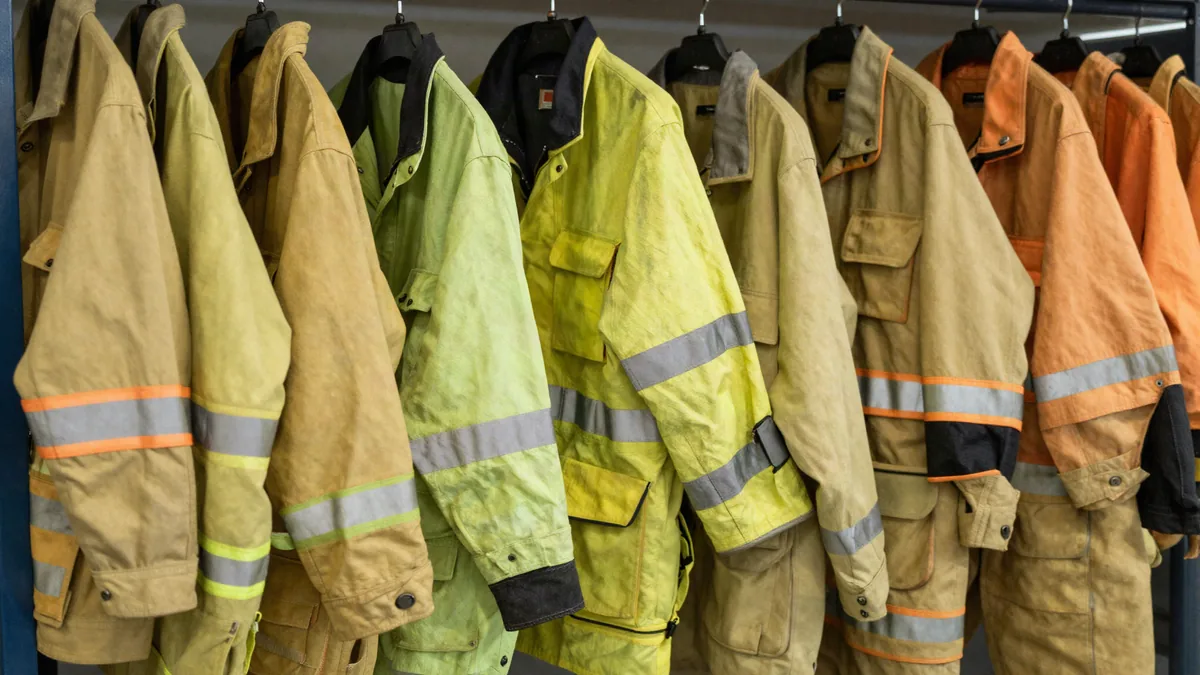
NFPA 2112 is the standard for flame-resistant garments worn where flash-fire hazards exist (utilities, oil and gas, some industrial manufacturing), and it applies to how the garments are cared for, not only how they are made. Home laundering, incorrect detergent, or fabric softener can strip flame-resistant treatment from a garment that still looks and feels normal, which is why programme-managed laundering by a provider that documents its FR care process is standard practice rather than a nice-to-have. See NFPA 2112 FR garment programs: certification, care and retirement for the specific care requirements and when a garment must be retired.
NFPA 70E arc-rated programmes
NFPA 70E governs arc-flash protection for electrical work and, like NFPA 2112, extends its requirements into how arc-rated garments are laundered and maintained over their service life. Arc-rated fabric can lose protective performance from improper washing in the same way flame-resistant fabric can, and a facility running an arc-flash PPE programme needs its laundry provider's care process documented as part of the overall programme compliance, not treated as a separate, unrelated service.
Cleanroom garments and ISO 14644
Cleanroom garment laundering — for pharmaceutical, semiconductor and other controlled-environment manufacturing — is governed by ISO 14644 cleanliness classifications rather than a hygiene certification in the healthcare sense. The laundry process itself must run inside a controlled environment to avoid reintroducing particulates onto garments that will re-enter a cleanroom, a specialized capability a small number of providers offer and most do not. This is a narrow, high-specification niche rather than something a general commercial laundry can add as a side service.
Environmental and wastewater
Laundry plants are heavy water users and, in some categories, handlers of contaminated textiles that trigger environmental rules most buyers never think to ask about.
Laundry wastewater and discharge permits
Commercial laundry plants discharge large volumes of wastewater carrying detergent residue, lint and sometimes contaminants from the textiles processed, and most operate under a local or state industrial discharge permit that limits what can go into the sewer system. A plant without a current discharge permit, or one operating above its permitted limits, is carrying a compliance risk that is invisible to a buyer evaluating service quality alone but relevant to due diligence on a long-term contract.
Used oil rags and solvent-contaminated textiles
Shop towels and rags contaminated with used oil or solvents are regulated differently from ordinary soiled textiles — depending on the contaminant and volume, they can fall under hazardous waste handling rules rather than standard laundry processing, and a provider that is not set up for this category can create liability for the generating facility as well as itself. See laundry wastewater, solvents and used oil rags: the rules facilities miss for the specific rules that catch facilities off guard.
Water reuse, ozone systems and what "sustainable laundry" means
Sustainable laundry is a marketing phrase more often than a verified claim, and it can mean genuinely different things: water reclamation and reuse systems that cut fresh-water draw per pound, ozone laundering that reduces hot-water and chemical use, or simply a provider's general efficiency messaging with no specific system behind it. Ask a provider claiming sustainability credentials to name the specific system in use and the metric it improves — water per pound, energy per pound, chemical volume — rather than accepting the word on its own.
How to verify a certification claim
A certification claim on a provider's website or sales sheet is a starting point, not proof. HLAC accreditation and TRSA Hygienically Clean status are both listed on searchable public registries maintained by the certifying body — check the provider's name and specific facility location against the registry directly rather than accepting a claim at face value, because a certification can apply to one plant in a multi-plant company and not others. NFPA compliance for FR and arc-rated garment care is generally not a searchable public registry; instead, ask the provider for its written care and retirement procedure and any third-party audit documentation it has for that specific programme. For any certification, confirm the certificate's expiration or renewal date — these are not permanent, and a lapsed certification quietly presented as current is a meaningful red flag in an RFP process.
What we record on listings and what we do not
This directory records certifications a provider states publicly — on its own website, in a business listing, or in materials it has submitted — and does not independently audit or verify any of them. A listing showing HLAC accreditation or TRSA Hygienically Clean status reflects that the provider claims that status, not that the site has confirmed it against the certifying body's registry or inspected the plant itself. Readers should treat every certification on this site as a starting point for their own verification, not a substitute for it, and should confirm any claim directly with the issuing body — HLAC, TRSA or the relevant standards organization — before it goes into an RFP or a contract requirement. See how we vet listings for the full explanation of what verification this directory does and does not perform.
Questions about laundry certification
What is the difference between HLAC and TRSA Hygienically Clean?
HLAC accreditation audits a laundry's entire process — facility, equipment, handling and training — against a healthcare-specific standard. TRSA Hygienically Clean instead tests outcomes directly through regular independent microbial testing of finished textiles. A provider can hold either, both or neither; the choice comes down to whether a buyer wants proof of process or proof of result.
Does a commercial laundry need to be certified?
No general legal requirement forces certification for most commercial laundry work. Healthcare, food service with elevated hygiene needs, and industrial flame-resistant garment programs are the categories where a buyer should require it, because the consequence of a failure is severe enough to justify a third-party standard. For routine textiles like bar mops or gym towels, certification adds cost without a proportional benefit.
How do you verify a laundry certification is real?
Check HLAC accreditation and TRSA Hygienically Clean status against the certifying body's own public registry, matched to the specific plant location rather than the company name alone, since certification can apply to one facility and not others in the same company. For NFPA-related garment care claims, ask the provider directly for its written care procedure and any audit documentation.
Can a certified laundry still fail to protect flame-resistant garments?
Yes. NFPA 2112 and NFPA 70E both extend into how a garment is laundered over its life, and improper detergent, fabric softener or wash chemistry can strip flame- or arc-resistant treatment from a garment that still looks normal. A provider's certification or documented FR care process is only as good as consistent execution on every wash cycle.