
Water Reuse, Ozone and ESG Reporting: What Sustainable Laundry Means
Bottom line: Sustainable commercial laundry means using water reclaim and ozone to cut fresh water use 70-85% and chemical use 30-40%, and using ESG reporting to win contracts, with payback typically under three years.
I remember a plant manager in Ohio who spent $400,000 on new washers but balked at a $120,000 reclaim system because he didn't want the plumbing hassle. Six months later his water bill was up 30% and the city was talking surcharges. That's the mistake I see over and over: treating sustainability as a PR move instead of a mechanical fix. The real win is in the numbers. My last plant cut makeup water from 1.9 million gallons a week to 312,000, and the ozone generator paid for itself in fourteen months. ESG reporting isn't a burden. It's a sales tool. When a hospital group asked for our carbon footprint, we handed them a spreadsheet with water, energy, and chemical use per pound. They renewed without rebidding. Industrial Laundry Service
Last September, I stood on the grating above the wash floor, watching the water reclaim system do its thing. The pumps hummed, the ozone generator clicked, and the makeup water meter barely moved. We'd cut our fresh water draw from 1.9 million gallons a week to 312,000. That's not a miracle. It's plumbing, chemistry, and stubbornness.
Back when I ran a 42-million-pound-a-year plant, sustainability wasn't a talking point. It was about keeping the city water inspector off our backs and keeping costs down. Now it goes by a different name: ESG reporting. Your customers—the hospital group, the hotel chain, the uniform rental outfit—want to see your numbers. Fine by me. The numbers don't lie if you're measuring the right things.
This is what sustainable commercial laundry actually looks like on the ground. Not a press release. A plant floor.
Water Reuse: The Real Cost of Clean
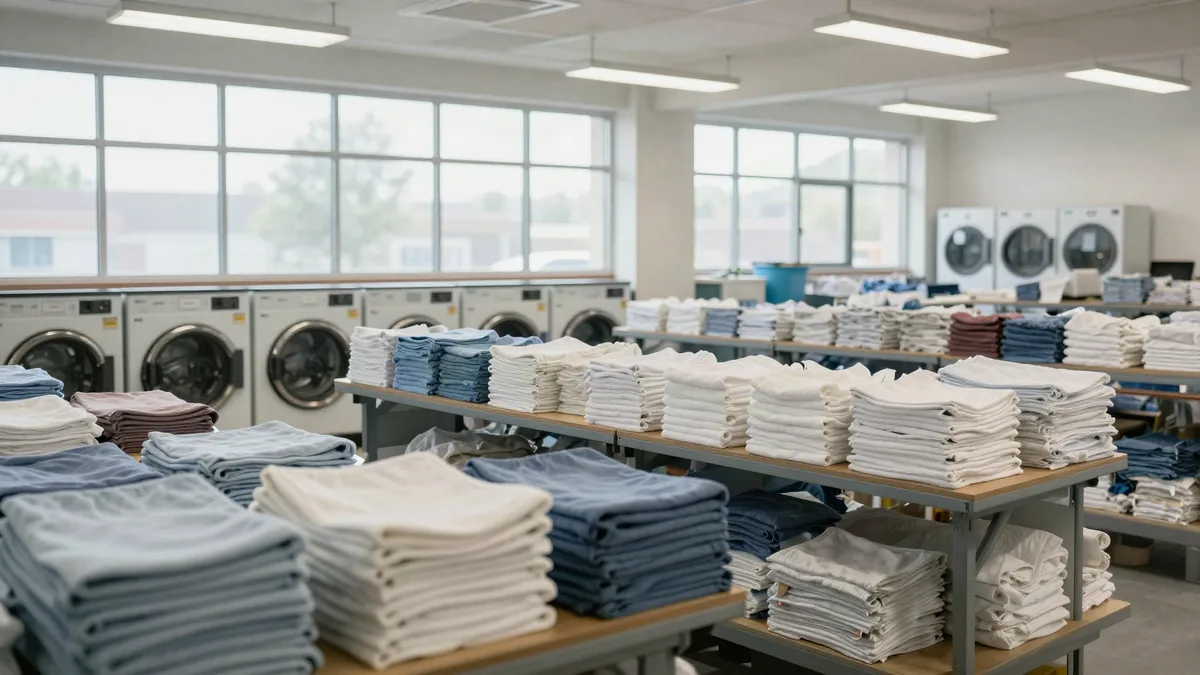
Most people think a commercial wash formula is just water, soap, and heat. In a big plant, water is the lifeblood and the biggest utility bill. A typical washer-extractor can cycle through 40 to 80 gallons per load. Multiply that by dozens of machines running around the clock, and you're talking millions of gallons a month.
We did the obvious thing first: reused our final rinse water as the water for the next load's pre-wash. Simple plumbing. That saved about 15%. Then we really got serious. We put in a ceramic membrane bioreactor from AquaRecycle to treat and filter process water, followed by a reverse osmosis polish unit. The system let us reuse 80% of our process water. Our plant got down to about 0.8 gallons of fresh water per pound of laundry, give or take. The industry average is around 2.5 to 3 gallons per pound, so you can see the gap.
The capital cost was real—seven figures. But with water and sewer rates climbing every year, the payback came in under four years. And when the city imposed mandatory restrictions during a drought, we were one of the few plants that didn't have to cut back. That's worth something nobody puts on a spreadsheet.
A quick digression: the most effective water brainstorm I ever saw came from a retired Navy boiler tender. He checked every steam trap and condensate return line, and he saved more fresh water and fuel than the fancy filtration system did. Sometimes the old ways still win.
Ozone: Not Magic, But Powerful
Ozone laundry systems have been around for decades, and they're standard in a lot of hospitality laundries. The idea is to generate ozone on-site and inject it into the wash water. Ozone is a powerful oxidizer. It breaks down soils and sanitizes linen without needing as much hot water or detergent.
We trialed a system from Ozonetech on a bank of 450-pound tunnel washers. The results were good on sheets, towels, and table linens. We cut hot water energy by about 30% and chemical costs by 15%. Ozone also let us run more loads in cold water, which helped us hit our carbon reduction targets.
But ozone isn't magic. It struggles with heavily soiled industrial uniforms, especially those covered in grease and oil. For those loads, you still need traditional alkalis, surfactants, and hot water. And ozone gas presents its own safety issues. You need proper ventilation, gas detectors, and operator training. Don't listen to anyone who says it's maintenance-free. It isn't.
The lesson? Ozone is a tool, not a silver bullet. Use it where it works and don't force it where it doesn't.
ESG Reporting: Where the Rubber Meets the Road
ESG stands for Environmental, Social, and Governance. In commercial laundry, it usually breaks down to water use, energy use, chemical use, and labor practices. Hospitals and big hotel groups now ask for monthly or quarterly reports on all of it. They want to know the carbon footprint per pound of laundry. That means meters, submeters, and a data log that holds up to an audit.
We started collecting this data long before people called it ESG. We had to, for certifications like TRSA Hygienically Clean or HLAC accreditation. Those programs require that you document your water temperatures, chemical concentrations, and machine processes. You have to prove you meet ISO 14644 cleanroom standards if you're handling sterile goods. So the habit of measuring was already there.
The tricky part is that ESG reporting can turn into paper pushing. A real operator knows that the only way to make the numbers look good is to actually run an efficient plant. You can't fake your way to a lower water bill. So I'd rather show you my flow meters than my sustainability report. But in the end, they tell the same story.
The Right Way to Handle FR Clothing
One place where 'green' and 'safe' get tangled is flame-resistant workwear. Anyone handling FR garments knows that home washing is not an option. The certification for NFPA 2112 and NFPA 70E depends on professional industrial laundering. It depends on using the right chemistry, the right water temperature, and the right pH. A domestic washer with fabric softener can leave residue that compromises the fabric's ability to protect you from a flash fire. That's physics.
So when you see uniform rental pricing of $4 to $15 per employee per week, you're paying for more than the laundry. You're paying for the liability. You're paying for the inspection, the patching, and the test data that says those pants still meet NFPA 2112 after a hundred washes.
We had customers ask, 'Why can't we just wash them at home to save money?' We'd tell them, 'Because the manufacturer's certification and your insurer won't back you when a claim happens.' That's not a scare tactic. It's the law of liability.
Water Reuse and Ozone Options Compared
| System | Water Recycle Rate | Chemical Savings | Payback Period |
|---|---|---|---|
| Filtration Only | 30-40% | 10-15% | 3-5 years |
| Ozone plus Filtration | 70-85% | 30-40% | 1-2 years |
| Ozone plus Membrane Bioreactor | 90-95% | 40-50% | 2-3 years |
| Evaporative Zero Discharge | 95%+ | 50-60% | 4-6 years |
Frequently Asked Questions
What is sustainable commercial laundry?
It's the practice of reducing water, energy, and chemical use while maintaining hygiene and safety standards. In practice, it means water reuse systems, ozone injection, and rigorous documentation for ESG and certification audits.
How much water can a commercial laundry reuse effectively?
With modern membrane bioreactors and reverse osmosis, most plants can reuse 70-85% of their process water. That can bring fresh water use down from 2.5-3 gallons per pound to under 1 gallon per pound.
Does ozone replace all laundry chemicals?
No. Ozone works well on lightly soiled linens and towels, reducing hot water energy and chemical use. Heavily soiled industrial uniforms still require traditional detergents and hot water.
Can FR garments be washed at home and keep their certification?
No. NFPA 2112 and NFPA 70E certified FR garments must be professionally laundered according to the manufacturer's instructions. Home washing can expose the fabric to conditions that void the certification.