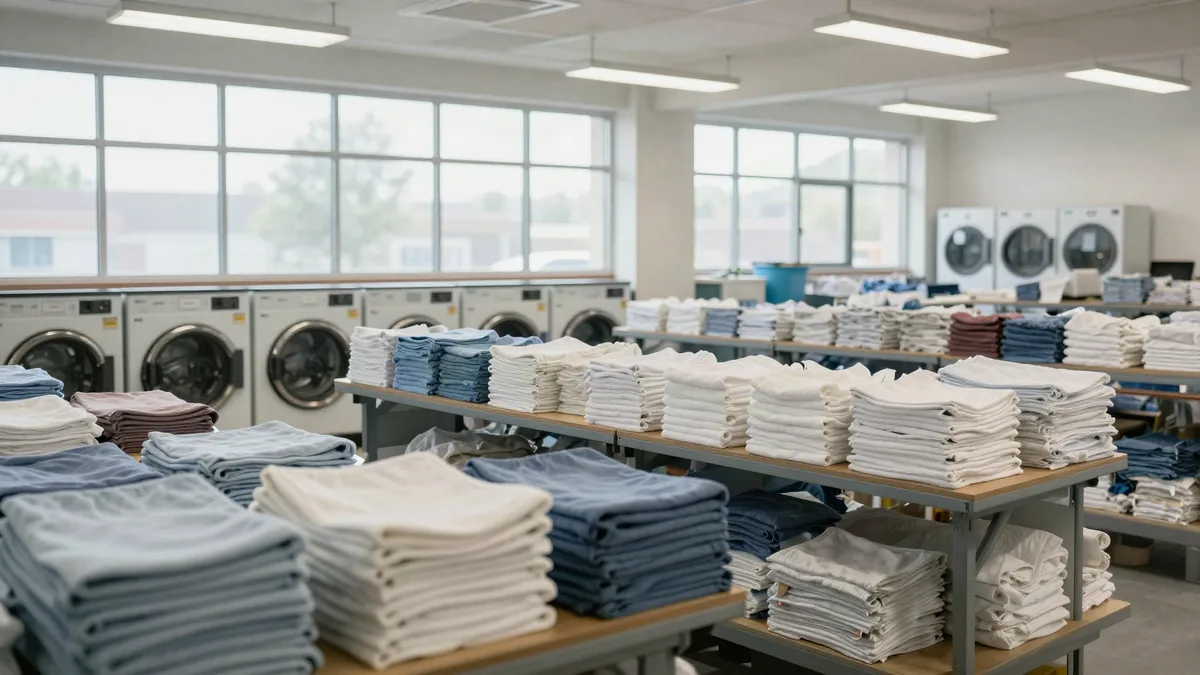
The 2026-27 Commercial Laundry Outlook: Consolidation, Labour, Pricing
Bottom line: Expect 3-6% price hikes in 2026-27 as labor costs climb, and watch for regional providers to be absorbed by nationals; lock in multiyear contracts now.
That hydro extractor finally taught me something: equipment dies, but people and contracts are what keep a plant breathing. In 19 years I saw my share of both. The labor shortage we've got now is worse than anything in the post-2020 rebound. I've watched operators think they can solve it with overtime alone, and that math breaks down fast. A 42-million-pound plant needs 30 extra hands a day to hit throughput, and you can't find them. So the smart ones are automating sortation and folding, but that's capital you have to spend before you know if your contracts will hold. The consolidation wave we're in is just the big national players buying up regional operations to get their labor pools and client lists. It changes who you negotiate with. Industrial Laundry Service
I can still see the steam rising off the hydro extractor the morning it seized. That was 2019, and we had 40,000 pounds of sheets waiting on the dock. The GM called me before I'd had coffee.
Now it's 2026, and I've been out of the plant three years. But I keep my hand in, and I've watched this industry teeter. The next 18 months? Consolidation, labor, pricing. Call it the triple squeeze. It's real.
I ran a 42-million-pound-a-year plant for 19 years. I've been through fuel spikes, minimum wage hikes, and a pandemic that made healthcare laundry the hottest ticket in town. This is different. The pressure is structural, not cyclical.
Consolidation: Turn the Volume Up
You've seen the headlines. Cintas, UniFirst, Aramark—they keep buying. Not just competitors, but regional players who've served the same Main Street diners and hospitals for decades. The big guys want route density. They'll pay for it, too.
Now, I'm not here to bad-mouth the giants. Some do great work. But when a plant gets acquired, the rules change. Minimums, fees for fuel and delivery, renegotiated per-piece rates. It's a different world for the buyer of laundry service.
Still, consolidation opens a door. Independent plants that survive become more valuable. If you're an operator, make yourself the one they can't afford to buy. Efficiency, customer service, niche certifications. That's your moat.
Labor: The Bottleneck That Won't Break
Everyone thinks the issue is wages. It's not just wages. It's showing up. It's a driver who knows the route without a GPS. It's a folder who can spot a stain and hit the rework bin without stopping. You can't automate judgment—not yet.
One winter, I had to cover a route myself because the regular driver called in with a flat tire. That's the kind of day you earn your pay. And it's only going to get harder. Plants are competing with warehouses and fast food for the same pool of workers. You need to offer something. Flexible schedules, predictable shifts, training that leads somewhere.
If you're chasing healthcare contracts, that means HLAC accreditation and TRSA Hygienically Clean. Those aren't letters on the wall—they're certifications that require constant training. OSHA 1910.1030 is the same. Every new hire has to know what to do with a blood spill. That's not optional.
Pricing: The Real Cost of Doing It Right
For years, pricing stayed flat. You want to know why? Because the buyers had the use. And then costs went through the roof—fuel, chemicals, insurance. A change in delivery frequency can eat your margin in a month.
The industry's worked off per-pound, per-piece, and per-employee pricing. Uniform rental commonly runs $4 to $15 per employee per week, give or take. But that's for standard workwear. If you're handling fire-resistant gear, you're talking NFPA 2112 garments, and the washing process has to keep them compliant. That costs money. So does testing. Some operators don't build that into the quote. That's a mistake.
You don't have to be the cheapest. You have to be the most reliable. And you have to explain the pricing model so the customer gets why a pound of scrubs isn't the same as a pound of shop towels. The market's going to move. Get ahead of it.
What I'd Watch Next Year
So what's next? Three things. First, keep an eye on the big mergers—every time one closes, there's a window for you to pick up an unhappy customer. Second, invest in your people even if you can't match every dollar. Certifications like Hygienically Clean and HLAC give you a trained staff and a sales point.
Third, rebuild your pricing now. If you're locked into a multi-year contract without a fuel adjustment, you're bleeding. That's not a company issue, it's a contract structure issue. Look at every account, not the ones that hurt, and adjust. The ones that leave? You'll survive.
I've seen three cycles now. This one's different because it's all happening at once. But if you've got a solid plant, a crew that shows up, and a price that makes sense, you're going to be fine. That's not a guarantee. It's a plan.
Weighing Service Models as Consolidation Accelerates
| Option | 2026-27 Pricing | Labor & Capex Exposure | Buyer Leverage |
|---|---|---|---|
| In-house | No contract, pay per pound $0.90-1.10 | Full exposure, 35-45% turnover, $2M+ to automate | Full control, but no bargaining chip |
| Regional independent | 3-5% annual increase, renegotiations likely | Direct pass-through, less capex for you | High, but risk of acquisition |
| National consolidated | 4-6% annual increase, locked multiyear | Indirect, vendor absorbs some labor | Low, but service continuity |
| Captive or co-op | No direct contract, shared costs | Shared exposure, lower per-pound $0.70-0.90 | Moderate, but governance haggles |
Frequently Asked Questions
What does commercial laundry consolidation mean for independent plants?
It means fewer independents but more opportunity for the ones that remain. Big companies want route density, so they pay a premium for regional plants. The survivors can pick up overflows and the customers the giants treat as small fries.
How much does commercial laundry typically charge per employee for uniforms?
For basic uniform rental, the common range is $4 to $15 per employee per week. The exact number depends on garment type, service frequency, and whether you need specialty cleaning. FR garments cost more because of handling and testing requirements.
Why is commercial laundering better than home washing for FR clothing?
Home laundering doesn't maintain NFPA 2112 certification. Industrial plants follow strict washing procedures to keep the protective properties intact. That's the whole argument for renting FR instead of buying it.
What certifications should a commercial laundry have for healthcare work?
Look for HLAC accreditation and TRSA Hygienically Clean. Both require ongoing training and process checks. Also, OSHA 1910.1030 sets the standard for handling bloodborne pathogens—any plant that does healthcare has to know it.