Spring Facility Refresh: Mat, Mop and Microfibre Programme Reviews
Bottom line: Spring refresh means auditing edge curl and absorbency on mats and mops, and if your floor mat rental service hasn't been reviewed in a year, renegotiate the contract.
Last spring I sat with a hospital EVS manager who was buying the same mop heads every month because the rental company had quietly switched to a lighter grade. Nobody on the floor noticed until they saw the thread count. That kind of thing happens when you review invoices but not the actual product. I've also seen a hotel chain with 400 rooms pay for daily mat service at the front entrance but leave the kitchen mats on a weekly schedule. The kitchen mats were saturated by Tuesday. So here's what I check when I do a spring program review: edge curl, absorbency, backing integrity, and whether your service agreement matches the soil load. The savings are never in the line item you watch; they're in the one you ignore. Industrial Laundry Service
I remember a Tuesday in April, walking through a loading dock at a parts plant. The floor mats they had were three years old if they were a day, edges curling, and the custodian told me he'd given up on the mop heads because they wouldn't accept any more bleach. That's the moment I knew spring wasn't just for cleaning—it was for reviewing what you're actually getting from your linen and mat programs.
Most facility managers think of spring as the season for pressure washing and window washing. But the stuff underfoot—and in the bucket—gets ignored until it becomes a safety issue or a bad smell. I've been on the route side for fifteen years, and I've brokered another five. I can tell you, a mat that's worn thin is a slip and fall waiting to happen. And a mop that's gray and ragged isn't cleaning anything but the floor's surface grime, and it's probably spreading bacteria that you really don't want to think about.
That's why I tell my clients to use the spring months to do a full programme review. Not just a coat of wax and a prayer. I'm talking about mats, mops, microfibre, and the contracts that keep them coming. Here's how to approach it like a pro, without getting fleeced.
Why Spring's the Time to Look Under the Dirt
Spring is when budgets get tight and summer opens the doors for more foot traffic. It's also when the weather changes, and that means more rain, mud, and slush tracked in from the parking lot. Your mat program is the first line of defense against that grit. If your mats are overworked, they're not just ugly—they're dangerous. The back coating on a mat can break down, and then it folds into a trip hazard. I've seen that happen in a high-traffic lobby, and it's a liability nightmare.
But here's the thing: nobody writes a line item for 'mat review' on the spring calendar. So it falls to you. Start by walking your facility with a notepad. Count every mat, note its condition, and ask the crew which ones actually get used. Some are hidden in corners, doing nothing. Others are taking a beating. You'll find you have too many in some areas and not enough in the spots that matter. This is the kind of legwork that's thankless, but it pays off when you negotiate a new rental contract or adjust your current one.

Floor Mat Rental: The Quiet Workhorse
If you're not using a floor mat rental service, you probably think a mat is a mat. Big mistake. A good rental mat has a commercial-grade rubber backing, a nylon face that traps moisture and grit, and a flame-retardant treatment that meets NFPA 701. The service that delivers them also launders them to a standard that your in-house washing machine can't touch. I've seen a 3'x5' mat that gets swapped out once a week. That's 52 cleanings a year, and the mat still looks decent because it's built for commercial abuse.
Now, pricing. You'll see quotes per mat, per week. That's the industry standard. Call it $1.50 to $4 a week per mat, depending on size and frequency. But don't get hung up on the number. Ask about the service frequency. Twice a week if you're a heavy-dirt operation. Once a week for most offices. And make sure they're not nickel-and-diming you for delivery. Some contracts charge a separate delivery fee that can eat your budget.
Here's a digression a route rep would make: you'd be surprised how many people think mats are owned by the customer because they've been sitting there so long. The rental company used to pay a sales rep a commission to keep that mat full of fresh ones. When the contract lapses, the mat still stays, but the service stops. Then you're one step away from a lawsuit, and you don't even know it.

Mops, Microfibre, and the Laundry Question
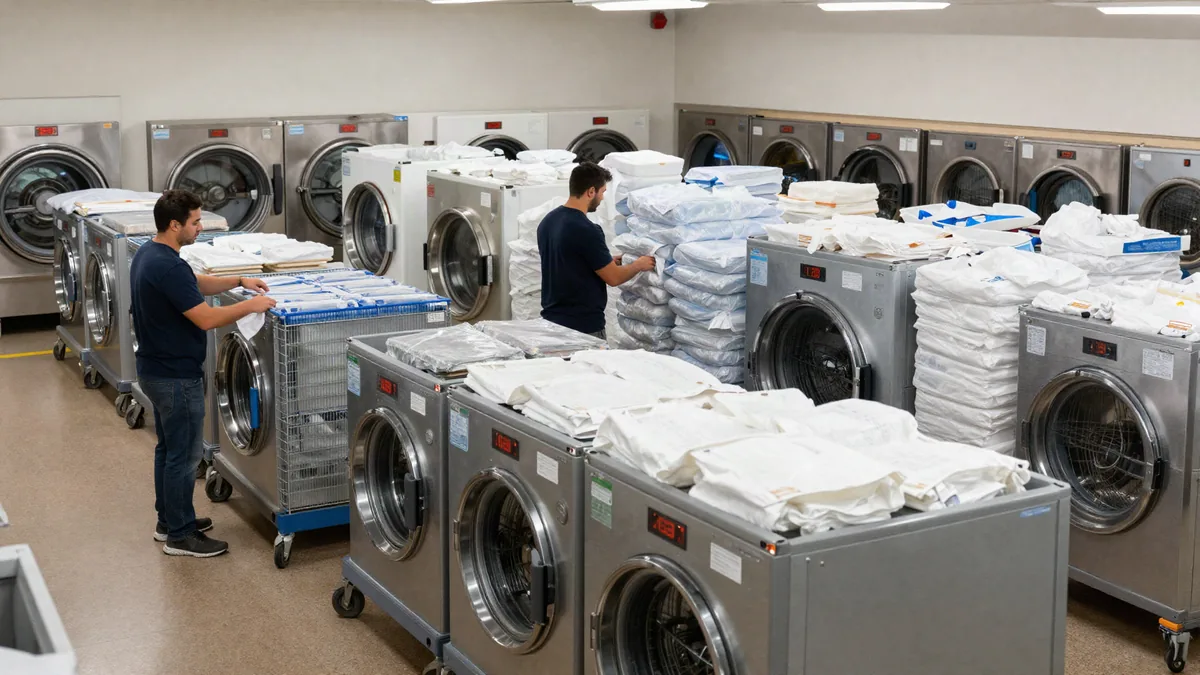
Mops and microfibre flat cloths are the workhorses of your cleaning closet. But they're also the most abused items in the building. In-house washing with bleach and fabric softener ruins the fibres in microfibre. The cloths lose their electrostatic charge, and they stop picking up dust—they just push it around. The same goes for cotton loop mops; the yarn gets tangled, and the mop heads hold onto odors no matter how long you soak them.
That's where a rental program shines. Industrial laundries use precise water temperatures and chemistry. They follow TRSA Hygienically Clean standards for hygiene and cleanliness. You get a consistent, fresh product delivered on schedule, and you've offloaded the maintenance headaches. When you review your program, look at your current usage. How many mops do you have? How many are in rotation? Most facilities overstock mops by 30% because nobody bothers to retire the worn ones. Cut that number and you'll save money on the rental and on the labor to swap heads.
Microfibre colour coding is another thing to check. You want blue for glass, green for kitchen, yellow for restrooms. That's a best practice standard, not just a gimmick. When you use a rental service, they'll bring them color-coded and folded. If they don't, ask. You're paying for it.
And don't forget the laundry itself. Some facilities try to keep a few mops for spot cleaning and wash them in the house machine. That's fine, but it's a separate process. Just know that if you're using a rental service for the rest, your employee is going to wash a mop, and then they're going to put it in a dryer that's also used for shop rags. I've seen that more than once. You get what you accept.
The Contract: Renegotiate or Switch, but Know Your Footprint
I've brokered deals with Cintas, UniFirst, Aramark, and a dozen local suppliers. Here's the truth: the national companies are fine, and the local guys are fine. The problem isn't the company. It's the contract you signed three years ago and forgot about. Those contracts have annual escalation clauses, mat overage charges, and a long list of fees for 'extra pickups.' I've seen a customer pay $7.50 per mat per week because they had a low-volume initial contract and never renegotiated.
Spring is the time to pull out the service agreement and read it. Actually read the fine print. Then count your actual mat inventory and compare it to what you're billing. You'd be surprised. Most facilities are paying for more mats than they have physically in the building. The rental company won't correct that for you. They'll just keep sending the invoice.
If you want to switch, the process isn't that bad. Start by measuring your facility's entrance square footage. A rule of thumb is you need a 3'x5' mat for every doorway, and a 4'x6' for main entrances. But it depends on the plant. I had a client with a cleanroom hallway, and we ended up with 2'x3' mats at every internal door. That was only 15 mats, but they needed them 5 days a week. The point is, you know your traffic. Take a week to count, then get three quotes. Make the new supplier take over your old contract if they want the business. It's a normal ask.
A Practical Spring Review Checklist
Here's what to do this month. First, count every mat in the building and tag it with a number. Second, inspect for curling edges, torn fabric, or lost traction. Replace any mat that's more than 5 years old—that's the typical lifespan for a commercial mat. Third, do a mop and cloth inventory. Throw out anything that doesn't pass the white-glove test. Fourth, talk to your contact at the mat rental service. Ask them for a refresher on their quality standards. If they don't come back with a documented program, that's a red flag.
Finally, look at your costs. You're likely paying between $4 and $15 per employee per week for a full linen and uniform program if you have one. That's a separate line. But if you're only renting mats and mops, ask for a per-piece breakdown. Some companies bundle it into one flat rate and hide the details. You can't manage what you can't measure.
Spring's the time. Do your audit, renegotiate, and set your program for the rest of the year. If you do it now, you'll have time to test new suppliers before the summer rush hits. That's the difference between being reactive and being in control.
Floor Mat Acquisition Models Compared
| Criteria | Floor Mat Rental Service | Direct Purchase | Buy + In-House Laundry |
|---|---|---|---|
| Upfront Cost | $0; first delivery included | $20 to $40 per mat | $20 to $40 per mat plus washer/dryer |
| Monthly Cost | $2.50 to $4.00 per mat | Laundry labor and chemicals | Water, electricity, chemicals, labor |
| Cleaning Frequency | Vendor replaces on a set schedule | You wash when needed | Staff wash in-house, typically daily |
| Replacement Included | Yes, on damage | No, you buy new | No, you buy new |
| Best For | Entrances, kitchens, safety zones | Low-traffic offices | Facilities with existing laundry staff |
Frequently Asked Questions
What does a typical floor mat rental service cost?
Most suppliers quote per mat per week, not per pound. A standard 3x5 mat might run $1.50 to $4.00, but the exact price depends on how often they swap it and how many mats you have. Always ask for a delivered cost, not just the mat fee.
How often should I have mats cleaned and swapped?
Weekly is standard for most facilities. If you're in a high-traffic area like an industrial entrance, you might need twice a week. Depends on the plant and the weather. Spring mud can turn once a week into a soggy mess, so consider a seasonal frequency bump.
Can I just buy my own mats and wash them in-house?
You can, but you'll be managing the washing, the drying, the replacement, and the liability when the mat curls and someone trips. A rental service buys in bulk, launders to a consistent standard, and owns the condition. For most facilities, the cost is close but you lose the hassle.
What should I look for in a mat rental agreement?
Read the fine print for extra charges: a separate delivery fee, an overage charge if you go over your weekly count, and a lost mat fee. Make sure the contract states how often they'll swap and how quickly they respond to a request. And get the quality standard in writing—like TRSA certification.