
Auto-Renewal Traps in Uniform and Linen Contracts
Bottom line: Auto-renewal clauses quietly raise prices 3-9% per year and lock you in for another term unless you give written notice 90-180 days early; calendar every renewal date and trigger your own review.
Last fall, I reviewed a uniform rental contract for a restaurant group. The brand manager had signed a five-year deal with a local provider because the price per garment was low. But an auto-renewal clause required 150 days notice to cancel. The group wanted to switch after three years, but by the time they started the RFP, the notice window had closed. They ended up paying an 8% escalation for another two years. That's the trap: the renewal date gets lost, and the price increase is baked in. I've seen this happen with senior-living portfolios, hotels, and hospitals. The best defense is a calendar reminder 180 days before every contract anniversary, plus a clause that allows either party to terminate without cause after the initial term. Industrial Laundry Service
Last spring, I sat down with the quarterly invoice for a 400-bed senior-living portfolio. We'd been on 'month-to-month' for eleven months, which sounded flexible. But that month-to-month came from a clause that auto-renewed the original three-year contract every year since 2019. The price per pound had gone up nine percent over that time, mostly through annual escalators we'd stopped noticing.
I've run linen and uniform RFPs for hotels and senior-living portfolios for over a decade. I've read a lot of ugly contracts. This one wasn't the worst. But it was typical: the auto-renewal didn't get you a lower price; it got you the same terms minus your attention. That's the trap.
The odd part is that auto-renewal isn't evil. It's convenience for both sides. The problem is when it becomes default, and you stop thinking about it. Call it gravity. Call it inertia. I call it a line item in somebody's pricing model.
The Evergreen Clause and the 90-Day Phantom Window
Most uniform rental agreements work like this: a 36-month initial term, then it auto-renews for 12 months at a time unless the customer gives written notice at least 90 days before the current term ends. The supplier has to notice the date. You have to notice the date. If you miss it, you've just agreed to another year.
I've seen the notice requirement printed on the back of a sales order, buried in an addendum called 'Service Acknowledgment,' and once under the signature line in grey italic font. The term 'evergreen' sounds friendly. It isn't. In the industry, we call it 'the dumb tax.'
Here's a real example from a hotel I worked with. They'd been with the same uniform supplier for nine years. The annual renewal had rolled over so often that the original purchase price for a few hundred chef coats had never been questioned. The per-employee weekly rate was $5.60, which is fine for a simple uniform rental. But a competitor quoted $4.10 with the same service route. The property lost nearly $3,800 a year because nobody filed a piece of paper 90 days earlier.

The Price Escalator Is the Quiet Part
An auto-renewal clause is rarely a flat renewal. The same clause often carries an annual service charge increase. I'm talking 3% to 5% per year, or CPI plus 1.5% to 2%. On a $10,000 annual uniform rental, that's $300 to $500 per year. On a $150,000 linen contract, it's real money, but it's still small enough to slide through when the cost review is a five-minute glance.
Some contracts have a mid-term escalation 'on the anniversary date of the effective date,' which isn't the same as the renewal date. That means the price can go up in the middle of your term, and the renewal is just a second kick.
The pricing model matters too. Uniform rental is usually a flat per-employee weekly rate. It commonly runs $4 to $15 per employee per week, depending on the number of garments, replacement frequency, and whether it's standard workwear or NFPA 2112-rated FR. But linen is priced per pound or per piece. Both have a minimum weekly guarantee. On auto-renewal, the minimum carries forward, even if your volume has dropped. I've seen a senior-living property pay for 1,200 pounds a week when they were using 900. That's a 33% overage. The invoice line was called 'minimum guarantee.' The trap is that you don't get a break for using less.
Audit Your Portfolio Before the Window Shuts
The only way to beat an auto-renewal is to know the date, and the date isn't the renewal date. It's the notice deadline. I put a calendar block 120 days before every renewal. That means the contract review is done, and the notice letter is sent, or you've started a conversation with your rep.
Here's what I do with every new client. Step one: pull every linen and uniform invoice for the last 18 months. Step two: find the original agreement, not the last invoice, and read the auto-renewal section. Step three: build a table with contract start, notice deadline, renewal date, and any annual price change. It takes about an hour and it pays for itself.
I'll be honest: the big national companies like Cintas, Aramark, UniFirst, and Alsco are efficient at service. I've had good years with all of them. But the contract structure is what it is. They all have auto-renewal in their standard forms. It's not because they're monsters. It's because those forms are weighted toward the house. I don't blame the sales rep; I blame the document.
You've Missed the Window. Now What?
Suppose the notice deadline was last Tuesday. The contract is auto-renewed for another twelve months. Are you stuck? Not usually. But the use is different.
Here's what I've done more than once: call the rep and ask for a 'transition plan' for moving the account. You're not bluffing. Even if you decide not to move, the fact that you're prepared to move changes the conversation. In the last five years, I've had suppliers waive the auto-renewal, drop the price by 8%, or both, once they knew I had a competing quote. The supplier doesn't want to re-route a truck or process a take-back of thousands of garments. It's far cheaper for them to keep you. Use that.
For uniform rental, switching is easier than people think. Your garments are tagged with a customer number, but they're the supplier's property, unless you've bought them. A competitor can issue new shirts and pants in a week. For FR programs, it's a different story. You're not just changing shirt vendors. You're re-specifying to NFPA 2112 or NFPA 70E, and the industrial laundry that handles your FR has to be a qualified processor. The auto-renewal isn't the biggest issue then; the compliance rider is. But notice deadlines still matter.
The Linen Contract Trap That Makes Uniforms Look Simple
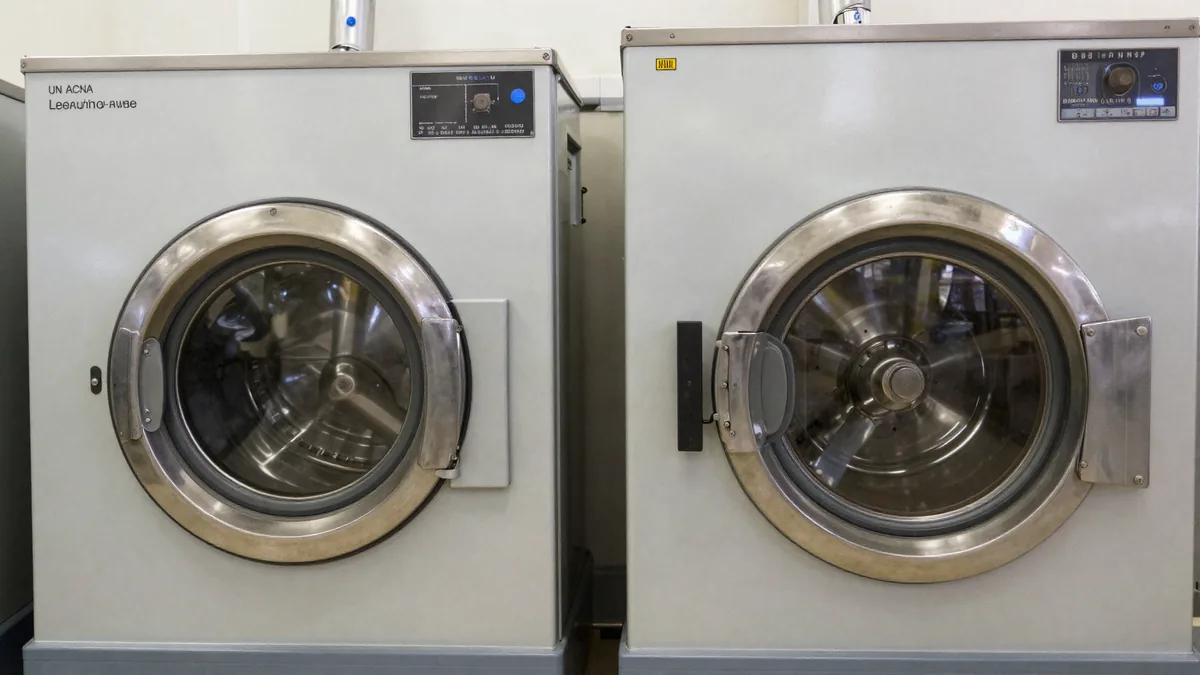
I should talk about linen separately, because it's where I've seen the ugliest auto-renewals. A uniform rental renewal is usually a flat rate per employee or a small list of garments. A linen contract is a perpetual bill based on weight, piece counts, and service categories. The renewal clause might be one sentence, but the pricing schedule runs to pages.
On linen, once you auto-renew, the 'stop fee' or 'restocking charge' can apply to any unused inventory. For a hotel or senior-living property, that might be thousands of dollars in sheets and towels. And the price per pound is often adjusted for 'fuel surcharges,' 'chemical surcharges,' or 'sanitization surcharges' that have no stated cap. The auto-renewal doesn't just keep the term alive; it keeps the surcharge formula alive.
That's why a healthcare or senior-living linen contract needs a compliance element. Look for a plant that can back up its process with things like TRSA Hygienically Clean or HLAC accreditation. Those aren't quality badges; they're process standards. If the plant loses its accreditation, you should have an exit clause. But the auto-renewal clause doesn't care about that.
So here's my bottom line: treat the auto-renewal as a risk, not a convenience. Mark the date, read the prices, and make the call.
Renewal Clause Options Worth Comparing
| Option | Notice Required | Price Escalator | Exit Risk |
|---|---|---|---|
| Auto-Renewal with Annual Escalators | 90 days before anniversary | CPI plus 2% | High if notice missed |
| Manual Renewal with Mutual Agreement | 60 days before anniversary | Negotiated each term | Medium |
| Month-to-Month After Initial Term | 30 days before end of month | Market rate | Low |
| Evergreen with CPI Cap | 180 days before anniversary | CPI plus 1% capped | Medium due to long notice |
Frequently Asked Questions
What is a typical auto-renewal notice period for uniform rental contracts?
Most standard agreements ask for written notice 30, 60, or 90 days before the end of the initial term. If you miss it, the contract renews for a fixed period, often 12 months. I've seen 180 days in a few national contracts. Always verify.
Can I cancel a uniform rental contract after it auto-renews?
Technically you're locked for the renewal term, but suppliers often agree to an early exit if you are willing to sign a service agreement or pay a restocking fee. The best move is to ask before you sign a competitive quote. Many accounts get out without any penalty during a sales rep's discretionary period.
Is auto-renewal different for FR garments like NFPA 2112-rated coveralls?
Yes. For flame-resistant clothing, the laundry itself is part of the compliance chain. Industrial laundering is required to maintain the FR protection level, so you're not just renewing a rental; you're maintaining your qualified processor status. If the renewal clause doesn't let you requalify other processors, you're locked into the existing laundry.
What price increase is typical on auto-renewal?
In uniform rental, well-established ranges are $4-$15 per employee per week. Annual escalators of 3-5%, or CPI plus 1-2%, are common. For linen, look at per-pound or per-piece pricing and watch for surcharges that have no cap. The initial renewal price is often lower than the mid-term escalation.