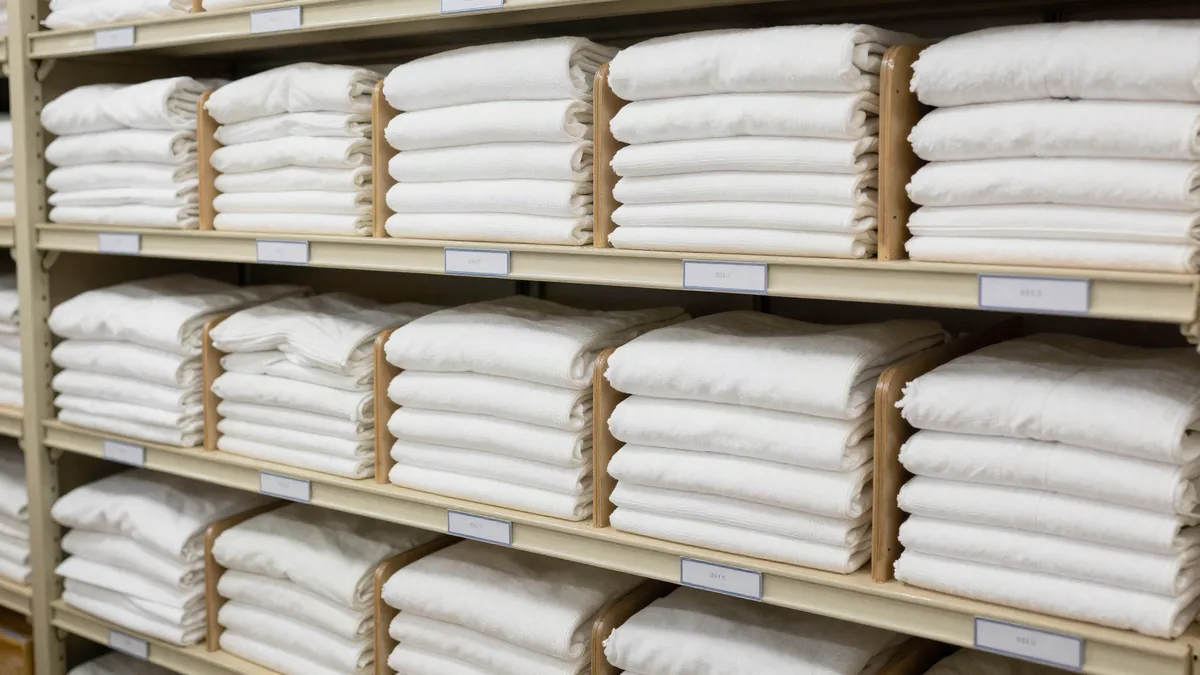
Reject Rates, Stain Rates and Quality Audits: Scoring Your Vendor
Bottom line: Score your vendor monthly on a 100-piece random sample, tracking stains, tears, and rejects; demand a corrective action plan if stain rate exceeds 2% or reject rate exceeds 1%.
I've been through three vendor changes in my career, and each time the problem wasn't the chemical supplier, it was the inspection. The guy who runs the plant will tell you his reject rate is 1.2%, but he's counting only the pieces that fall off the ironer. I pull a random 100 pieces from the clean line and go through them with a light table. In '09 I found 5% of the 'clean' sheets had bloodstains that survived the wash. The vendor didn't even have a stain category in his QC log. That's when I built my own checklist. It's not fancy, but it's the only thing that keeps the housekeeper and the patient satisfied. Hotel Laundry Service
I remember standing in the soil sort line at the plant in '08, watching a load of OR scrubs come through with a yellowish-brown stain on every chest panel. The vendor had switched to a cheaper chemical supplier, and the re-wash rate doubled before anyone caught it. That's when I started keeping a hard-nosed audit checklist, and I've been scoring vendors with it ever since.
That's the thing about commercial laundry: you don't get a second chance to make a first impression. If the sheets you deliver have a stain or a tear, the hospital notices, the patient notices, and the administrator hears about it. Reject rates and stain rates aren't just quality metrics—they're the numbers that keep your accounts or sink them.
So here's how I did it. Call it a linen quality audit checklist, if you want. It's the same process I used for 19 years in the plant, and it'll work for you whether you're a hospital laundry manager or a uniform rental operator.
Start with the Numbers: Reject Rates and Stain Rates
Every pound of linen that comes off the line gets a verdict. A reject is anything you wouldn't put back into service—a hole, a tear, a stain, a residue. Stain rate is a subset. I tracked both separately because stains are often a chemistry problem while holes are a mechanical problem. Different fixes.
In my plant, we ran about 42 million pounds a year. A 1% reject rate on that is 420,000 pounds of lost product. At $0.35 a pound for processing, that's almost $150,000 a year. So when a vendor shows up with a 4% reject rate, they're not just losing a few sheets—they're bleeding money, and you're the one who ends up paying for it.
That's why I set a target: reject rate under 2% for hospitality, under 3% for healthcare. But it depends on the plant, the fabric type, and the soil loads. Give or take. I'd rather see a 3.5% rate with honest reporting than a 2% rate that's been gamed.

What a Quality Audit Actually Checks
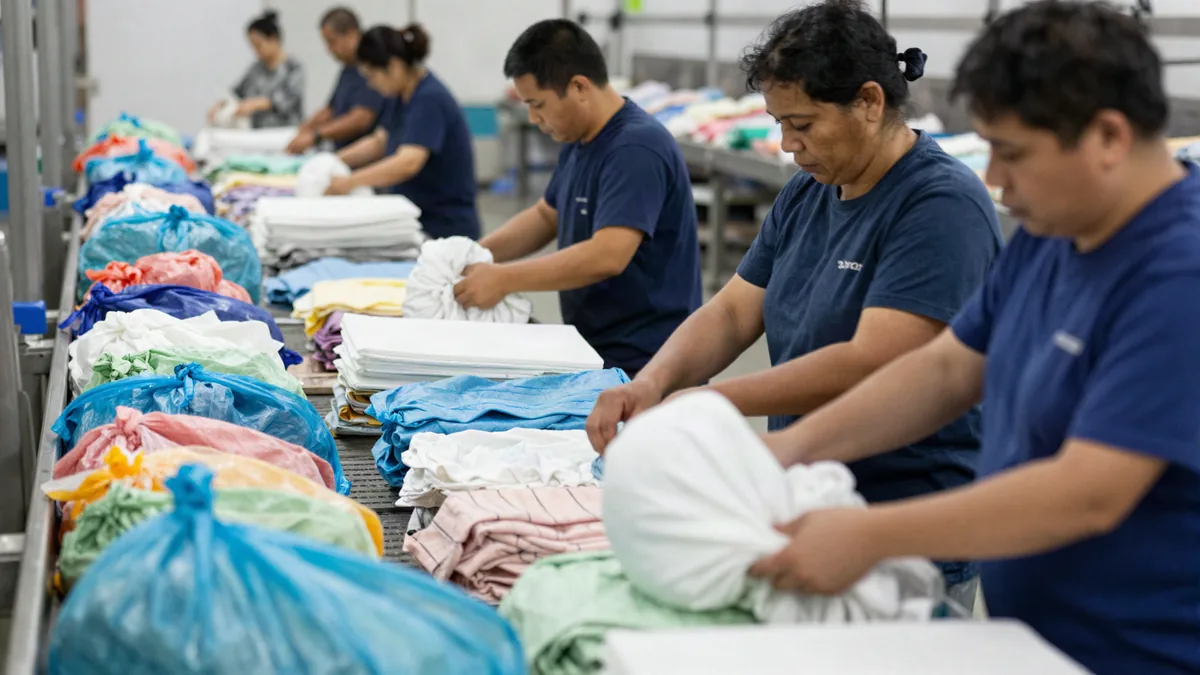
An audit isn't just counting rejects at the end of the line. I would walk the whole process: the soil sort, the washer load, the ironer, the packing area. I'd check the pH of finished linen—should be between 5 and 6.5. I'd pull a sample and run it through my own wash test to see how it held up. And I'd look at their maintenance logs to see if the equipment was actually being serviced.
Certifications matter as a baseline. TRSA Hygienically Clean and HLAC accreditation tell you they meet a certain standard. But they don't tell you if yesterday's load was handled right. I've seen vendors with all the certificates still ship stained goods. So I always did my own spot checks.
One digression: I had a vendor brag about their ISO 14644 cleanroom once. I asked about their washer maintenance. They looked at me like I'd asked about their favorite color. The cleanroom was for a side operation, not the linen. So don't get blinded by fancy certifications.
The Audit Checklist I Used
I'd pull a sample from every tenth skid, ten pieces per account. Under 3000K lighting, I'd inspect each piece for holes, tears, stains, color fade, and overall texture. I'd record each issue. Then I'd calculate a reject rate and a stain rate for the month. Three months of data gave me a trend, not a snapshot.
Here's the scoring system I used, and you can steal it. For the reject rate: 0-2% gets 5 points, 2-3% gets 4, 3-4% gets 3, over 4% gets 1. Same for stain rate, but I'd give extra weight to heavy stains—the stuff that looks like blood or betadine. A single bad stain on a surgical gown is a bigger deal than a slight gray on a bath towel.
Then I'd look at their internal documentation: wash formulas, temperature logs, chemical inventory, and maintenance records. If they couldn't produce a wash formula for a specific account, that was a red flag. I asked about their re-wash rate. If they didn't know it, they weren't paying attention.
How to Score Your Vendor (and When to Walk)
Scoring a vendor isn't just about reject rates. I weighted it: 40% reject rate, 30% stain rate, 20% delivery compliance, and 10% communication. The last one is hard to measure but crucial. If a vendor can't be honest about a problem, you'll never trust them.
Most laundry contracts are per-pound, per-piece, or per-employee. Uniform rental commonly runs $4-15 per employee per week. But the contract structure should include quality metrics. If the vendor owns the linen, their incentive is to take care of it. If you own it, you're the one who eats the replacement cost. I always negotiated a rejection clause: if the reject rate stays above a threshold for two quarters, we get a credit.
Here's when I walked. I had a vendor who hit a 6% reject rate for three months. I put them on a 60-day improvement plan. They didn't budge. So I switched. It cost me a few thousand in transition fees, but it saved me ten times that in product losses.
How to Score Your Linen Vendor: Audit Methods Compared
| Method | Frequency | Cost | What It Catches |
|---|---|---|---|
| Visual check at ironer | Every shift | No extra labor | Gross stains and tears, but missed on folded items |
| Random 100-piece sample | Weekly | 30 minutes of labor | Accurate stain and tear rates, catches pattern issues |
| Third-party lab test | Quarterly | $250 per test | Chemical residue, tensile strength, bacterial count |
| Customer complaint log | Continuous | Minimal | Real-world failures, but lags and undercounts |
Frequently Asked Questions
What's a good reject rate for hospital linens?
In my experience, 2-3% is normal. If it creeps above 5%, you've got a problem. But it depends on the mix—OR towels are forgiving, fitted sheets are not.
How do I measure stain rate without boring myself to death?
Pull a random sample of 50 pieces per load, count the ones with visible stains, and you've got your rate. Use the same lighting every time.
What certifications should a laundry vendor hold?
TRSA Hygienically Clean or HLAC accreditation are the big ones. For FR garments, NFPA 2112 and NFPA 70E are the standards. And remember: home laundering doesn't maintain FR certification—only industrial laundering does.
How often should I audit my vendor?
Monthly spot checks, quarterly full audits. If you see a spike in rejects, drag a team in next week. Don't wait.