
Per-Pound, Per-Piece or Per-Employee? How Commercial Laundry Pricing Works
Bottom line: Per-pound works best for high-volume, consistent soil like hotel sheets, per-piece for mixed loads, per-employee for uniforms, with costs driven by item mix, labor, and wash chemistry.
Twelve years ago, a hotel group in Phoenix asked me to audit their linen bill. They were paying per piece and getting killed on napkin volume. I pulled a month of invoices and found they were being charged for every napkin, even the ones thrown out with food waste. That's when I started looking at weight versus count. A pound of napkins has a different cost profile than a pound of towels. The choice between per-pound, per-piece, and per-employee isn't just math. It's about who owns the risk of miscounts, overuse, and shrinkage. I've watched buyers lock into per-pound to save money, then get surprised when the plant adds surcharges for stain rework. You need to know what the number does and doesn't cover. Restaurant Linen Service | Industrial Laundry Service
I've spent fourteen years in procurement, mostly sourcing linen and uniform services for hotels and senior-living communities. Last fall, I stood in a plant outside Charlotte with a clipboard and a digital scale, watching a worker pull a 350-pound batch of 180-count sheets from a tunnel washer. The plant manager told me his per-pound price to a neighboring hotel group, and that moment a dozen RFPs snapped into focus. Pricing isn't a number. It's a risk allocation.
There are three main pricing structures in U.S. Commercial laundry: per pound, per piece, and per employee. Each one decides who carries the risk of inefficiency, soil, and fluctuating volume. If you're an operator or an administrator, you need to know which one you're agreeing to, because the cheapest bid can become the most expensive contract in twelve months.
Per-Pound: The Workhorse
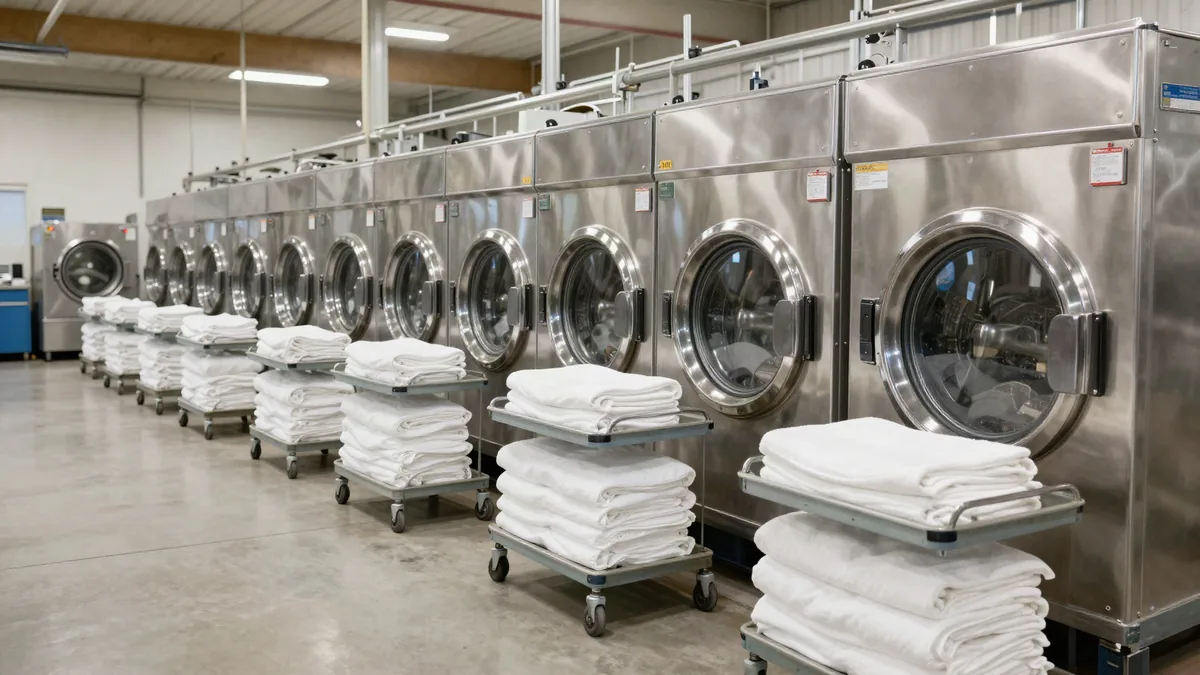
Per-pound pricing is the classic model for hotels and restaurants. The laundry weighs your dirty linens from the soiled chute, or your clean goods on the outfeed, and charges you per pound. Think of a trash hauler charging per bag. It works because the plant's consumption of water, gas, and chemicals tracks closely with weight. A 1.3-pound sheet takes about 2.5 gallons of water to process, give or take, depending on the plant's reclamation system. At a rate of, say, $1.10 per pound, that sheet costs you $1.43. But rates vary wildly by region and soil type.
So why not always use per-pound? Because the mix matters. If you're sending heavy terry towels, per-pound works in your favor. If your operation is mostly lightweight napkins and tablecloths, you're paying for air. Some plants will offer a lower rate if you commit to a fixed weekly volume, but that means you carry the risk of a slow week. And watch the definitions: "soiled weight" can add 5-10% if the linen is damp with food or moisture. A plant I worked with in Ohio used a clean-weight standard, and it penalized the buyer for anything that dried on the line. We ended up moving to per-piece for napkins.
Per-Piece: Predictable, Puzzling
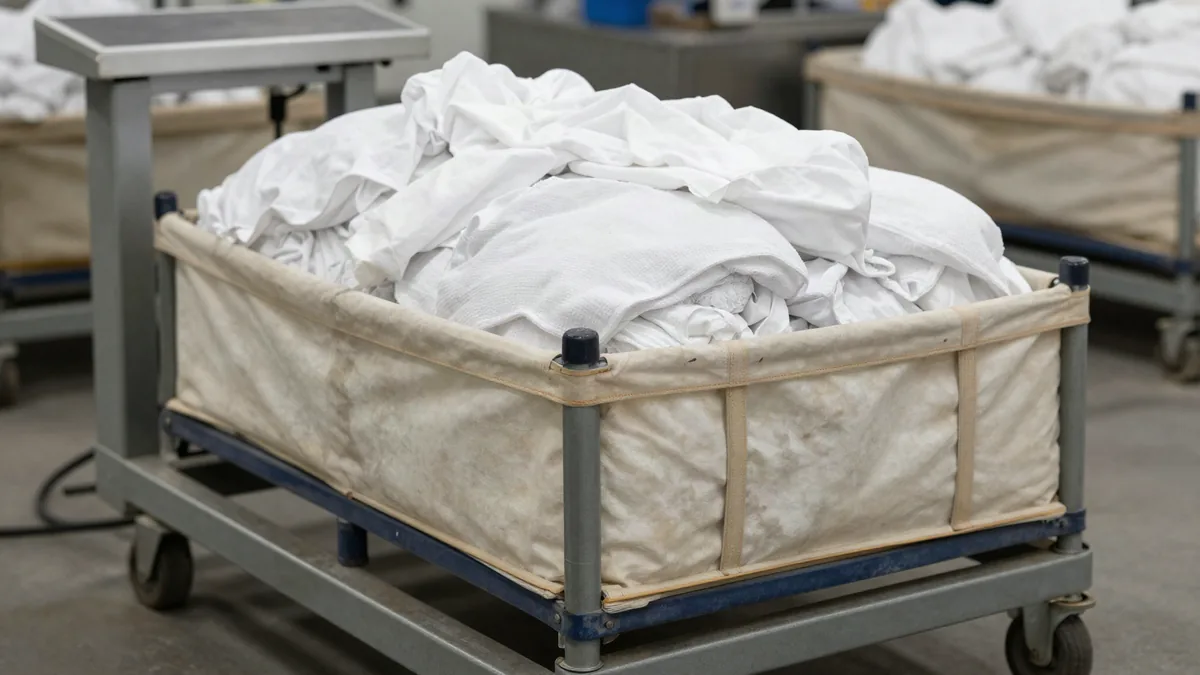
Per-piece pricing fixes the price for each finished unit: a sheet, a pillowcase, a mop head. It's common in healthcare because operators need a predictable cost per bed per day. They don't want a surprise charge for a heavy isolation cart. You might pay $0.12 for a washcloth and $0.85 for a bed sheet, give or take. The numbers vary by hospital, but the model is the same: the plant assumes the handling and weight risk, not you.
The catch is that you need a clean, standardized inventory. Per-piece pricing falls apart if you're sending odd items like fitted sheets with deep pockets or custom-sized tablecloths. Plants hate sorting, so they'll quote a piece only if it's a recognized size and type. If you have too many varieties, the price climbs or the item gets reclassified. And watch for unsorted clauses that turn a piece into a pound if it's too heavy.
Per-Employee: The Uniform Standard
Uniform rental is almost always priced per employee per week, not per pound or piece. The industry benchmark is $4 to $15 per employee per week, and that range has been stable for years. It's an all-in price that includes the garments, laundering, minor repairs, and route delivery. The plant handles the logistics, and you pay a predictable amount per employee headcount.
The per-employee model transfers almost all the volume risk to the laundry. They're betting on your headcount and rotation schedule. If you have 100 employees and each gets five FR-rated coveralls, you're at the top of the range. If you're a small senior-living kitchen with twenty aprons, you're at the bottom. This is also where certification matters. For flame-resistant clothing, home laundering does not maintain the protective treatment, so the industrial process is not optional. NFPA 2112 and 70E compliance is part of what you're buying. Same for NFPA 1851 for firefighter gear.
The risk to you is that the per-employee price can mask service creep. As your headcount grows, the bill grows even if your actual laundry volume stays flat. That's why I always ask for a 'cost per delivered uniform' in addition to the per-employee rate.
The Hidden Costs in Every Model
Whatever the pricing model, you're paying for the same physical inputs: water, heated to 140-160 degrees, detergent and chemistry, labor, energy to dry, and the replacement cost of the linen itself. On a per-pound basis, the water and energy alone can be $0.20 to $0.50 in an efficient plant, but that depends on the region and the machinery. I've seen older plants lose a third of their heat up the stack.
On top of that are certifications. If a processor holds TRSA Hygienically Clean certification or HLAC accreditation, there's a cost to that. In healthcare, OSHA 1910.1030 requires a bloodborne pathogen plan for handling contaminated linen. These aren't luxuries; they're part of the bid. But they're often the first thing a lower bidder leaves out, so read the scope carefully.
I once saw a buyer compare a per-pound bid from a regional plant that didn't offer delivery with a per-employee bid from a national uniform company that did. He told me the regional plant was cheaper. He was right, but only because he hadn't budgeted for a truck and driver. Delivery is a real cost, whether it's baked into the rate or charged as a route fee.
How to Compare Bids Without Getting Burned
My rule is to convert every bid to a weekly delivered cost per occupied unit or per resident, depending on your sector. Lay out the scope side by side: pickup frequency, turnaround time, sorting, delivery, repair, and replacement. Then ask each vendor to quote exactly that scope in all three models. You'll find that a per-pound bid can be lower for a heavy terry operation, but per-piece wins for a small, standardized healthcare facility.
The single biggest gotcha is the 'minimums' line. Most plants charge a minimum weekly weight or piece count. If you fall below, you pay the minimum anyway. Another gotcha is the 'soil' or 'stain' charge. Some contracts add a surcharge for heavily soiled items, and that surcharge is defined by the plant. Ask, in writing, what qualifies as 'heavy soil' at that plant.
Finally, ask for the names of three customers with your profile who are currently on the same pricing model. Call them. Ask one question: did your invoice match your estimate? That's the only answer that matters.
The Pricing Models: What Triggers Your Bill
| Pricing model | Billing trigger | Typical buyer | Main risk |
|---|---|---|---|
| Per pound | Net weight after wash, on a calibrated scale | Hotels and hospitals with heavy, consistent sheets or towels | Overweight charges or surcharges for stain rework |
| Per piece | Each item counted by tag or scan, flat rate per item | Restaurants and banquet halls with mixed linen sizes | Miscounts or extra charges for accessories like napkins |
| Per employee | Number of staff members on payroll, monthly fee | Companies that rent uniforms and want fixed costs | Overordering uniforms; no cost incentive to cut usage |
Frequently Asked Questions
Is per-pound or per-piece cheaper?
It depends. Per-pound is cheaper for heavy, dense items like terry towels because the plant's costs scale with weight. Per-piece is cheaper for light, standardized items like napkins because you're not paying for air. For a mixed hotel, per-pound is common. For healthcare, per-piece is often more predictable. Run a side-by-side on your actual inventory.
Can I mix models in one contract?
Yes, and I'd encourage it. For example, you might negotiate per-pound for terry and per-piece for sheets and pillowcases. Most plants will allow this if you have enough volume. Just make sure the contract says 'per item' and defines the exact size and finish.
What does uniform rental cost per employee per week?
The well-established range is $4 to $15 per employee per week. The exact number depends on the number of uniforms per employee, the frequency of service, and the garment type. FR garments put you at the high end.
What hidden charges should I watch for?
The most common are minimum weekly charges, fuel surcharges, soil surcharges, and separate charges for delivery or route stops. Also watch for a temporary peak fee if you need extra pickups over holidays.