UniFirst vs Vestis: Two Challengers, Two Service Models
Bottom line: Choose UniFirst for same-day replacements and local route flexibility; choose Vestis for lower base pricing and national account consolidation.
But the route rep is the product, not the uniform. Last week I stood in a paper mill break room while the manager flipped through two proposals. UniFirst promised same-day emergency replacement; Vestis offered a 6% lower base price on shop towels. He was leaning to Vestis because the savings were visible on paper. I asked him how many times he had used emergency replacement in the past year. He said none. But he also said his washroom goes through 200 pairs of gloves a shift, and Vestis's route driver only comes every other day. The cost of a stockout on gloves is not in the price sheet. Both companies have different service models, and you have to know your own consumption curve. Industrial Laundry Service
I was in a boiler room outside Columbus, Georgia, counting flame-resistant coveralls for a route audit. The plant manager was thinking about leaving UniFirst for Vestis. He asked me which was the better company. I said that's the wrong question.
There's no 'better' between these two. There's what fits your plant, your shift counts, and your risk tolerance. Both are challengers to Cintas and Aramark, but they've come at that challenge with different playbooks. I've seen both from the inside, and from the sidelines as a broker. Let me break it down the way I would if we were standing by a conveyor of shop towels, because that's where these decisions actually get made.
Who They Are Right Now
UniFirst is the old-school New England grind, founded in 1936, publicly traded, with a big route network east of the Mississippi but national reach. They push standard programs: you pay per employee per week, you get a set number of garments, and they handle the laundering. Their rep visits on a schedule, audits the racks, and adjusts the par levels. It's a system built for consistency, not for surprises.
Vestis is the spun-off uniform division of Aramark, and it's been independent only since fall 2023. That means it has Aramark's scale and supply chain, but it's also rebuilding its route books and service culture from a legal entity that's still figuring out its own identity. Vestis tends to price more like a piece-goods operation, especially for industrial accounts; you might see per-pound laundry deals or per-piece rates for shop towels and mats. Call it a more à la carte model. Neither approach is right or wrong, it just depends on what your controller's spreadsheet handles.

Route Reps and the Human Factor
Here's where the rubber meets the road. A uniform rental contract is only as good as the route rep who shows up on Tuesday morning. With UniFirst, I've found the reps are usually career employees; they know the product line cold, but they're hammered on the same metrics every other national company uses: stop times, route revenue, and retention. The good ones will work with you on par levels, but they've got a script.
Vestis inherited a lot of Aramark's former reps, and those folks are used to a more, let's say, entrepreneurial territory. Some of them will cut a deal on the spot for a skid of shop rags. That can be great if you're the kind of manager who likes to negotiate. But it also means service can vary wildly from one branch to the next. I've walked into a Vestis-run plant that was spotless, and one next state over that was losing garments every week. It's a franchise in all but name.
FR, Cleanroom, and the Certification Maze
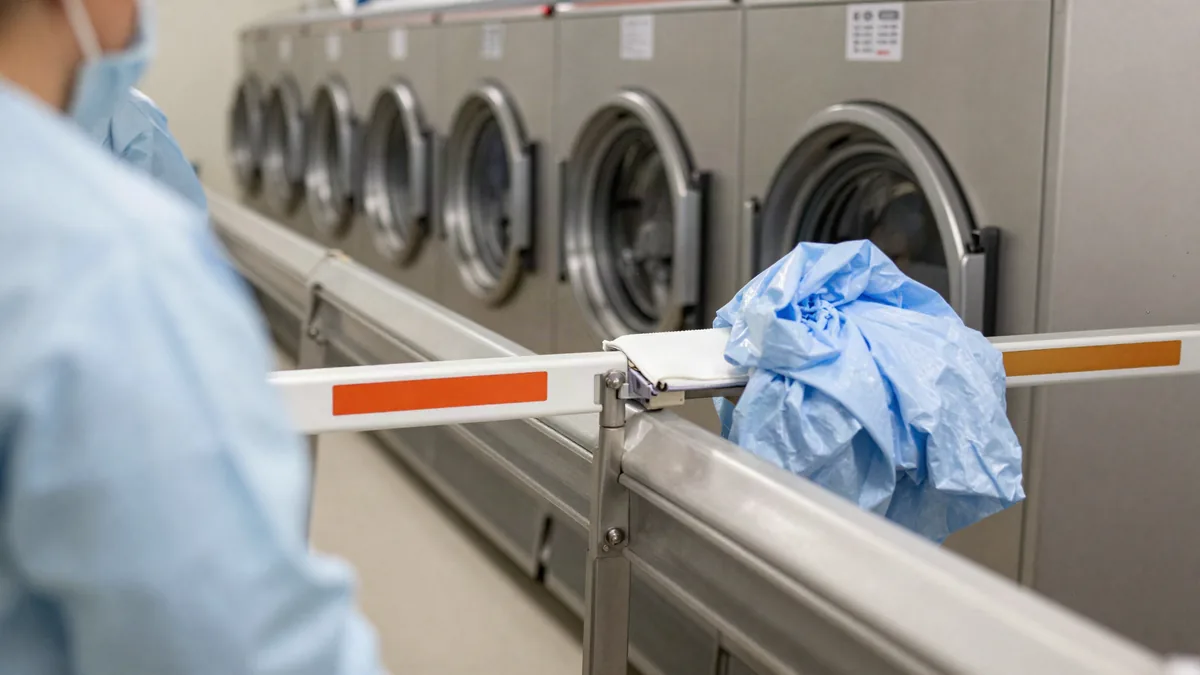
Now let's talk about the stuff that can get you killed or shut down. If you're issuing flame-resistant coveralls, NFPA 2112 is the garment standard, and NFPA 70E is about the electrical hazard itself. Home laundering of FR is a non-starter; it voids the certification, period. The whole point of industrial laundering is that a facility like UniFirst or Vestis follows the manufacturer's wash cycle, uses pH-neutral detergents, and doesn't put any other chemicals on the same line. Both companies can do this, but they do it differently.
UniFirst tends to have dedicated FR lines in their bigger plants. Vestis, because of its broader supply chain, sometimes mixes FR with other industrial laundry at the same facility. That's fine if the line is segregated, but I've seen audit reports where the plant manager had to ask for paperwork. You want a written guarantee that FR is processed on a dedicated line. And for cleanroom work, look for ISO 14644 certification and a cleanroom facility that's separate from the main plant. Both companies have those, but not at every branch.
Pricing and Contract Gotchas
Here's the money part. Uniform rental commonly runs $4 to $15 per employee per week, depending on how many garments you rotate and what industry you're in. But that's just a starting range. UniFirst will often quote you a flat weekly rate per employee, which includes everything, and then hit you with a surcharge for extra pieces above the par level. Vestis might quote a lower base rate, but they'll bill separately for each type of item, like a $0.50 per shop towel and a $2.15 per FR shirt. If you aren't tracking every piece, the invoice creeps up.
The real gotcha is the contract term and the renewal clause. Some of these agreements auto-renew for 36 months if you don't cancel within 60 days of the end date. I've had clients sign a five-year lease on uniforms, which is insane because the garments are depreciated in two. Read the termination penalties, and ask what happens if you lose a major contract and need to cut back on service levels. Both companies will work with you, but they'll also stick to the letter if you're trying to bail.
Service Model Comparison: UniFirst vs Vestis
| Factor | UniFirst | Vestis |
|---|---|---|
| Route structure | Local service centers in most metros | Regional distribution hubs |
| Emergency add-on | Same-day if within route zone | Next-day from nearest hub |
| Base pricing | Higher, negotiable per account | Lower, volume discounts for multi-site |
| National contracts | Need to coordinate regional branches | Single contract, one account manager |
| Rep access | Local branch, weekly visits | Regional rep, monthly or on-call |
Frequently Asked Questions
Which is cheaper, UniFirst or Vestis?
There's no across-the-board answer. UniFirst typically quotes $4-15 per employee per week with a bundled rate. Vestis often prices per piece or per pound, which can look cheaper on paper but might add up if your inventory isn't tightly controlled. Get both in writing and compare the total cost for your specific garment list.
Does Vestis clean FR uniforms the same as UniFirst?
Both can meet NFPA 2112 and NFPA 70E requirements, but only if they use dedicated, segregated FR wash lines and follow the manufacturer's instructions. Ask for written confirmation that the plant processing your FR has these segregated lines. Home laundering is not acceptable for maintaining FR certification.
Why can't I just wash FR coveralls myself?
Because home laundering doesn't maintain the garment's certification. NFPA 2112 requires that FR garments be cleaned according to specific industrial processes to preserve the flame-resistant properties. A standard home washer can leave residues that compromise the fabric, and that's a liability you don't want.
What should I look for when switching uniform companies?
Look at the service model, not just the brand. Check route density, ask about who your route rep will be, and verify certifications like TRSA Hygienically Clean or HLAC for healthcare, ISO 14644 for cleanroom. And read the auto-renewal and termination clauses carefully.