Uniform Rental Hidden Fees: Decoding Every Line on Your Invoice
Bottom line: Uniform rental invoices often carry extra fees like energy surcharges and administrative charges that can add 20 to 40 percent to your base rate. Always ask for a line item breakdown before signing.
Most managers never read the back page of a rental invoice. I knew a guy who paid an energy recovery fee for 14 months before he asked what it was. That money bought a new welder. When you sign a uniform contract, the base rate is just the opening bid. Every line below it is there because someone knows you won't question it. I've seen fees for route density when the driver comes anyway. I've seen administrative handling on a paper invoice. That's not an accident. That's how the math works. Last year I audited a hospital account and found 11 separate surcharges that added up to 34 percent over the quoted base. Nobody had ever gone through it with a calculator. Industrial Laundry Service
Back when I drove for Cintas in the Des Moines market, a customer – a 14-person welding shop – slid an invoice across the counter at me and pointed to a line that said 'energy recovery fee.' He'd been paying $12.47 a week for that line for 14 months. His base rate was $27 a week for 12 uniforms. That's bad, but it's typical.
I've seen a lot of invoices in my day. Some are honest. Most are indexed to something called 'base rate' and then loaded with extras. Call it 'energy recovery,' or 'environmental fee,' or 'fuel adjustment.' Whatever the name, it's money coming out of your pocket that you didn't price into your budget.
Here's the thing: uniform rental is a good system if you're running a crew in a dirty environment. But the contract is where they get you. Let's decode.
The Base Price Is Bait. The Invoice Is the Hook.
Every rental company quotes a per-employee weekly rate. That's usually in the $4 to $15 range, depending on the kind of garment, the industry, and the region. That's the number they wave in front of you. But that per-employee rate almost never includes everything. The quote from a sales rep covers the basic garment rental – a certain number of shirts, pants, maybe a shop coat. Then you get add-ons: a weekly delivery stop, a fuel surcharge, a processing fee for wiping rags, a charge for 'managed inventory' or 'room service.' Some companies bill you for 'imprinting' your logo once, then bill you again when they replace a garment. It's like a hotel resort fee.
One particular charge that gets under my skin is the 'safety compliance' fee. That's a markup on FR or high-vis clothing. Some plants mark up FR uniforms 40% over base. I understand it – FR laundering is a real process, with real standards (NFPA 2112 for flash fire, NFPA 70E for arc flash). The chemical handling, the water temperatures, the monitoring – it's all real. But it should be priced into the per-piece rate, not tacked on as a separate line.
And here's the thing about FR: unless the garment is laundered in an industrial facility with the right protocols, the flame-resistant barrier can degrade. Home laundering doesn't maintain the certification. So you can't just buy your own FR coveralls and have them washed at home – you lose the protection. That's the core reason you need a professional uniform service, and that's why they can charge a premium. But the fuel surcharge? That's not protecting you from anything.

Per-Pound, Per-Piece, or Per-Head: Know the Model
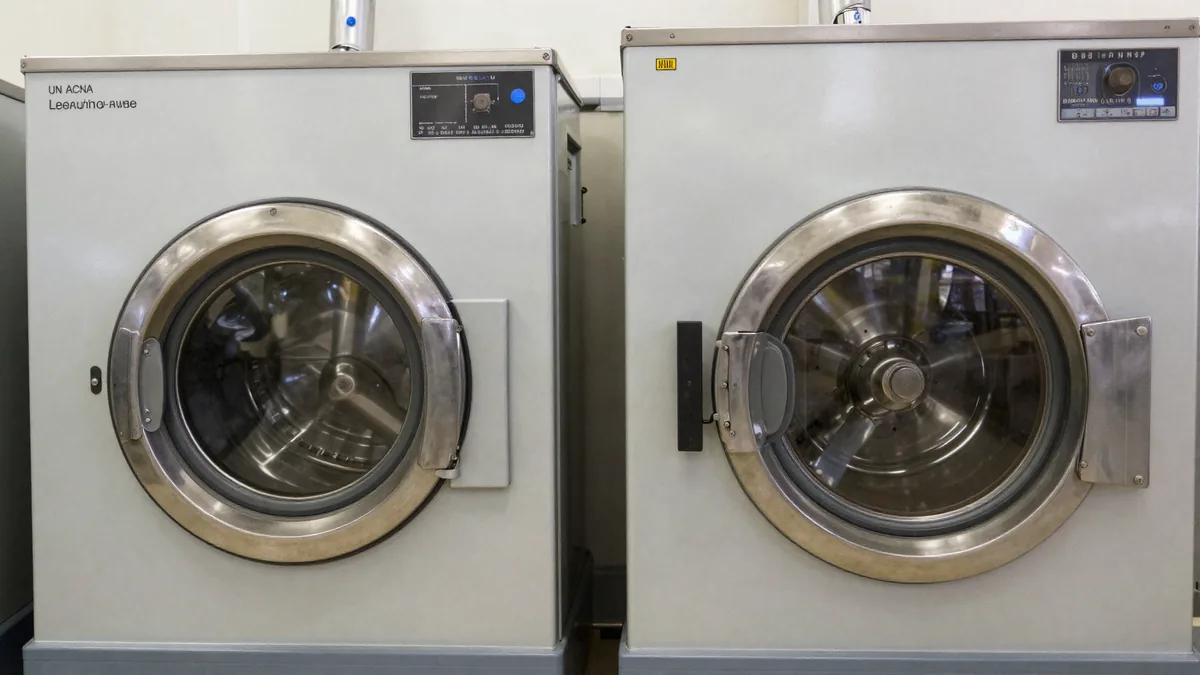
Once you look past the base rate, you have to figure out what you're actually being billed on. There are three main pricing models: per employee per week, per piece, and per pound. Per-head is the simplest – you pay a flat fee per person, and the company shoulders the risk of wear and tear. Per-piece is straightforward too – you pay for each garment, each time it's processed. Per-pound is the sneaky one. In an industrial laundry, you get a bill based on the weight of the soiled laundry. The problem: dirty rags absorb water and solvent. A soaked shop rag weighs more than a clean one. So you're paying for water weight. It's not dishonest, but it's hard to predict. I had a machine shop that paid $0.68 per pound for towels. Their weekly bill swung from $210 to $340 based on how wet the rags were. That's not budgeting.
Per-head is the most common for uniform programs. But the per-head quote can be misleading if you don't read the contract's 'overage' clause. Most rental agreements have a base purchase – say, 20 shirts per week. If you need 22 in a week, you'll pay per-piece overage rates that are often double the effective average. And if you drop below the minimum, you'll pay the guaranteed weekly amount anyway. That's a contract, not a theft. But you should know it going in.
On FR garments, per-piece is the norm, because each garment has to be tracked and tested differently. And the certification process matters – NFPA 2112 covers flash fire, NFPA 70E covers arc flash, and NFPA 1851 covers structural firefighting turnouts. You want a provider that documents their processes. Ask to see their TRSA Hygienically Clean or HLAC accreditation. If they can't show you that, you're paying a premium for guesswork.
The Fees They Don't Name on Page One
Now let's talk about the line items. The worst is the 'energy recovery fee' from my intro. Others: 'environmental fee,' 'waste disposal fee,' 'fuel adjustment,' 'residential delivery fee' if you're not a commercial address, 'peak season adjustment' (yes, that exists). I've seen a 'security monitoring fee' for a garment tracking system that was actually a separate data service. The kicker is that many of these fees are tied to a formula – for example, 'adjusted quarterly to reflect the prior three months' average diesel fuel price, as published by the Energy Information Administration.' That sounds legitimate. It's not. It's a way to shift the laundry's cost risk to you.
And then there's the annual price escalator. Most rental contracts in this space have a 4% to 6% price increase baked in, often tied to the CPI. That's normal. But some contracts have a 'reset clause' – at renewal, the per-piece rates can be renegotiated upward with no cap. I once saw a 12-unit franchise get hit with a 22% increase at renewal because the rep's commission structure was tied to the new rate. That's not a company being predatory, it's just how the game works. You have to ask.
Let me give you a real-world audit from a small client. They were paying $9 per employee per week, which included 10 garments and 3 pairs of gloves. But their invoice also had these lines: 'delivery fee' – $6.50 weekly; 'fuel surcharge' – 4.5% of total; 'environmental fee' – $4.00 weekly; 'inventory management' – $2.25 weekly; 'after-hours access' – $10.00 monthly. That added $14.45 to a $360 invoice. Over a year, that's $751 in fees they never saw in a quote. That's a plain fact, and it's typical.
One more digression: I worked with a hospital that used a service for surgical linens. The contract had a 'stat processing' fee for rush orders. The hospital didn't realize it was being billed for its own routine orders that got flagged 'stat' by the OR scheduler. That's not a clean-company problem; that's a communication problem. The same thing happens in uniform rental. Watch your usage patterns.
How to Audit Your Invoice and Fight Back
Here's a practical audit. Pull your last three invoices. Highlight every line that isn't the per-piece or per-head charge. Then go back to your original quote. If the quote didn't list those lines, you have grounds to challenge them. Call your route rep or the billing department and say this exact phrase: 'I want to see the contract line item that authorizes this charge.' That's the magic sentence. Most reps can't pull it up on the spot. They'll tell you they'll get back to you. Follow up.
Once you've identified the junk fees, you have use. If you've been with the company for more than a year, they don't want to lose you. The switching cost for them – losing your weekly revenue – is real. So say: 'Drop the environmental fee and the fuel surcharge, or I'm taking the contract to a competitor.' I've seen this work, and it works more often than not. Be polite. Be firm.
You can also negotiate the overage rate. Ask for a 1.5x multiplier instead of 2x. Ask for a waiver of the start-up fee or the stop fee. And always ask for a cap on the annual price increase – say 3% – rather than CPI open-ended. If your contract is up for renewal, this is your moment. I can't stress that enough.
A final thought: it's worth hiring an independent broker – someone like me – to run one invoice through the ringer. I get paid by commissions from the rental company, not by you, and I can see across the market. But you don't need me for that; you need thirty minutes and a calculator.

Common Hidden Fees and How to Challenge Them
| Fee name | Claimed purpose | Typical monthly cost | Actual cost driver | Negotiation reply |
|---|---|---|---|---|
| Energy recovery fee | Offset rising utility costs | $5 to $12 | Profit margin | Ask to cap at 2 percent of base |
| Environmental surcharge | Compliance with EPA | $3 to $8 | Already covered by base rates | Demand it be removed on renewal |
| Administrative handling | Paperwork and invoicing | $2 to $6 | Cost of doing business | Insist it is rolled into the base |
| Route density | Fuel for the driver | $4 to $15 | Driver already routes the street | Negotiate a flat weekly rate per stop |
| Damaged item replacement | Normal wear and tear | $1.50 per item | Double billing for items you already rent | Ask to see the return log |
Frequently Asked Questions
Is home laundering ever allowed for FR garments?
No. Home laundering doesn't maintain the garment's flame-resistant rating. Only industrial laundering following NFPA 2112 or NFPA 70E protocols keeps the certification valid. That's the entire reason to rent FR uniforms from a professional service.
I found a 'fuel surcharge' on my invoice. Can I get it removed?
Possibly. If it wasn't in the original quote, you can challenge it. Ask to see the contract line that authorizes it. If it's in the fine print, you can still negotiate for removal at renewal or ask to cap it. Be ready to walk away – that's your best use.
What's a fair contract term for uniform rental?
Most contracts run 3 to 5 years, but 1-year initial terms are becoming common. I advise negotiating a 1-year term with two one-year renewal options. That gives you a clean exit point if the service or pricing goes south.
My laundry charges by the pound for rags. Is that a rip-off?
Not necessarily, but it's unpredictable. You're paying for water weight and soil. Ask for the average weight per item and a rate per pound. Then compare that with a per-piece quote. If the pound rate seems high, push for per-piece pricing.