Soiled Linen Rooms, Carts and Chutes: Handling That Passes Inspection
Bottom line: Pass inspection on soiled linen handling by verifying negative pressure, sealed containers, clean gaskets, and a daily cleaning log that matches policy.
I've lost count of the audits I've done on the dirty side, but one thing holds true: the room with a $20 manometer bolted to the wall and a logbook nobody fills out fails just as often as the one with no gauge at all. Inspectors want proof, not intentions. I watched a plant manager argue with a surveyor for five minutes about whether the hand sink was a requirement, then lose the argument because his own policy said it was. That's the thing about soiled linen handling. It's not about the wash formula. It's about every small decision you make between the patient room and the washroom floor. Healthcare Linen Service
I remember the morning the HLAC surveyor showed up unannounced at the east facility. She didn't head to the clean linen store. She walked straight to the soiled linen room, opened the door, and stood there for ten seconds just breathing. That's when I learned that inspection isn't about the wash formula—it's about the dirty side of the building.
We had negative pressure, we had the hand sink, we had the sign-up sheet for daily cleaning. But the cart lid she lifted had a ring of grime around the gasket. She didn't cite it. She just wrote a note and handed it to me. 'Check the gaskets,' she said. That's the kind of small thing that turns a pass into a conditional pass.
The truth is, a soiled linen handling procedure that passes inspection isn't about buying fancy equipment. It's about the boring daily stuff: bagging, tying, transporting, cleaning carts, and making sure the room itself does what the design says it does. Call it the backstage pass to accreditation. This is how we make it work across four hospitals.
The Room: Make Sure the Air and Water Work
Your soiled linen room is the one place you don't want visitors, but that's exactly where the surveyor will go first. So you need to see it through their eyes. The room should be under negative air pressure relative to the corridor—that means the door pulls shut and air flows into the room, not out. Put a simple manometer on the wall and check it weekly. You don't need a cleanroom certification like ISO 14644 here, but you do need airflow that's not blowing in your face.
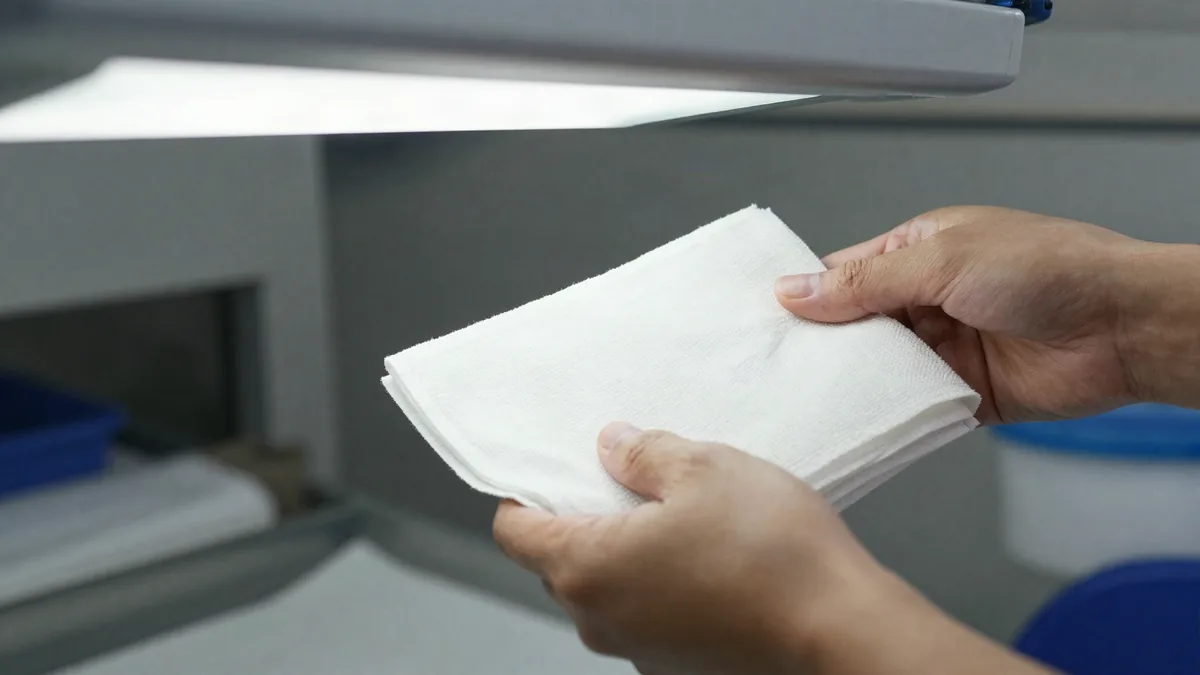
The hand-wash sink has to have soap and paper towels within reach. I can't tell you how many surveys get hung up on an empty dispenser. And the PPE station—gowns, gloves, face shields—needs to be outside the door or just inside, but not in a spot where it gets contaminated before you put it on. OSHA 1910.1030 is the baseline: treat every bag as potentially infectious, make sure the employee knows where the spill kit is, and have a written exposure control plan that someone actually updates.
One thing we learned the hard way: don't store clean linen in the same alcove, even in reverse-flow racks. Surveyors from TRSA Hygienically Clean and HLAC both look at separation. If the soiled room and clean room share a corridor, you need a physical divider. We used a rolling gate. It's not pretty, but it passes.
Carts: The Workhorses That Get Dirty
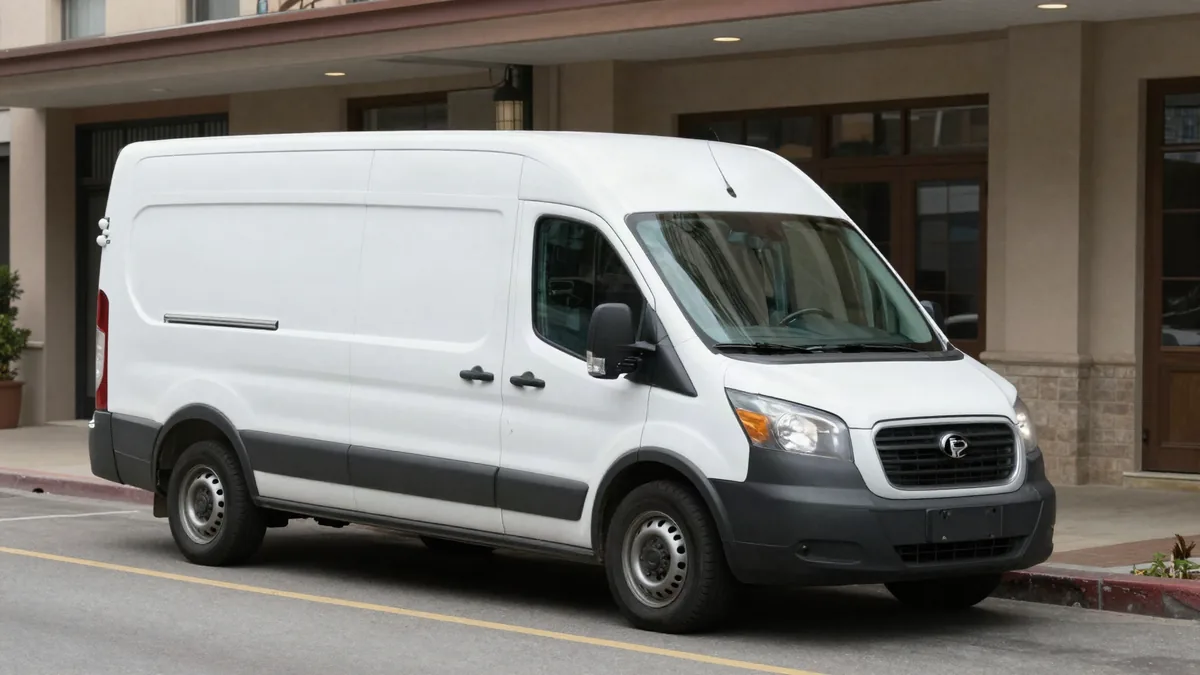
We run maybe two hundred soiled carts across the four campuses. Most are TecniQuip with spring-loaded lids, some are older Meese Orbitron units. The design matters less than the maintenance. The cart needs a tight-fitting lid, smooth interior surfaces with no rust, and casters that roll without jamming. When a caster locks up, staff will drag the cart, which tears the bottom and then leaks. That's how you get a yellow stain on the corridor carpet that follows you around for months.
Cart cleaning is the thing that separates a pass from a fail. We do a two-step: first wipe down with an EPA-registered hospital disinfectant, then rinse and dry. Some plants use a cart washer in the washroom, which is fine if you've got the volume. We don't, so we do it by hand on a Friday schedule, give or take. The key is to clean the underside of the lid and the gasket. That's what the surveyor will touch—you can bet on it.
Here's the digression I always make with new managers: you can rent carts as part of a linen service, or you can own them. The pricing model for carts depends on whether you rent or buy. With a service, the cart cost is bundled into your per-pound rate. If you buy, you're looking at capital cost, plus repair parts. Either way, the maintenance is on you. And maintenance isn't just the caster—it's the lid seal, the latch, and the plug where the drain goes. Check that plug. Ask me why.
Chutes: Convenience With a Side of Caution
Chutes are a love-hate thing. They save staff from hauling bags down the stairs, but they also create a vertical pipeline that can spread lint and odors if the fire doors aren't working. We have two hospitals with gravity chutes, and we've kept them because the building design makes carts impractical above the fifth floor. But we had to retrofit them with self-closing fire doors, and we now enforce a simple rule: bag and tie before you drop. Loose linen in a chute is how you get a jam, and a jam is how you get a call at 2 a.m.
The other thing about chutes is that they tend to accumulate residue on the interior walls. You can't see it from the top. We contract a duct cleaning service to vacuum and wipe the chute interior twice a year. That's not an accreditation requirement, but it keeps the soiled linen room from smelling like a dead mouse. Call it a precaution.
If you're designing a new building, give serious thought to skipping the chute altogether. Cart transport is slower but it gives you a closed system—you control the bag, the cart, and the route. With a chute, you've got a column that opens on every floor. Each floor is a potential exposure point. And with the fire dampers and sprinklers required by code, you're adding complexity. For us, the decision depends on the plant.
The Procedure: Write It Down and Follow It
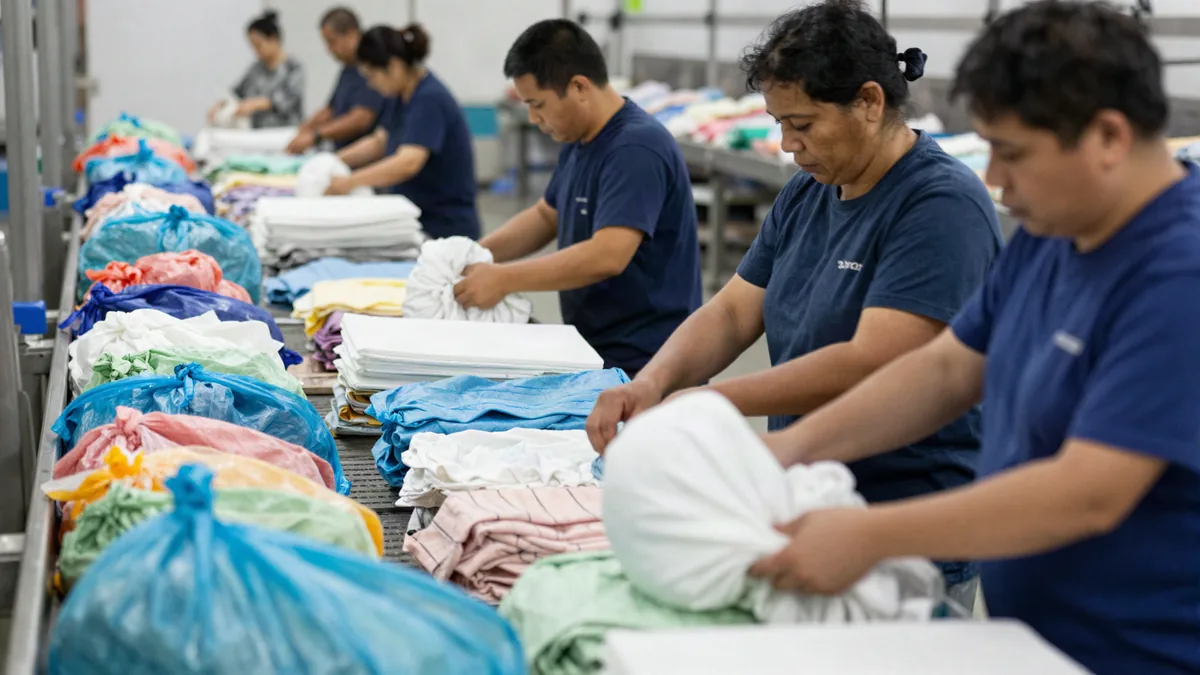
Here's the procedure that gets us past surveyors. It's not magic, it's just consistent. Soiled linen gets bagged at the point of generation—in the patient room, OR, or clinic. We use color-coded bags: clear for general, red for heavily contaminated or items that need special handling. We tie the bag with a half-twist and a knot, never a loose drawstring. Then the bag goes into the soiled cart. The cart goes to the soiled room, and from there it goes to the laundry either via elevator or chute—depending on the floor.
Employees have a one-page procedure sheet that includes the order of donning and doffing PPE, the route to transport, and the where and how of cart cleaning. We drill it every quarter. The surveyor will ask an attendant on the floor, 'What do you do with a bag that's leaking?' If they don't say 'double-bag it and put it in a red bag,' you've got a coaching opportunity.
The accreditation standards—HLAC, TRSA Hygienically Clean, OSHA—all have different checklists, but they converge on the same core: containment, separation, and cleaning. Don't get hung up on the acronyms. Just walk the path of a soiled bag from the patient room to the washroom and look for every place it could touch something clean. Fix those, and you'll pass.
Handling Systems Compared: Carts, Chutes, and Tubes
| Method | Upfront cost | Biohazard containment | Inspection culprit |
|---|---|---|---|
| Open cart | $180-$250 | Low | Exposed linen and odors in corridor |
| Covered cart | $350-$500 | Good | Gasket grime, lid not latched |
| Gravity chute | $4,000 per floor | Fair | Lint and residue at discharge door |
| Pneumatic tube | $200,000 plus | Excellent | Skipped maintenance log |
Frequently Asked Questions
What's the correct way to contain a leaking soiled linen bag?
Double-bag it in a red hospital-grade bag and place it in a rigid transport cart with a lid. Never carry it down a hallway without a closed container. Leakage is a direct OSHA 1910.1030 violation.
How often should soiled linen carts be disinfected?
After each emptying, and a full deep clean at least weekly. The weekly clean should include pulling the cart apart to wipe gaskets and hinges. Surveyors will check for residue in those spots.
Is it better to use chutes or carts for soiled linen?
Depends on the plant. Chutes are faster but require bagging and tying before dumping and regular interior cleaning. Carts give you more control and are easier to clean and inspect. New buildings tend to favor carts.
Does negative pressure really matter in a soiled linen room?
Yes—if you have positive pressure, air leaves the room into clean areas, and that's what surveyors look for. A simple manometer or smoke pencil test shows the airflow direction. Make sure the exhaust system is balanced at least annually.