
Two Deliveries a Week or Five? Optimising Linen Delivery Frequency
Bottom line: Three weekly deliveries typically balances holding and freight. Two saves fuel but raises par levels a day or two. Five cuts storage but adds $100 to $200 weekly. The right call depends on customer space and route density.
That South Bend call cost me more than overtime. It cost me a surgery scheduler's trust. Delivery frequency is never about route cost per stop. It's about the par level in your customer's closet. A 40-seat restaurant with two deliveries a week needs three times the napkins. That's storage they don't have, and linen you tie up. I once watched a GM stick clean trash bags in the walk-in because Friday's truck missed and Monday's breakfast was booked. Cheap freight isn't cheap if your inventory sits idle. Count the cost of the linen you hold, not just the fuel. Restaurant Linen Service
I got a 2 a.m. Call from a hospital in South Bend once. They'd run out of surgical gowns, and the truck wasn't due until Tuesday. It was Saturday. I remember standing over the phone in my kitchen, thinking about the 147-mile round trip the driver would have to make with forty pounds of linen. That's the moment you start asking: is two deliveries a week actually cheaper? Or is it just easier to schedule?
Most people outside the industry think delivery frequency is trivial. You set a Tuesday and a Friday, and you're done. But it's not. The right frequency is a moving target, and it depends on the plant, the customer, and the margin. Get it wrong and you're either paying for extra trucks or losing contracts because the nurses can't find a sheet.
In nineteen years running a plant that did 42 million pounds a year, I learned a few things about this. This isn't a textbook answer. It's something you figure out by juggling par levels, route costs, and the occasional panicked phone call.
The cost of running out
Every time you miss a delivery, you spend more than you save. It's not just fuel for an extra trip. It's the trust of the charge nurse, the overtime for the driver, and the chance the customer uses the outage to test another company's service. In healthcare, running short on clean linen can trigger a call to your competitor. That's not a scare tactic — it's what happens.
On the flip side, storing too much linen is a hidden cost. A hospital with a 3,000-square-foot storage room is paying for real estate that could be patient rooms. And linen sitting on a shelf forgives no one. It still has to be sorted, folded, and put into circulation. The longer it sits, the more likely it is to be mishandled.
I learned to price the risk of both. Two deliveries a week meant we had to carry a par level of 4.5 days. Five deliveries dropped that to 2 days. The difference in inventory alone was roughly 12,000 pounds for a 300-bed hospital. At a buck a pound replacement cost — call it that — that's $12,000 sitting in a closet. You can buy a lot of route hours for that.

The par-level juggling act
Par is the heart of it. For a hospital, you might start at 3.5 to 4 times the daily usage. But the number is never static. I've seen facilities run out on Tuesdays because Monday is surgery day, and they used twice the planned pounds. I've also seen a hotel that over-ordered for a wedding and ended up with 800 extra bath sheets.
To figure out the right frequency, you have to track usage in real pounds per occupied room or patient day. You don't guess. You pull the route sheets, the wash logs, and the delivery tickets from the last three months. Then you look at peaks. If a hospital does 50% of its volume on Mondays, you don't want to deliver on Friday and leave them with a skeleton crew.
A digression: I remember a nursing director who insisted the bath towels weighed 8 pounds. Our scale said 0.6. She was a brilliant woman, but she'd never actually hefted a wet towel. That's the kind of assumption that ruins a par calculation. We worked out a compromise: we weighed every cart before it left the dock. Numbers don't argue.
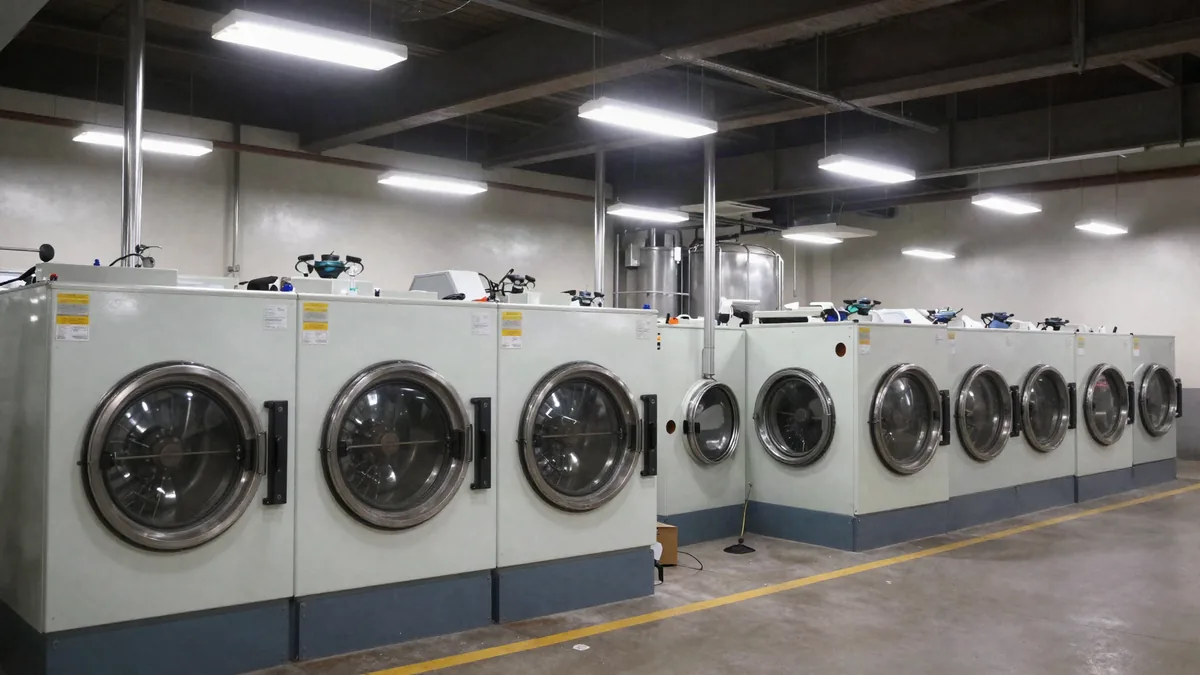
Route economics: five deliveries a week isn't just more stops
The fuel cost is real, but it's not the biggest line item. The bigger cost is labour. A route truck that stops five times a week instead of two means the driver is spending more time lifting and less time driving. That's hard on the body and hard on the route. You're also adding wear to the truck, the liftgate, and the wheels. Call it a service factor of 2.3 versus 1.4.
On the other side, fewer deliveries mean bigger loads. That means you need more carts, a heavier trailer, and more space at the dock. I've seen plants where the loading dock couldn't handle a 1,500-pound cart without breaking the concrete. So frequency isn't just about the route — it's about the building, too.
And don't forget the customer side. A hotel with a two-person housekeeping team doesn't have the hands to park five deliveries a week. They'll want two. But a hospital with a dedicated linen room can handle a daily drop. You have to match the frequency to their labour, not just their usage.
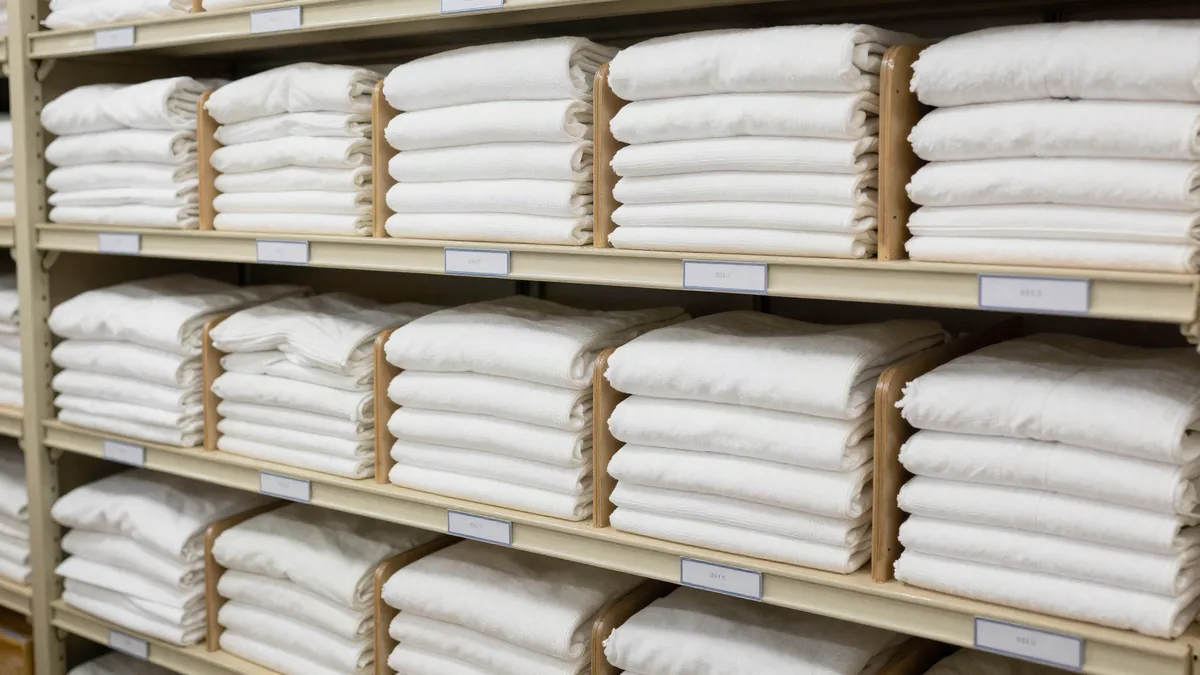
What I'd do today: a practical approach to picking a schedule
Start with a baseline. Pull your route data and calculate the actual usage per account for eight weeks. Don't rely on a one-week snapshot; that's how you get burned by a banquet. Then set a par level for the slowest day and the busiest day. The difference tells you whether you can get away with two deliveries or need five.
Next, look at the storage space on site. Measure it, don't eyeball it. I once walked a closet and estimated 4 racks, but it held 12. It was a fire hazard, and the local inspector caught it. The customer moved to a daily service just to keep the hallways clear.
Then run a pilot for four weeks. Keep the old schedule for the first two, then switch to a new frequency for the last two. Track stockouts, emergency calls, and driver time. The numbers will tell you what the contract negotiator won't: the actual cost of each option.
And be honest with the customer. If you move them from two to five deliveries, you're adding cost. You deserve a rate increase, but you have to show them why. The savings in storage and par might cover it on their side. Don't ask for money without showing the trade-off.
Special cases: healthcare, hospitality, and industrial
Healthcare is where frequency gets political. An HLAC-accredited laundry can't just drop a cart in the basement and walk away. There are standards for transport, for handling, and for the soiled-to-clean separation. Some facilities need segregated deliveries for clean and dirty — that means two trucks or a partitioned one, and often a different delivery schedule. That's why TRSA Hygienically Clean certification matters: it's not a badge, it's a set of practices that affect route planning.
Hospitality is usually simpler. You're delivering to a loading dock, not a surgical suite. But hotels have their own rhythm: occupancy spikes on weekends, so a Friday delivery might be useless. I've run hotels on a three-delivery schedule that includes a Sunday evening drop, because that's when the housekeeper can actually put the linen away.
Industrial is a different animal. FR garments, especially those certified to NFPA 2112, need to be handled with care. The frequency depends on how many sets the worker owns. If you're renting five sets per worker, you might deliver every two weeks. But if you're doing daily laundering for a refinery turnaround, you're looking at daily deliveries. The product type, not the contract, drives the schedule.
Linen Delivery Frequency Tradeoffs
| Deliveries per week | Par level (days) | Weekly delivery cost | Storage space (sq ft) | Emergency runs per month |
|---|---|---|---|---|
| 2 | 4 | $120 | 32 | 3 |
| 3 | 3 | $180 | 24 | 1 |
| 5 | 2 | $300 | 16 | 0 |
Frequently Asked Questions
How many times a week should a hospital get linen deliveries?
It depends on their storage, surgery schedule, and your route. Most hospitals I ran used three to five. A two-delivery schedule can work for a smaller facility, but you'd better have a fast emergency truck. I'd start at three and test from there.
Is it cheaper to deliver twice a week or five times?
Only by looking at your total cost. Five deliveries raise route and labour costs, but they cut inventory and storage. For a 300-bed hospital, dropping par from 4.5 to 2 days frees up about $12,000 in linen. That often pays for the extra stops.
How do I calculate par levels for a hotel?
Take the average daily usage times the number of days between deliveries plus a cushion. Hotel linen is often at 3x. But watch for weekend occupancy spikes. I'd use 3.5x for Friday and Monday, and 2.5x for midweek.
Do more frequent deliveries mean better hygiene?
More frequent deliveries can reduce the time linen sits on a shelf, which helps, but hygiene comes from the wash process and proper handling. Certifications like TRSA Hygienically Clean or HLAC set those standards. Frequency is just one piece.