RFID Linen Tracking: What It Costs and When It Pays Back
Bottom line: RFID linen tracking costs $0.15 to $0.50 per tag and $2,000 per reader, with a payback in 12 to 18 months from reduced replacement and counting labor.
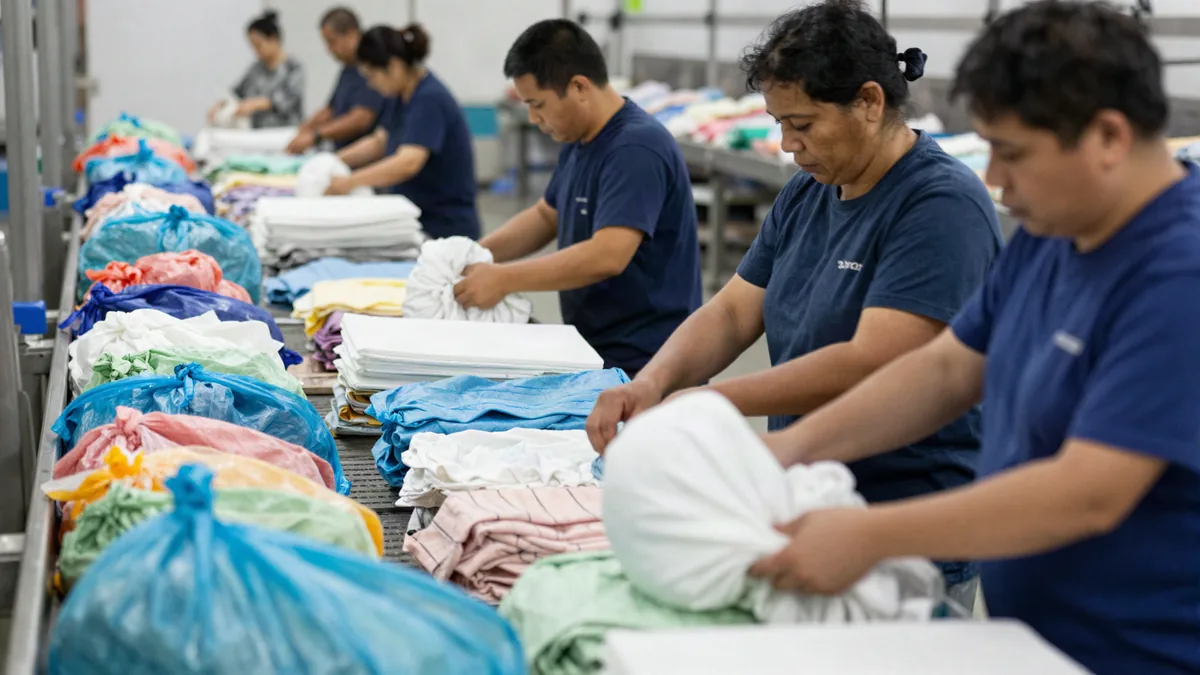
That $240,000 was not all from theft. Some was lost in the wash, some in the trash, but most was just bad counts. I had a barcode system that required line of sight and a person with a scanner. In a soil room, that's a joke. The first RFID install I observed, a hospital laundry with 400,000 pieces, cut their replacements by 14 percent in six months. Not because RFID finds every lost sheet, but because it gives you a real number. You can't manage what you don't measure. If you're still doing monthly physical inventories, you are paying for RFID every month, just not on the ledger. Healthcare Linen Service | Hotel Laundry Service
I remember standing in the soil room at 2 a.m. Watching a tow of 1,200 OR gowns go by, and knowing our par level was off by 18 percent. That's when I started counting what we actually had, not what the computer said. We spent $240,000 that year replacing linens we couldn't find. RFID didn't sound like tech. It sounded like a lifeline.
RFID linen tracking isn't magic. It's a box of tags, some readers, and a database that tells you where every sheet is. But when it works, it changes how you buy, wash, and deliver. Let's talk about what it really costs and when it pays back.
What You're Buying: Tags, Readers, and the Software That Connects Them
The hardware is simple. You get a roll of RFID tags, some readers, and a license for software that turns the reads into counts. Tags get sewn or heat-sealed into your linens. Readers sit at load chutes, washer exits, folders, and clean linen storage. Each tag has a unique ID, so you know exactly which gown or sheet passed that point.
The cost model is per piece, per reader, per month, not a lump sum. Tags cost more if you buy small volumes and less if you buy millions. Readers can be fixed or handheld. You'll pay for installation and network wiring. Software is usually a subscription based on the number of tagged items. Add a bit for training and downtime—call it 10 percent on top of the hardware.
I've seen plants buy the cheapest tags and then spend money on re-tagging every six months because they washed poorly. Other plants buy expensive rugged tags for everything and never need to replace them. It depends on the plant, your wash chemistry, and your dryer temperature. Be straight with your vendor about your process before you sign.
Where RFID Linen Tracking Earns Its Keep
The biggest payback is inventory shrinkage. In my plant, we were losing 3 to 4 percent of total linens every month. Some walked out the door, some got thrown away by mistake, and some just got buried in a corner. With RFID, you can detect that a par level is dropping before you run out. You can trace a missing item to the last reader that saw it. That's how you catch the load that went to the kitchen instead of the OR.
You also get utilization gains. Instead of overstocking to cover shortages, you run leaner. One hospital we worked with cut their surgical pack inventory by 20 percent after seeing the real usage data. That's real money sitting in shelves you could return to the vendor or use for something else.
There's a labor angle too. Handheld readers let one person do a full inventory of a floor in under an hour, instead of a team of three counting by hand and still not trusting the numbers. But that only pays if you actually use the data. I've seen plants buy the system and then ignore the reports. That's on you, not the tech.
How to Run the Numbers on Your Own Plant
Here's the exercise I'd do. First, pick your highest-value category—maybe it's OR gowns or blankets. Count what you have on hand, count what you're buying every quarter, and estimate the loss rate. If you're replacing 25 percent a year on a category that costs $300,000, that's $75,000 going out the window. RFID won't stop all of it, but if it cuts that loss in half, you've just found $37,500.
Now add the side savings: labor for inventory, customer billing accuracy, and maybe the fact that you can reduce par levels by 10 percent. You don't need a fancy spreadsheet. Just put the annual cost of the system against the annual savings. If you're saving $60,000 a year and the system costs $40,000, your payback is eight months. If you're a small plant with low loss rates, it might be three years.
The payback depends on your plant size, your current shrink, and what you pay per pound. I've seen plants justify it on 200,000 pieces; others need a million. Don't let a vendor sell you on a lifecycle cost study they wrote themselves. Ask for references and call them. Real numbers beat projections every time.
The Misses: What RFID Won't Fix
RFID is not a silver bullet. If your sorter is throwing clean linens into the trash because nobody trained them, the tag will tell you where the piece went, but you still have to fix the behavior. Readers get knocked out of position. Tags fail in dryers. The software can give you a 97 percent read rate, and that missing 3 percent will drive you crazy if you let it.
Also, you need to be disciplined about tagging new linens when they arrive. I remember a facility that spent months getting everything tagged, then bought 10,000 new sheets and skipped the tagging step because they were busy. Six months later, their data looked like Swiss cheese. You have to make tagging part of your receiving standard operating procedure.
One more thing: RFID doesn't replace meeting cleanliness standards. TRSA Hygienically Clean and HLAC accreditation are about process, not just location tracking. OSHA 1910.1030 governs bloodborne pathogens. RFID can tell you a linen is in the right place at the right time, but it can't tell you if it's clean enough. That's on your wash chemistry and your compliance program.
RFID vs. Barcode vs. Manual: What You Pay for Each
| Method | Tag Cost | Reader Setup | Time to Count 100 Items | Accuracy |
|---|---|---|---|---|
| Manual Count | None | None | 30 minutes | 85% |
| Barcode | $0.05 per label | $500 handheld | 10 minutes | 95% |
| Passive UHF RFID | $0.15 to $0.50 per tag | $2,000 per reader plus antennas | 1 minute | 99% |
| Active RFID | $5 to $10 per tag | $5,000 per reader | Instant for entire room | 99.5% |
Frequently Asked Questions
What is the typical cost of RFID linen tracking per piece?
There's no fixed price because it depends on tag volume, ruggedness, and your laundry process. You'll buy tags per piece, readers per location, and software per month. Ask vendors to price based on your actual piece count and reader layout, not a generic per-pound quote.
Can RFID solve inventory shrinkage in a rental uniform program?
It helps a lot. In rental, you own the linens and you bill per piece. RFID lets you verify what came back and what didn't. But remember, uniform rental pricing commonly runs $4-15 per employee per week, and that includes laundering and replacement. RFID can tighten your cycle counts, but it doesn't change that your pricing model is per employee, not per pound.
How long do RFID tags last in a commercial laundry?
Depends on the tag quality, wash chemistry, and dryer heat. Good tags can last 100 to 200 wash cycles. Cheap tags might fail sooner. In my experience, tag longevity is the biggest hidden cost—if your tags fail early, you're re-tagging linens and losing the whole point.
Will RFID help me meet TRSA Hygienically Clean or HLAC standards?
It supports the process by giving you accurate inventory and accountability, but those certifications are about cleanliness and handling. RFID alone doesn't get you certified. You still need to follow the food-safety-style protocols and pass inspections.