Hospital Laundry Standards: Wash Temperatures, Chemistry and CDC Guidance
Bottom line: For hospital laundry, the CDC requires a hot water wash of 160°F for 25 minutes, or 180°F for 10 minutes, combined with proper chemical sanitizer and mechanical agitation.
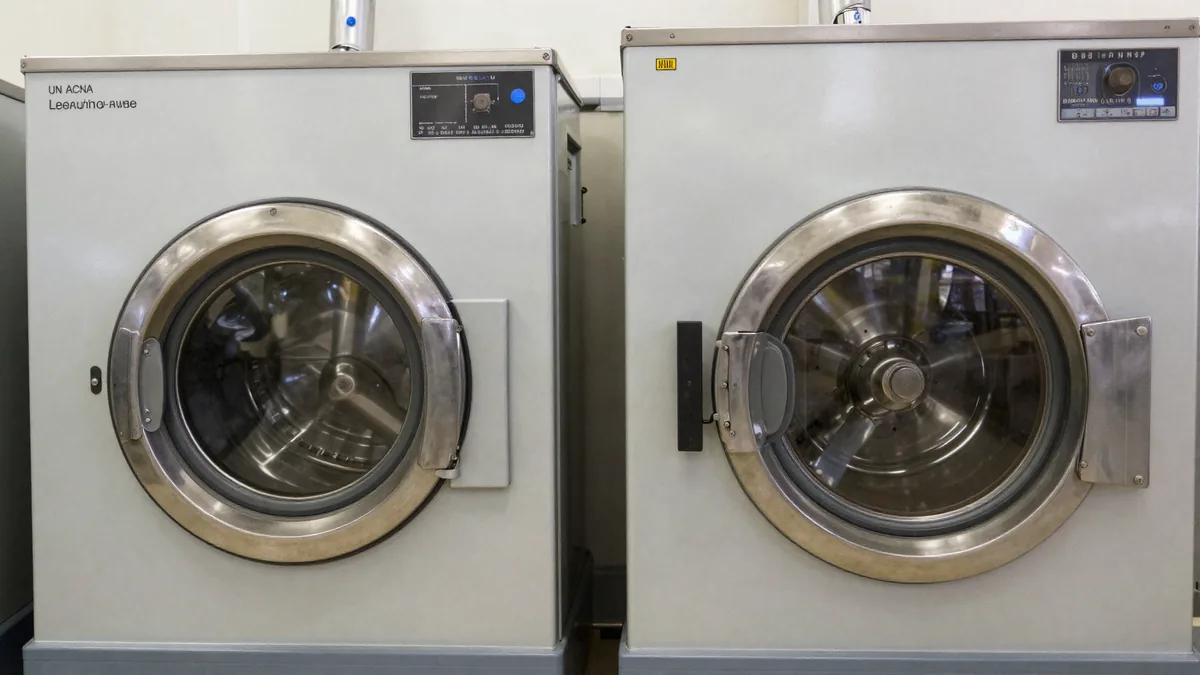
Last Tuesday I watched a 450-pound Milnor washer-extractor hit 165°F on the digital readout, and the steam fogged my safety glasses. The wash chemistries had been set that morning, the pH was holding at 11.8, and the chlorine residual was right at 50 ppm. But I've seen too many managers walk in, look at that number, and think they're done. They don't realize that if the load is packed too tight or the water level is off, 165°F is just warm water. The temperature requirement is a minimum, not a guarantee. You need the mechanical agitation to get the sanitizer to every fiber. I've had to pull a jammed load that came out at 140°F because someone overloaded the drum and the machine couldn't roll it. The digital readout said 165, but the linen in the core never saw it. Healthcare Linen Service
Last Tuesday I watched a 450-pound Milnor washer-extractor hit 165°F on the digital readout, and the steam fogged my safety glasses. That's the moment everyone imagines when they hear 'hospital laundry.' But here's what I've learned running linen for four hospitals: the temperature number is only half the story.
People ask me about 'hospital laundry temperature requirements' all the time. They want a simple number. I get it. There is a number, but it lives inside a system of chemistry, timing, and mechanical action. Change any one variable and that number means nothing.
I'll walk you through what we actually do, what the CDC guidance says, and where the certifications fit. And I'll tell you why throwing a uniform into a home washing machine is a bad idea, especially for FR gear.
The Numbers: 160°F, 25 Minutes, Give or Take
CDC guidance says hot water at 160°F for 25 minutes. That's our baseline at all four hospitals. Some plants run 180°F for 10 minutes and call it good. The math isn't simple, because it depends on the plant, the machines, and the water chemistry.
We validate every cycle with data loggers and chemical indicators. If a probe reads 158°F for a minute, that load gets redone. It's rare, but it happens. If you can't prove the temperature, you can't claim the disinfection.
Chemistry: Temperature Doesn't Do It Alone
Temperature won't kill everything by itself. You need detergent to lift soil, alkali to get the pH right, and a chlorine bleach step to oxidize pathogens. We run a six-step cycle: flush, main wash at 160°F, bleach at around 100 ppm available chlorine, two rinses, then a souring step to neutralize pH.
We use Ecolab's laundry products, but the chemistry is the formula, not the brand. If your water's hard, you add chelator. If your soil load's heavy, you add a pre-wash. There's no universal mix. It depends on the plant.
Certifications: Hygienically Clean, HLAC, and the Audit Life
That's where third-party certifications come in. We're TRSA Hygienically Clean certified and HLAC accredited. Both require documented wash cycles, water temps, and chemical feed. They also swab test finished linen for bacterial counts. Someone's checking, not just us.
Auditors poke through everything from temperature probes to the air flow on the clean side. It's a pain, but it's how we prove to the health department and our infection control staff that we're doing it right. The best protocols are worthless if you can't show them.
FR Gear and the Home Laundry Trap
Now a digression. People think washing their own scrubs or uniforms saves money. For standard scrubs, maybe. For flame-resistant clothing, no. FR clothing works because of chemistry built into the fabric or a coating. Home detergents, fabric softener, and dryer heat degrade that. Once an FR garment goes through a home washer, it's no longer certified to NFPA 2112 or NFPA 70E.
That's why we contract with a rental service for FR uniforms. It runs $4 to $15 per employee per week, depending on the job. The service washes, repairs, and tracks them. Industrial plants are audited to keep the FR rating, and they follow NFPA 1851 for turnout gear. Call it insurance against a burn injury. I don't argue with that expense.
OSHA's Rules on Handling Contaminated Linen
OSHA's bloodborne pathogen standard, 1910.1030, doesn't specify wash temperatures. It focuses on worker exposure. That means gloves when handling soiled linen, no sorting where people can get stuck, and bagging at the point of origin. We use water-soluble bags for OR linen. They dissolve in the wash, so no one touches the stuff twice.
The temperature and chemistry do the killing after the bag dissolves. OSHA is about worker safety, not microbial counts on linen. Keep that separate in your head. Hospital laundry has to satisfy both CDC guidance and OSHA rules, and they aren't the same thing.
Hospital Laundry Wash Cycle Options
| Cycle | Wash Temp | Hold Time | Sanitizer | Best For |
|---|---|---|---|---|
| CDC High-Temp | 160°F (71°C) | 25 min | Chlorine bleach | Routine patient linen |
| CDC High-Temp Alt | 180°F (82°C) | 10 min | Chlorine bleach | Time-critical loads |
| Low-Temp Chlorine | 120°F-140°F | 30 min | Chlorine bleach | Energy-sensitive operations |
| Low-Temp Peracetic | 120°F-140°F | 20-30 min | Peracetic acid | Heat-sensitive synthetics |
Frequently Asked Questions
What is the minimum wash temperature for hospital laundry?
The CDC baseline is hot water at 160°F (71°C) for 25 minutes. Some plants use 180°F for 10 minutes. But the number alone doesn't guarantee disinfection; it has to work with the right chemistry and cycle time.
Can lower wash temperatures be used with chemical disinfectants?
Yes, some plants use a low-temp formula depending on the plant. That requires an EPA-registered disinfectant approved for laundry, and you have to demonstrate to your certifying body that it meets hygienically clean standards. We don't run that system, but it's used.
How do you verify that hospital laundry reached the required temperature?
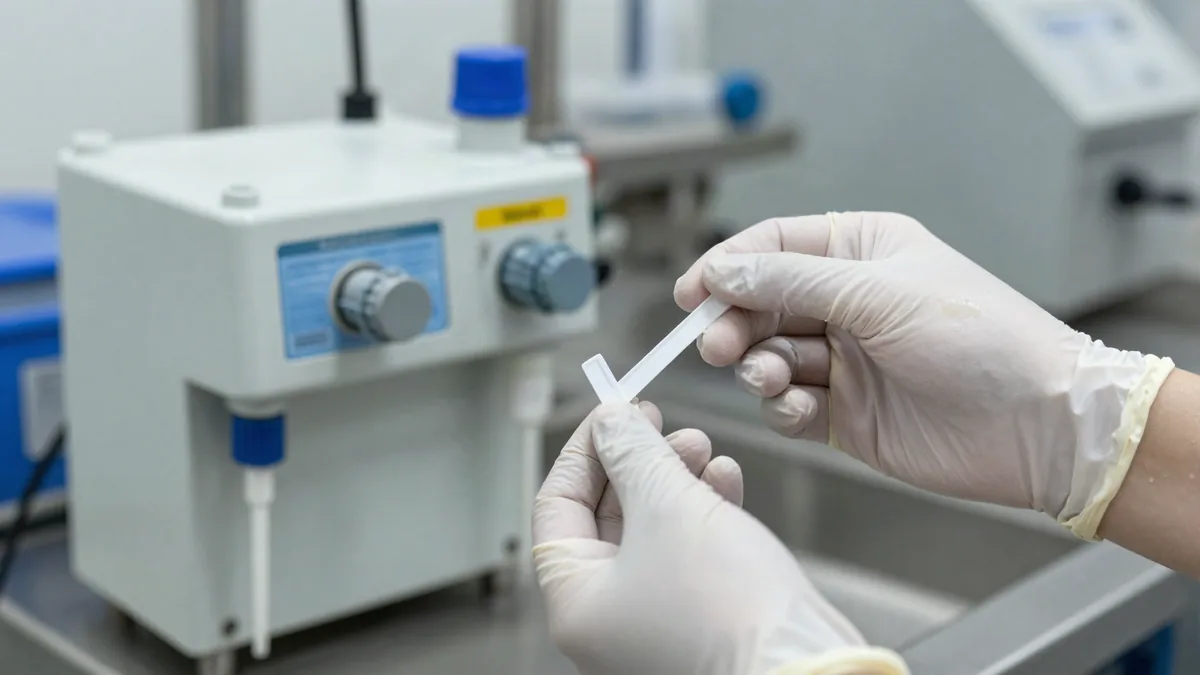
We use temperature data loggers attached to the drain line on every cycle, plus chemical indicator strips that change color at the target temperature. The washer's digital readout isn't enough; it's measuring water at the inlet, not in the drum.
Can home washing machines meet hospital laundry standards?
No. Home washers don't have the thermal or chemical controls, and they can't hit the sustained temperatures and dilution ratios needed. For FR clothing, home laundering invalidates the NFPA certification. Use an accredited industrial service.