How to Calculate Linen Par Levels, With Worked Examples
Bottom line: Par level equals your peak day's linen demand times the number of days in your laundry cycle, plus one extra day of cushion; a 200-room hotel typically needs 800 to 1,000 bath towels.
I once watched a chief engineer set par by counting the number of folding tables in the laundry room. He came up with 1.2 par, and I couldn't argue with the math because he hadn't done any. The real formula starts with your peak day, not your average day. If you run 80 percent occupancy on a Tuesday and 100 percent on a Saturday, your par has to cover Saturday. I've seen a 300-room resort try to run on 2 par during a holiday weekend, and by Sunday the housekeepers were stripping bed linens from unoccupied rooms just to make the rack. That's the kind of mistake that costs you a franchise inspection and a big-box store run at 5 p.m. Par is a buffer, not a guess. Hotel Laundry Service | Restaurant Linen Service
Last summer, on a sold-out Saturday, we hit the wall. The laundry cart came back from the plant at 4 p.m., and the housekeepers were already working the third floor. By the time the towels made it upstairs, the pool was standing room only, and we'd run out of bath towels. I sent a houseman to a big-box store to buy 200 beach towels. That's what happens when your par level's off.
I've been running rooms for 22 years, so I'll tell you straight: par level isn't a formula you memorize and forget. It's a living number. You adjust it when your occupancy shifts, when the plant slows down, when the sales team books a 2,000-person convention. But you have to start with a calculation that makes sense. Here's how I do it.
Start With Daily Usage
Before you can talk about par, you need to know what a normal day looks like. For a 430-room convention resort, you don't base it on 430 rooms. You base it on average occupancy. Call it 65% if you're running a good year, 60% if you're just getting by. At 65%, that's 280 occupied rooms.
For each occupied room, I count two bath towels, two hand towels, and two washcloths, plus a bath mat. That's the standard set. A lot of properties set out fewer, but we don't. We also have pool towels, which live at the pool deck. So my daily bath towel need is 560. Hand towels, another 560. Washcloths, 560. Then add pool towels: I figure four per occupied room in summer, so 1,120 per day. It's a different number in shoulder season.
That daily number is the basis of everything. If you write it down, you know what you're going to use on any given Tuesday.

The Par Factor: How Many Days of Cushion
Par is daily usage times the number of days you want to cover. That's it. But the number of days depends on your laundry cycle. If you have an in-house plant, your cycle might be 24 hours. But you don't want to run the plant seven days a week, and you don't want to cut it that close. I like a 5-day par for towels and a 7-day par for sheets. Why sheets? Because sheets turn slower, and you need a buffer for stains that don't come out.
On the other hand, if you outsource to a commercial plant, your par factor is set by their turnaround time. If they pick up Monday and deliver Thursday, you need at least a 5-day par. If they tell you 3-day turnaround, you can run a 4-day par. But I always add one day of safety stock, because deliveries are late. It's not if; it's when.

The Worked Example: 430 Rooms, 65% Occupancy
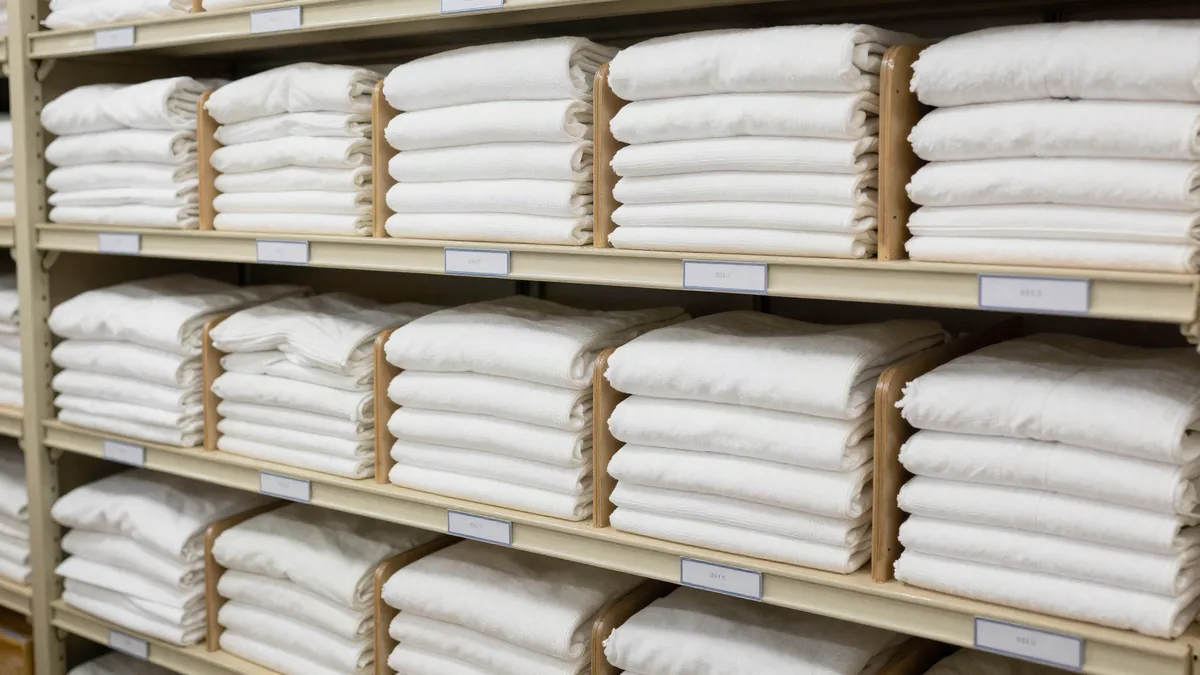
Let's run the numbers for our place. Average occupancy 280 rooms. For bath towels, daily need is 560. With a 5-day par, that's 2,800 bath towels in circulation. Hand towels: same math, 2,800. Washcloths: another 2,800. That's not counting what's in the linen closet on any given day.
Here's where the cushion comes in. On a Saturday, we might run at 98% occupancy, which is 421 rooms. Daily bath towel need jumps to 842. Still within the par, because we have 2,800. But if I didn't adjust for weekends, I'd be short. So I don't set par at 5. I set it at 6 for towels, which gives me 3,360. It's a buffer against the October convention that throws 400 people into the pool.
For sheets, let's say each bed needs one fitted sheet, one flat sheet, and two pillowcases. A standard room has two beds, so that's two fitted sheets, two flat sheets, and four pillowcases per room. With 280 rooms, you need 560 of each sheet type per day. At a 7-day par, that's 3,920 fitted sheets, 3,920 flat sheets, and 7,840 pillowcases. In practice, I run a little higher because some sheets get stained and don't come back.
The math is straightforward. The hard part is knowing your real occupancy and your real turnaround time.
Adjusting Your Par: The Living Number
Par is not set and forgotten. I review it monthly. I look at the previous 30 days of occupancy and the actual usage from the laundry. Our laundry system gives me a count of what goes out and what comes back. If the variance is trending negative—meaning we're losing more than we buy—I bump the par. If we've got money tied up on shelves, I lower it.
Also, the sales team will tell you about a big group. So I add a temporary boost. For a Super Bowl weekend or a large convention, I'll add 20% to the towel par starting two weeks before. That means I order ahead from our distributor. The cost of carrying a few extra dozen towels is nothing compared to the cost of a guest waiting for a towel.
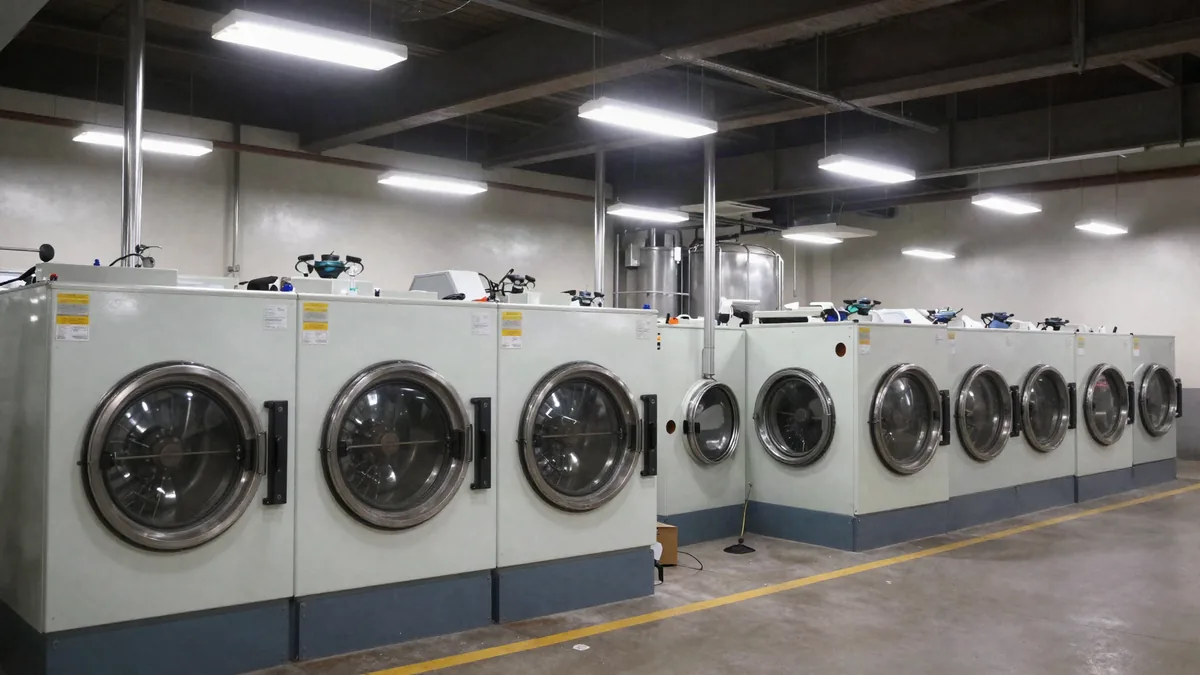
Let me digress a minute: a lot of housekeepers think par is just inventory. It's not. It's your entire flow. Our Milnor washer runs a 45-minute cycle, so the plant can turn a load in about an hour. If you don't have enough carts, or the dryer's down, your par doesn't mean a thing. So you need to know your own operation first. The formula is the same everywhere, but the numbers are yours.
Par Level Calculation Methods Compared
| Method | Best For | Downside | Example |
|---|---|---|---|
| Fixed par | Small properties with stable occupancy | Doesn't flex for demand spikes | 250-room hotel keeps 750 bath towels year-round |
| Seasonal par | Resorts and convention hotels | Requires two inventory counts a year | Winter par 2, summer par 3 |
| Cycle-time par | On-premise laundry operations | Needs accurate daily usage data | 200 rooms x 2 towels x 2.5 days = 1,000 towels |
| Safety-stock par | Hospitals and healthcare | Ties up capital in extra linen | 1,000 lbs daily demand, 1,200 lbs par with buffer |
Frequently Asked Questions
What is a linen par level?
It's the number of a particular item you need on hand to cover daily usage for a set number of days, including your laundry turnaround time and a safety buffer.
How many towels should a hotel have per room?
That depends on your property type and average occupancy. A common starting point is two bath towels, two hand towels, and two washcloths per occupied room, but in a convention resort we often add pool towels. For par, you multiply your daily need by your par factor (usually 4-7 days).
What's the difference between par for sheets and par for towels?
Towels turn faster and are used more heavily. Sheets stay on beds longer, but they take longer to launder and have more stain loss. So I often keep a 6-7 day par for sheets and 4-5 for towels, but it depends on whether you have an in-house plant or a commercial laundry.
How do I know if my par level is too low?
You'll see it in the daily linen variance. If housekeepers are wiping their feet on the rug to avoid running out, or if you're making emergency purchases, your par is too low. If you have more inventory than you use in 10 days, it's probably too high.