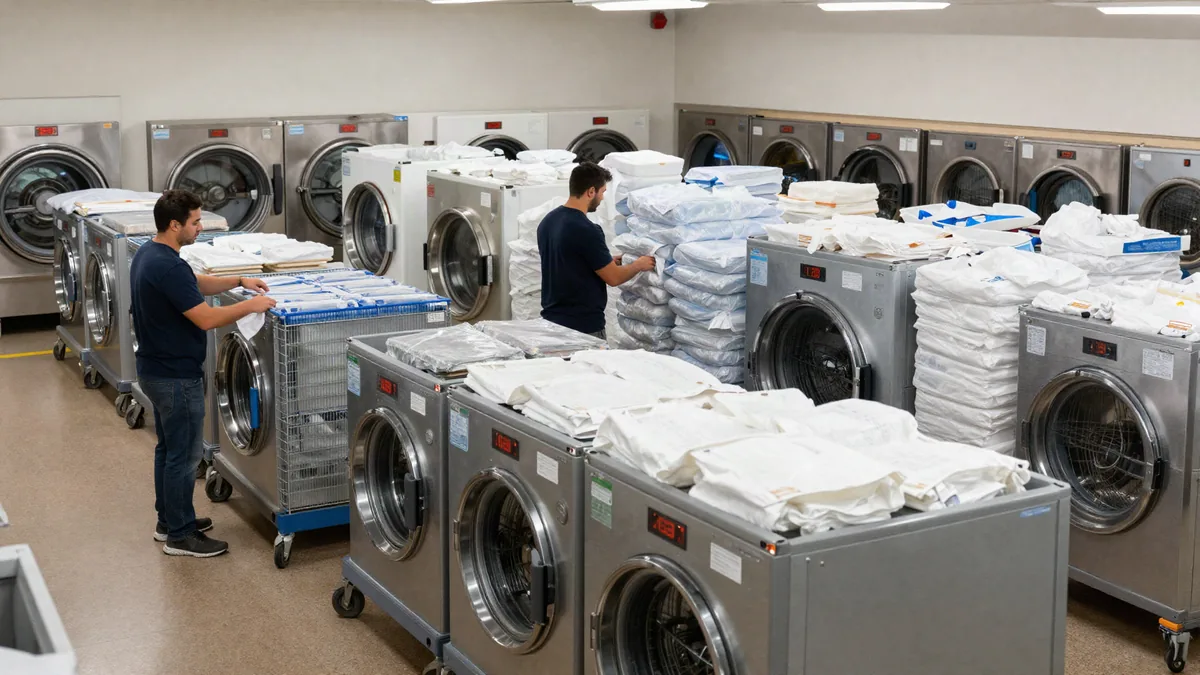
Holiday Banquet and Catering Linen: Booking Q4 Capacity in September
Bottom line: Reserve your holiday event linen rental capacity by September 1: commit to volume and delivery dates early, or risk late deliveries and low-quality finishing.
Last December a driver handed me eighty tablecloths ironed with a brick. We had 240 covers that night. I'd ordered in November, thinking that was enough. It wasn't. The plant had over-committed every customer who didn't sign a Q4 capacity agreement by September, and my linen got the leftover wash cycle. That's when I learned holiday event linen rental is a capacity game, not a service game. Fabric matters, but the real question is whether the laundry can handle your volume on your dates. I've watched banquet managers order extra napkins in October, then beg for delivery on December 20. Plants don't have extra drivers or presses. If you want clean, pressed linen on your busiest nights, you have to stake your claim before Thanksgiving. Restaurant Linen Service | Hotel Laundry Service
Last December I stood on the loading dock behind our event space and watched a driver hand me eighty tablecloths that looked like they'd been ironed with a brick. We had 240 covers that night. I'd placed that order in November, which felt like plenty. It wasn't.
The plant had over-committed every customer who hadn't signed a Q4 capacity agreement by September, and my rental linen got the leftover wash cycle. That's the moment I learned that holiday event linen rental is a capacity game, not a service game. The fabric matters, yes. But the real question is whether the laundry can handle your peak nights without flinching—or without swapping your 90-inch rounds for 70s and hoping you don't notice.
Book the capacity, not just the linens
When you call a linen company in October and ask for 120 extra banquet cloths for the third Saturday in December, you're competing with every hotel, caterer, and country club in town. The plant's wash schedule has hard physical limits. They can't manufacture more hours. So they allocate capacity months ahead. If you don't book by mid-September, you're not really a Q4 customer. You're a walk-in.
You want a written agreement that says how many pieces per week they'll commit to, and at what price. I ask for a 'capacity commitment' specifically for Thanksgiving week, Christmas week, and New Year's Eve. Some companies call it a 'peak season rider.' It costs a little more, and it's worth it. That rider should spell out the maximum number of pieces by type—banquet rounds, napkins, skirting, sashes—and a guaranteed delivery window. Without that, you're at the mercy of the plant's daily rotation.

What I ask before I sign a Q4 rider
I've killed a lot of linen contracts. Usually because the contract was written for steady state, not for spikes. Here's what I look for now. Overage terms. If you exceed your weekly poundage or piece count, some contracts 'tier' you up to the next volume bracket and back-bill the whole week. That can double your invoice. Ask for a 10% overage allowance before any rate step-up—real operators often give that. If they won't, ask how they handle holiday overages, and get it in writing.
Delivery windows. A commercial laundry runs routes on fixed schedules. The standard is a morning delivery and a morning pickup, but for holiday events you need afternoon drops and on-call pickups. That's a real operational change for them, so they price it per stop. I've paid a premium for a same-day emergency run—enough to make you think twice. The alternative is a big labor bill for my own driver. You do the math. And I check that the plant runs third-party verified processes—TRSA Hygienically Clean, for example. That's not a guarantee of a perfect press, but it's a floor for how they handle the goods.
Some plants charge a 'holiday surcharge' for the week between Thanksgiving and New Year's—call it 10 to 15 percent, though it varies. I don't love it, but I understand it. Their labor costs spike, and they often run three shifts. I ask for the surcharge to be capped, and I ask what it buys me: usually priority washing and a guaranteed delivery window.

Pricing by the piece, not by the pound
Table linen is priced by the piece or by the pound. By the pound is common for large banquet loads—you're paying for the weight of dirty linen, which means heavier goods cost more. That's fine if you're comparing apples to apples, but I've seen contracts that quote 'per 100 pounds' without defining how much starch or finish is added. Starch adds weight, so your cost creeps up.
By-the-piece pricing is cleaner. You pay a fixed rate for each banquet cloth, napkin, or skirting segment. The plant has a per-piece rate for poly, one for cotton, one for spandex-edged sateen if they carry it. They usually quote a blended rate if you give them your average piece count. I do that. I say, 'We'll commit to 350 rounds and 800 napkins in a typical holiday week,' and they give me a blended number. The rate depends on the plant's capacity, not just the fiber. I don't haggle on the base rate. I haggle on the schedule, the surcharge, and the overage allowance.
Fiber choices matter, but not the way you think
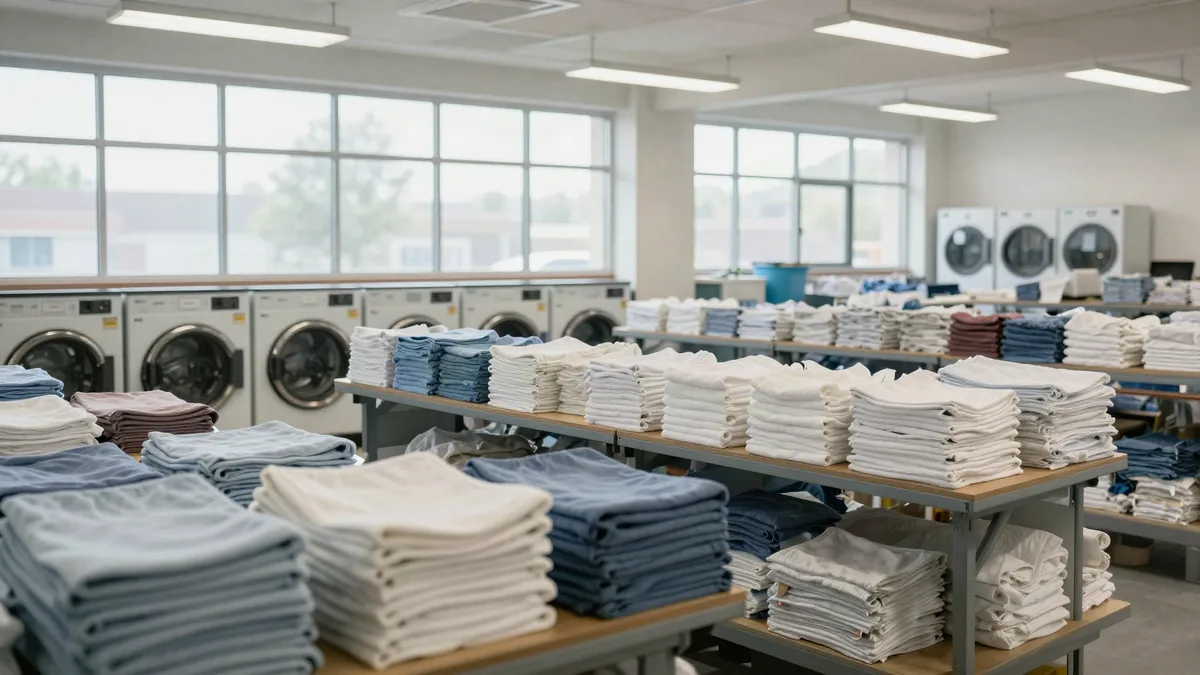
Since you'll be staring at these linens on a 4-midnight shift, let's talk about fabric. Polyester is the workhorse. It takes dye well, resists stains, and doesn't need the same level of pressing as cotton. But a 100% poly banquet cloth has that flat, slightly synthetic sheen that some catering directors hate. I don't mind it. It photographs okay and you can bleach it.
Cotton or a poly-cotton blend looks richer. It folds into a drape that catches candlelight. But it's heavier, it stains more easily, and it needs a higher press temperature. A lot of premium venues use a 'spandex' or 'stretch' tablecover that fits over the table base. They look sharp, but they're a specialty item that the plant has to inventory. That means limited quantities.
Ask your linen provider what they stock most of. If they run a 70/30 poly-cotton blend, you'll get consistent quality because that's what their press is tuned for. Don't ask for a 100% combed cotton damask unless you're prepared to pay for the extra care and the risk of replacement. For holiday events, I've learned to stick with the house standard and use color and napkin folds to make it festive. And buy a few accent items—like a colored napkin or a silk-look sash—that you own outright. That way the rental contract is strictly for the workhorse items.
Your backup plan needs a backup
So you've booked capacity, agreed to the surcharge, and set your piece count. What happens when the union calls a strike at the plant? Or the boiler breaks and they shut down for two days? I've seen both. You need a secondary source.
I keep a relationship with a regional linen supplier—not a national behemoth, but a family-run plant two towns over. They know they're my emergency line, and I've never had to use them for a full event. But they've bailed me out for a last-minute shortage of napkins five times in four years. The cost is a bit higher, but the backup is priceless.
Also, buy a small stock of your own linens. For our catering events, we own forty 90-inch poly rounds and a hundred napkins in a fitted duffel that lives in the server station. That's not enough for a full banquet, but it's enough to cover a 10% overage screw-up. And if the rental linen is late, that little stash has turned a disaster into a 'sorry, chef, we're setting up earlier' moment.
What Your Holiday Linen Booking Commitment Buys
| Commitment type | Latest commit date | Lead time required | Finish and delivery guarantee | Cost premium |
|---|---|---|---|---|
| Signed capacity agreement | September 1 | 60 days | Priority press, fixed dates | None |
| Advance order | October 1 | 30 days | Standard press, 1-2 day window | 10% |
| Rush order | December 1 | 7 days | Leftover cycle, no guarantee | 20% |
Frequently Asked Questions
How far ahead should I book holiday event linen rentals?
By mid-September, if not earlier. That's when commercial laundries set their Q4 capacity. If you wait until October, you'll be squeezing into whatever's left after the hotels and country clubs commit.
What's the difference between per-pound and per-piece pricing for banquet linens?
Per-pound means you pay for the weight of the soiled linen, so starch and moisture add to your bill. Per-piece gives you a flat rate for each cloth or napkin. I prefer per-piece because it's easier to budget for a peak week.
Are there holiday surcharges for linen rental?
Yes. Many plants add a surcharge for late November through New Year's—call it 10 to 15 percent, though it varies. That covers extra shifts and priority scheduling. You can sometimes cap it if you sign a Q4 rider early.
Should I buy my own linens for holiday catering instead of renting?
If your volume is steady and you have storage, buying can pay off. For a variable holiday schedule, renting is more flexible. I own a stash of about 10% of a full banquet as a hedge, but I rent the rest.