Commercial Laundry Terms Glossary: 60 Words in Your Contract, Decoded
Bottom line: The glossary decodes the 60 terms that decide price and service, from CPL to par, so you can spot inflated weights and hidden capacity clauses before you sign.
I have sat across from too many buyers who think 'par level' is a golf score. I once watched a regional manager sign a five-year linen contract because the per-pound price was a nickel cheaper than the competitor. He never noticed the line about 'confidential capacity reserve', which let the plant ship his clean goods to an overflow facility 40 miles away. Deliveries ran late for a month before anyone read the glossary. So here is the plain-English version I share with every client: it will not make you a lawyer, but it will keep you from paying for a term you were too embarrassed to ask about. Restaurant Linen Service | Industrial Laundry Service
I once sat across from a sales rep who swore his plant could hit "99.9% availability on a 3:1 par" for a 400-room property. I didn't bother asking how he calculated that. I just pointed to the line about "CPL pricing with a confidential capacity reserve" and asked him to explain that in dollars. He couldn't.
That's the problem with commercial laundry contracts. They're written by lawyers and plant managers, and you're a hotel GM or a senior-living director trying to keep your beds clean. You don't need a law degree. You need a translator. So here's my commercial laundry terms glossary—the 60 terms that actually show up in your linen and uniform agreements, decoded the way I'd explain them to a new analyst on my team.
A few ground rules before we start. I'm Priya, a procurement analyst who's run linen and uniform RFPs for hotels and senior-living portfolios. I've seen contracts from Cintas, Alsco, UniFirst, and a dozen local co-ops. I'm not here to bash any of them. I'm here to make sure you know when you're getting a fair deal and when you're getting a "we'll add a fuel surcharge at our sole discretion" clause. We'll cover pricing, specs, compliance, and the fine print. And yes, one of the terms is "force majeure"—because COVID changed how everyone reads that one.
Pricing Terms: CPL, CPP, and CPW
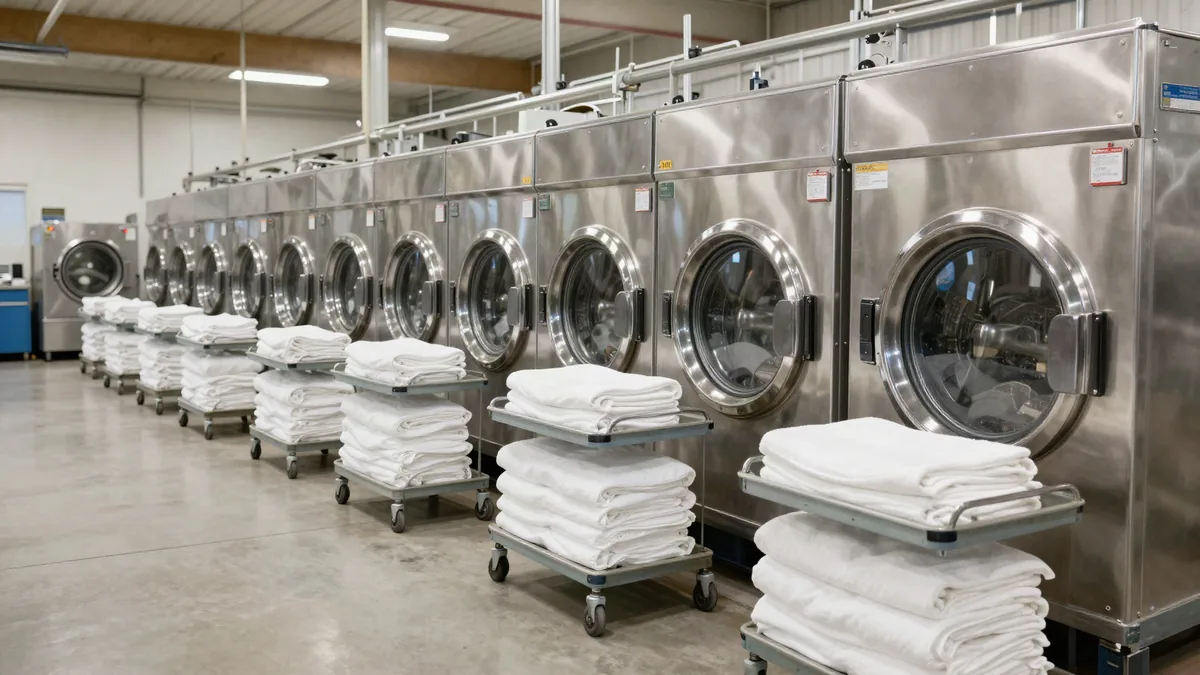
Let's start with the money. The three initials you'll see everywhere are CPL, CPP, and CPW. CPL is cost per pound—your bill is calculated by the weight of processed linen. CPP is cost per piece, which is simpler for uniforms but risky for towels because a "piece" can shrink, go missing, or turn into a rag. CPW is cost per week, a flat fee usually tied to a par level and service frequency. I've negotiated all three. The price itself depends on soil levels, water costs, and your mix of items. The key is the "chargeable pound." Some plants weigh everything before soil sort, so you pay for dirt and water too. Others use a "clean weight" basis, which is fairer but less common. Before anything is washed, there's a soil sort where workers separate heavily soiled items from lightly used ones. The scales weigh the load to compute CPL—that's the "weighing" step. And watch the "soil count"—how dirty your stuff is when it hits the plant. Heavily soiled linen pushes your rate up.
Now, par level. That's how many sets of linen you have per room or bed. A 3:1 par means you have three sets: one on the bed, one in the laundry cart, one being processed. But the contract will also throw around "availability rate"—the percentage of your par that's actually clean and ready for use at any given time. That number can look great on paper and still mean you're short on Saturdays. And watch for "minimum pound" and "stop charge." If your hotel slows down in winter, you might still have to pay for a minimum weight even if you don't send it. That's not malicious. It's how a plant keeps its boilers running. Also ask about "linen rental" vs. Leasing—sometimes they're the same, sometimes you're paying a finance charge. And check for an "escalation clause" that adjusts pricing based on utilities or CPI. Finally, don't ignore "invoicing" details. Laundry invoices are usually generated by weight, piece, or weekly fee, and rounding conventions vary.
Fabric and FR Terms: Picks, Threads, and NFPA
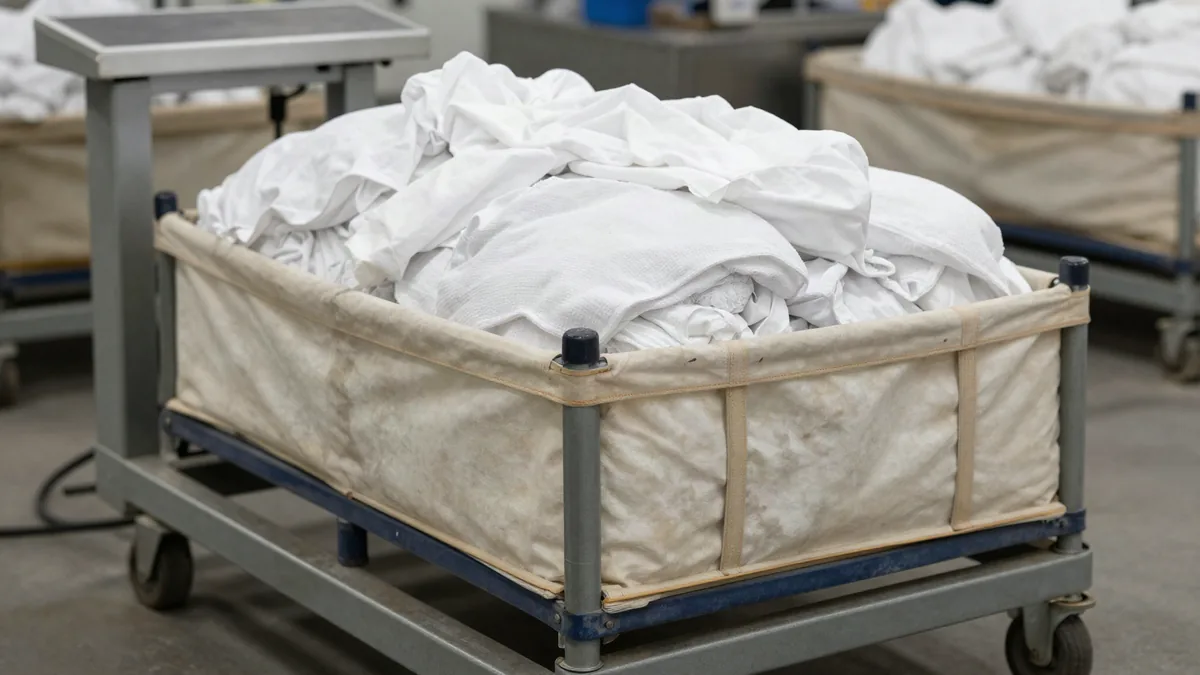
Now the fabric talk. When you see "pick count" and "thread count," stop conflating them. Pick count is the number of threads crossing per inch in the warp direction. Thread count is the total threads per square inch in both directions. A 300-thread-count sheet isn't necessarily better than a 180 pick count percale if the fiber quality is different. And "fabric weight" is measured in ounces per square yard. Heavier terry (like 14 oz) feels lush but takes longer to dry, and that cuts into your CPL.
Here's where I get preachy. Flame-resistant (FR) garments are not a joke. NFPA 2112 is the standard for FR clothing for industrial workers. NFPA 70E covers arc-rated clothing for electrical workers. And NFPA 1851 is the standard for structural firefighting gear. You'll also see "AR" (arc-rated)—that's not the same as FR. A lot of clothes are FR but not arc-rated. Know which you need. If your contract says you'll "launder FR at your facility," walk away. Home laundering will not maintain an FR garment's certification. Full stop. It'll still be a shirt, but it may not protect anyone. Industrial laundries use specific wash chemistry and extraction cycles that follow the manufacturer's label and keep the FR rating intact. That's the central argument for industrial laundering of FR wear.
Compliance Terms: HLAC, Hygienically Clean, and OSHA
For healthcare and senior-living, compliance is the whole ballgame. Two certifications matter: TRSA Hygienically Clean and HLAC accreditation. TRSA is the Textile Rental Services Association; their Hygienically Clean program certifies that a plant's processes meet hygiene standards. HLAC is the Healthcare Laundry Accreditation Council. They both audit things like water temperature, wash chemistry, and the facility's air flow. You'll also see OSHA 1910.1030 referenced—that's the bloodborne pathogens standard. It requires a laundry to have procedures for handling contaminated linen. Plants that are HLAC-certified are ready for that. And ISO 14644? That's for cleanrooms, not typical hotel linen, but if you're doing healthcare, some contracts throw it in to sound impressive. Don't get spooked by it.
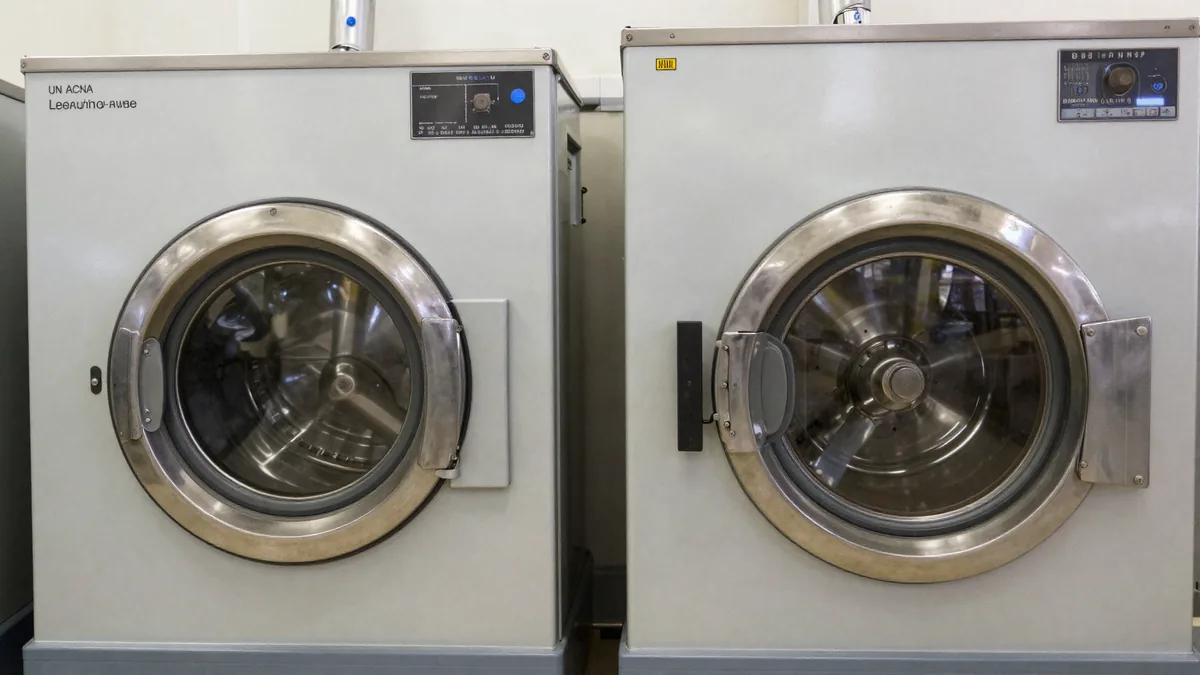
Here's a digression I always make with younger buyers: when a plant says "we follow CDC guidelines for water temperature," that doesn't mean what you think. There's no single CDC temperature for laundry. It's about wash chemistry, dwell time, and the correct use of disinfectants. I've seen plants run cold water with the right chemical and get better results than hot water without it. So don't fixate on a number. Ask for their wash formula records. A reputable plant will show you. And on a plant tour, you'll see tunnel washers. Each load goes through phases—pre-wash, main wash, bleach, rinse, and extract (that's where water is spun out). Then it goes to drying or finishing. Finishing includes ironers, folders, and tumblers. Lint is a fire hazard, so a good plant keeps it under control. Also, if you're in healthcare, know the terms "PPE" and "universal precautions." They're not laundry terms per se, but they appear in contracts about contaminated linen handling. And "barrier fabric" is a specialized material used for surgical gowns and drapes—don't let a hotel contract sneak it in as an upsell. "Healthcare laundry" itself implies a stricter level of sorting and disinfection. The goal is infection prevention, but that's an outcome, not a clause.
Contract Terms: Rework, Loss, and Force Majeure
Finally, the stuff that makes your legal team twitch. "Guarantee" in a laundry contract isn't a warranty on your sheets. It's usually a promise of uptime or fill rate. For example: "Vendor guarantees 95% availability for all rental items." That's a service contract, not a product warranty. "Rework" is the industry term for items that come back stained or torn and need to be washed again. A good plant will have a low rework rate—but you'll need to define what counts as rework in the contract. "Seconds" are flawed items, like a torn sheet or a missing button on a shirt. You should get a credit for those.
Loss and damage is where you'll get nickel-and-dimed. The contract will say something like "reasonable wear and tear expected; however, customer responsible for excess loss." Don't sign that until you agree on a "loss allowance" percentage. For rental linen, benchmarks are usually single-digit percentages per month, but they depend on the item and the facility. Uniform rental commonly runs $4-15 per employee per week, and that often includes maintenance and replacement—so read whether there's a separate "replacement fee." And "force majeure"? That's the clause that says neither party is liable if a hurricane or pandemic shuts down the plant. After 2020, everyone reads that clause first. Also check the "liability" section—who's on the hook if a loaded cart tips over and hurts someone? And "turnaround time" is the time from pickup to delivery back. For hotels, 24-48 hours is typical; for healthcare, sometimes 12. Make it explicit.
Logistics Terms: Route, Pickup, and Turnaround
Now the stuff that shows up on your loading dock. "Route" is the scheduled path your laundry truck follows. "Driver" is the person who picks up and delivers. "Delivery window" is the time slot they promise. If you miss the window, you wait. And there's often a "pickup" fee if you need an unscheduled stop. These terms matter more than you think. I once had a property lose a full day of housekeeping because the driver wouldn't unload the clean linen cart without a signature from someone who was at lunch. We fixed it by adding a simple "after-hours drop-off" clause.
Another one: "linen cart" and "hamper" are not the same. A cart is for clean linen, a hamper is for soiled. The contract may charge a rental fee for each. And if you're swimming in "linen rental" costs, check whether you're paying for inventory you don't need. Also, "lease vs ownership"—some places offer lease options for carts and bins, which sounds good but you might be paying hundreds per month for the privilege. And always know your route sequence. If your property is last on the route, your delivery window can shift an hour later depending on traffic. That's the reality of commercial laundry logistics.
Laundry Pricing Terms: What Each One Costs You
| Term | What It Really Means | Typical Range | The Catch |
|---|---|---|---|
| CPL (cost per pound) | Price based on weight of soiled linen | $0.60 to $1.20 per lb | If the plant overstates weight, your bill rises |
| CPP (cost per piece) | Flat rate for each item processed | $0.30 to $0.80 per piece | Disputes over missing or torn items are common |
| Flat monthly fee | Set fee for a committed par level and service | $8k to $15k for 200 rooms | Going over par triggers extra fees per pound |
| Par level (3:1, 4:1) | Days of linen inventory the plant commits to supply | 3:1 hotel, 4:1 healthcare | Low par means stockouts; high par means wasted capital |
Frequently Asked Questions
What does CPL stand for in commercial laundry?
Cost per pound. It's how many plants bill you—weight of the processed linen. The actual rate depends on soil, utilities, and the mix of items.
Can I launder FR garments myself to save money?
No. Home laundering doesn't maintain the FR rating. Industrial laundries follow the manufacturer's instructions and use specific chemistry and extraction to keep the certification valid.
What's the difference between HLAC and Hygienically Clean?
Both are third-party certifications for laundering processes. HLAC focuses on healthcare laundries; Hygienically Clean is from TRSA. Both audit wash chemistry, water temps, and facility hygiene.
What is a par level?
The number of sets of linen you need per bed or room. A 3:1 par means three sets per bed—one in use, one in transit, one being processed. It's the foundation of your inventory plan.