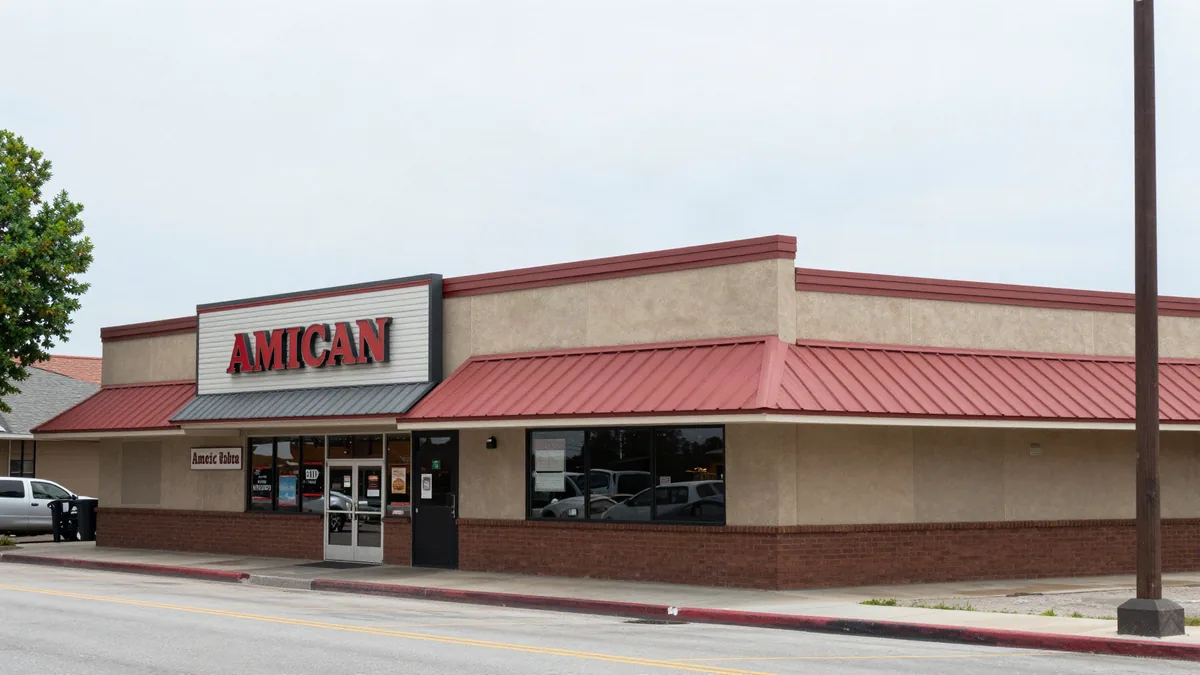
Commercial Laundry in the Mountain West: Boise, Spokane, Salt Lake, Billings
Bottom line: Mountain West commercial laundry runs lean: most plants handle 8 to 15 million pounds a year for hospitals, hotels, and uniforms, and you own your maintenance because service techs are hours away.
That coupling cost us 400 clean sheets and a hotel chain's goodwill. In the Mountain West, that's the difference between being a supplier and being a savior. I've watched operators in Boise and Spokane try to run 10-million-pound plants with one part-time mechanic and a prayer. It doesn't work. You need to stock drive shafts, bearings, and control boards because the nearest distributor is often a day's drive. And you need to train your people to rebuild a washwheel motor at 2 a.m. if you want to keep your hotel contracts. That's the real frontier: not the geography, but the self-reliance. Hotel Laundry Service
I remember a January morning in 2014, standing behind the tunnel washer at a Salt Lake City plant with a maintenance guy named Rick. The drive shaft coupling had sheared at 4 a.m., and we were down for six hours. That's the Mountain West for you – the distances are real, and when a machine's down, you can't just call a tech from the next town over.
I ran a 42-million-pound-a-year plant for 19 years. In this part of the country, that size plant is rare. You're more likely to find an 8- to 15-million-pound operation in Boise or Spokane, doing healthcare, hotels, and uniforms all under one roof. Call it the frontier of commercial laundry – the distances between cities make each plant its own island.
This is a local business, no matter what the national chains tell you. When you're a hospital in Billings or a hotel in Spokane, you need a plant that can turn a load around overnight. And that's what I want to talk about: what commercial laundry actually looks like in the Mountain West, and how to think about it if you're buying these services.
The Geography Decides Everything
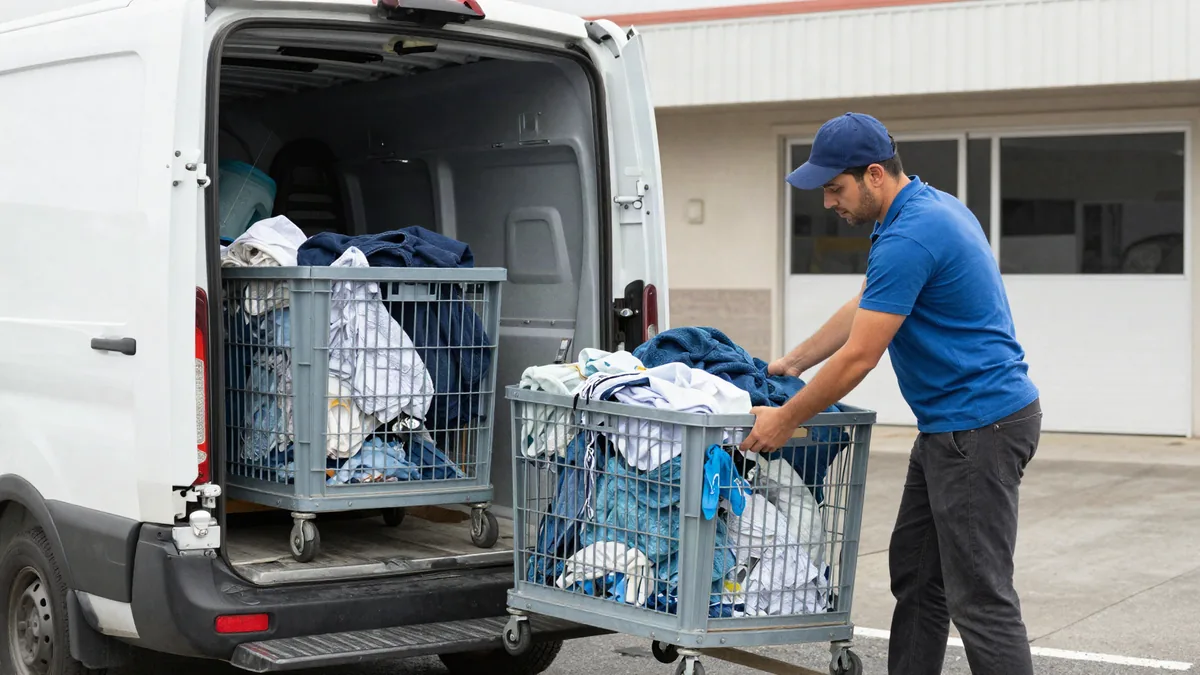
Boise to Salt Lake is about 340 miles. Spokane to Billings is five hundred and some, mostly two-lane. That doesn't sound insane until you're the driver on a route that runs 400 miles a day in a box truck with a liftgate, dropping 350-pound carts at a hospital loading dock before the OR starts. And the passes – Lookout Pass, Monida, Teton – they close in winter, and you learn to live with it.
Each plant I know in this region runs its own routes. A plant in Boise might serve Twin Falls, and even Elko if the route pencils out. But you don't see much cross-state work, because the cost per pound of transportation eats you alive. Give or take, freight adds five to ten cents a pound for every hundred miles, and at a typical commercial rate of a dollar a pound for healthcare, that matters.
Depends on the plant, of course. Some guys run a single truck and stay within a 75-mile radius. Others, like the big linen companies, will push a route from Salt Lake into Wyoming. But those are the exceptions.
A Mix of Work You Don't See Elsewhere
The Mountain West isn't one industry. In Spokane you've got healthcare and a lot of hotels near the convention center. Salt Lake has healthcare plus food service and a ton of industrial uniforms. Boise is tech-adjacent but still has F&B and manufacturing. Billings is energy and agriculture, which means a lot of FR coveralls and shop rags.
Those FR uniforms are a perfect example of why industrial laundry exists. You might think you can take a pair of NFPA 2112 coveralls home and run them through your own washer. You can't. Home laundering doesn't maintain the flame-resistant properties – the whole argument for a certified industrial launderer is that we follow NFPA 2112 or 1851 processes, track the garments, and document it. A plant that's TRSA Hygienically Clean or HLAC accredited has a protocol that a home washer can't match.
Healthcare is another one. You've got hospitals that need surgical linens processed to a standard, not just washed. That's where HLAC accreditation matters. And you've got OSHA 1910.1030 for bloodborne pathogens – that's a process requirement, not a suggestion. I've seen more than one inspector walk a floor and know exactly what to look for.
Standards, Not Guesswork
I used to tell my customers: don't ask me if the sheets are clean. Ask me what standard I'm running to. The certifications are real. TRSA Hygienically Clean is the one most people know in this industry – it covers healthcare and hospitality, and it's a rigorous audit. HLAC is specifically for healthcare linen. There's overlap, but they're not the same, and a hospital should know which one their launderer holds.
NFPA 2112 is for FR fabrics, NFPA 70E is for electrical safety in the workplace, NFPA 1851 is for structural firefighting gear. These aren't about making the laundry look good – they're about protecting the person wearing the stuff. And the only way to maintain that protection is through a documented industrial process. That's not a sales pitch, that's the science of it.
OSHA 1910.1030 covers bloodborne pathogens. In practice, that means handling contaminated linen a certain way, using the right chemicals and temperatures, and having the paperwork to prove it. I've been through these audits more times than I can count. They're not fun, but they're necessary, and a good plant runs to those standards whether an auditor is on site or not.
One digression: I once had a hospital admin ask if we could just add bleach to hot water for surgical packs. That's not how it works. You need a validated process with the right chemistry, temperature, and contact time. A washer-extractor doesn't make you an industrial launderer anymore than a stove makes you a chef.
Pricing and Contracts
The pricing model is simple to explain, if not to love. Healthcare linen is usually priced per pound – call it 75 cents to $1.50, depending on the item and the volume. Hospitality is per piece: a sheet set, a towel, whatever. Uniform rental is per employee per week, and that's where you see the $4 to $15 range. It's a wide band because the uniform type matters – a golf polo is cheap, an FR coverall with a weekly pickup is not.
What trips people up is the contract structure. Laundries carry costs for inventory – they have to own enough sheets and towels to cover your volume. So they'll write contracts with minimums and term commitments. And that's fair. The industry is capital-intensive. But I've seen national companies bury a per-pound surcharge in the details that you don't want to sign. Local plants tend to be more straightforward because they have to live with you after the contract's signed.
My advice is to ask for a pricing model that separates the actual laundry cost from the rental and the delivery. Then you know what you're paying for. A good local plant will show you that breakdown. A national chain might, too, but the local one can't hide.
Mountain West Laundry Hub Comparison
| City | Typical Plant Size | Main Clientele | Parts Access |
|---|---|---|---|
| Boise, ID | 8-15 million lbs/yr | Hospitals, hotels, uniforms | 1 day from Salt Lake City |
| Spokane, WA | 8-15 million lbs/yr | Healthcare, hotels, restaurants | 2 days from Seattle |
| Salt Lake City, UT | 20-40 million lbs/yr | Healthcare, hotel chains, uniforms | Local distributors, same day |
| Billings, MT | 3-8 million lbs/yr | Hospitals, small hotels | 2-3 days from Denver |
Frequently Asked Questions
What is mountain west commercial laundry pricing?
It depends on the type of service. Healthcare is typically priced per pound, hospitality per piece, and uniforms per employee per week. For uniform rental, expect the $4 to $15 per employee per week range, depending on the garment.
Can I wash FR coveralls at home and keep them certified?
No. Home laundering does not maintain the flame-resistant properties. A certified industrial launderer following NFPA 2112 or NFPA 1851 is the only way to ensure the garment's protection is documented and intact.
What accreditations should I look for in a commercial laundry?
For healthcare, look for HLAC or TRSA Hygienically Clean. For industrial uniforms, the launderer should follow NFPA 2112 for FR gear. OSHA 1910.1030 compliance is a baseline for handling contaminated linen.
How do I choose a laundry in Boise, Spokane, Salt Lake, or Billings?
Start with their route radius and certifications. Ask to tour the plant. In the Mountain West, distance is the enemy, so a local plant with a reliable truck and a documented process is worth more than a low price.