Restaurant Laundry: Napery, Chef Coats, Aprons and Bar Mops
Restaurant linen is a weekly operating expense most owners never benchmark against anything, because the invoice arrives folded into a single line item and the alternative -- buying and laundering in-house -- usually is not seriously considered until costs spike. A full-service restaurant is buying at minimum four distinct categories: table linen, kitchen and front-of-house garments, bar mops and towels, and floor mats, each priced and turned around differently. This guide covers what a typical restaurant sends out each week, how linen services actually price a weekly order, the health department rules that govern towels and aprons specifically, what counts as chargeable damage versus normal wear, and how to size an order so the kitchen never runs short without paying for slack capacity all week.
What a restaurant sends out each week
A restaurant's weekly linen order is really four separate inventories moving on different schedules: dining room linen tied to covers and reservations, kitchen and front-of-house garments tied to headcount, bar mops tied to service volume, and mats and mop heads tied to square footage rather than covers at all.
Table linen and napkins
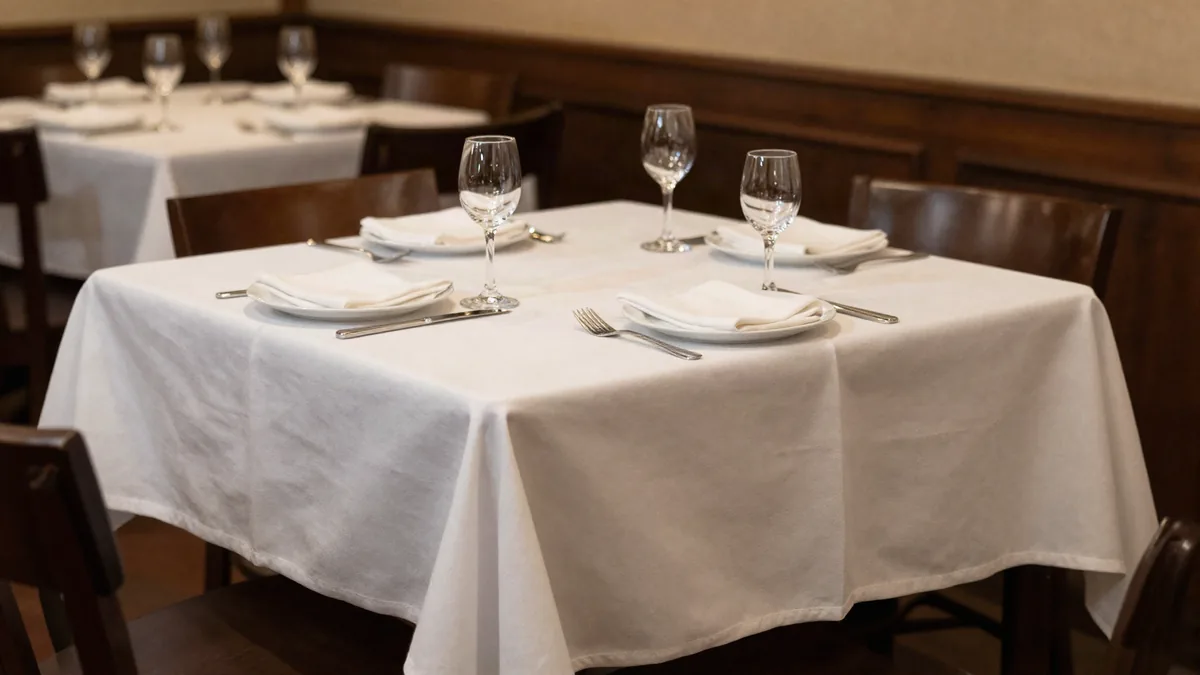
Tablecloths and napkins are priced and sized by the restaurant's own table count and cover style, not a generic restaurant average -- a white-tablecloth dining room and a fast-casual counter concept have almost nothing in common here. Restaurant linen service breaks down how napkins, tablecloths, aprons and chef coats are typically bundled into one weekly order and priced as a set rather than item by item. Colored and patterned linen commands a premium over white because dye lots need to be tracked and matched across deliveries, and a mismatched replacement cloth on a dressed table is a visible service failure in a way a mismatched bar mop never is.
Chef coats, aprons and front-of-house uniforms
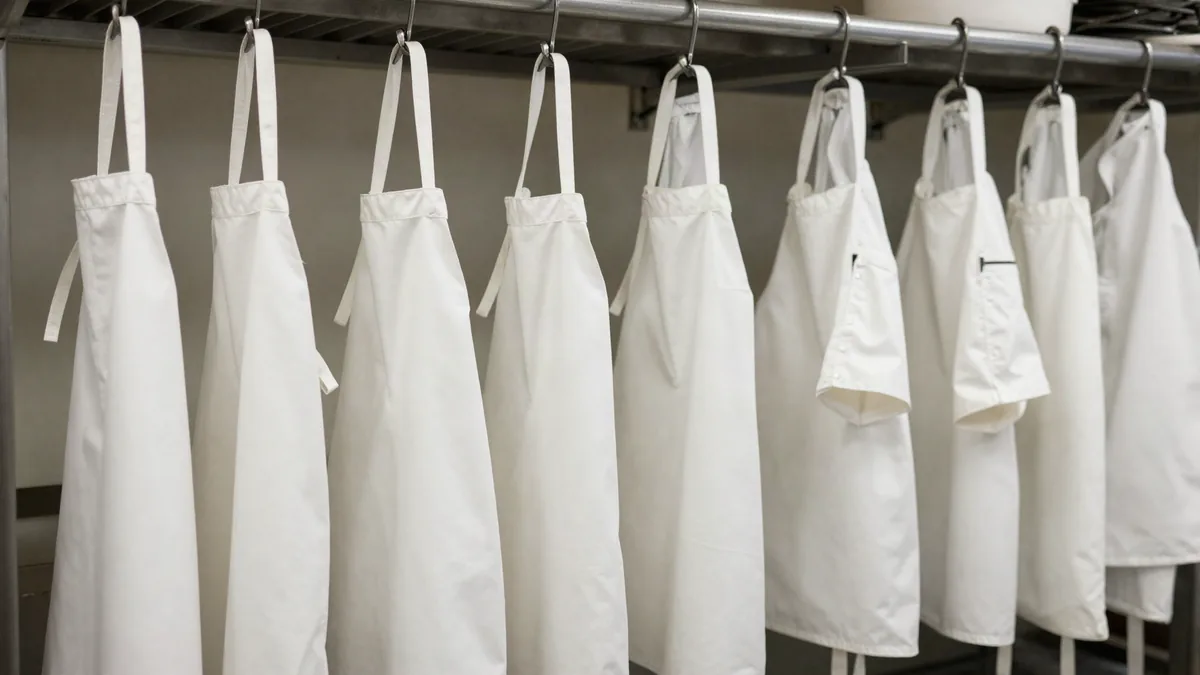
Chef coats and kitchen aprons see the heaviest and most varied soiling in the building -- grease, sauce, blood from raw protein handling, scorching -- and are almost always priced per-piece rather than per-pound because the labor to get a stained coat presentable exceeds what weight-based pricing would ever capture. Front-of-house uniforms see far less soiling but a stricter appearance standard, closer to hotel staff uniforms than to kitchen garments. Most restaurants keep a two- or three-day par on chef coats specifically, since a cook without a clean coat is a service problem that shows up to guests within the hour, not by end of shift.
Bar mops, kitchen towels and microfibre
Bar mops and kitchen towels are the highest-turnover category in the building by unit count, often replaced or laundered daily rather than weekly, because they absorb everything from spilled cocktails to hot pan handling within a single shift. Microfibre towels used for glass and bar polishing need to be laundered separately from cotton bar mops -- lint transfer from cotton ruins a microfibre towel's polishing performance -- a detail smaller operators frequently miss until their glassware starts coming back streaked.
Floor mats and mop heads
Rubber and vinyl floor mats are priced by square footage and swapped on a fixed rotation rather than counted like linen, since a mat's job is slip resistance and grease absorption, not appearance. Mop heads wear out fast in a working kitchen and are usually the cheapest line item on the invoice, but a kitchen that skips regular mop head rotation to save a few dollars a week is trading a small saving for a real slip-and-fall liability, which costs far more than the rotation ever would have.
How restaurant linen is priced
Most restaurant linen contracts price by a weekly flat rate covering an agreed item count per category, rather than pure per-pound pricing, because a restaurant's soil load is too variable week to week for pound pricing to give either side a stable number to plan around. The flat rate is usually built around par levels the operator and vendor agree on up front -- enough napkins and bar mops for the week plus a buffer -- with an overage rate for anything above that count. Colored linen, chef coats and specialty items (embroidered logos, patterned napkins) carry a premium over plain white stock, both because of dye-matching requirements and because they cannot be pooled across customers the way plain white terry can. Minimum order commitments are standard in this category and worth negotiating down for a new or seasonal restaurant, since a fixed weekly minimum sized for an established restaurant's volume can badly overcharge a restaurant still building its covers. Ask any bidder to price the same order two ways -- flat weekly rate and itemized per-piece -- since the gap between the two numbers usually reveals which categories are carrying the vendor's margin.
Health department rules for towels and aprons
Health departments generally require single-use or properly laundered wiping cloths in food prep areas, and most jurisdictions do not accept a cloth being rinsed and reused through a shift as meeting that standard -- it needs to go through a documented laundering cycle, whether that is an in-house sanitizing bucket system or an outside linen service. Food safety linen rules covers what inspectors actually check during a routine visit: whether wiping cloths are stored in sanitizer solution between uses, whether soiled linen is kept separate from clean, and whether aprons worn during raw protein handling are changed before contact with ready-to-eat food. A restaurant using an outside linen service should keep delivery and pickup records on hand, since some inspectors will ask for proof of a documented laundering cycle rather than taking the operator's word for it.
Chargeable damage: wine, grease, bleach and burns
Every restaurant linen contract has a damage clause, and the disputes almost always come from the same four causes. Restaurant linen stains breaks down which of them are typically chargeable to the restaurant and which are treated as normal wear the vendor absorbs: wine and grease usually launder out under commercial chemistry and are not chargeable on their own, but the same stains combined with age -- linen sent back a week or two after the spill instead of with the next pickup -- often are, because the stain has had time to set permanently. Bleach damage, almost always from a restaurant's own kitchen cleaning chemicals contacting linen rather than anything the laundry did, is close to always chargeable. Burn holes and cigarette damage are chargeable outright. The practical fix for a restaurant that wants to avoid disputes is simple: flag heavily stained linen at time of return rather than letting it sit, and keep kitchen bleach products away from anywhere linen gets staged.
Sizing a weekly order without overpaying
Oversizing a weekly linen order to avoid ever running short is the most common way restaurants overpay for laundry, and it happens because nobody revisits the par count after the restaurant's covers change. A restaurant that cut its weekend brunch service six months ago but never told its linen vendor is still paying for brunch-volume napkins every week. The fix is a quarterly par review against actual average covers, not a one-time setup at contract signing, with separate par counts for weekday and weekend service rather than one blended number. Seasonal patio restaurants should carry two contracted par levels rather than one -- patio season and indoor-only season -- since the gap between the two can be large enough to make a flat year-round order wasteful for half the year. A par review takes a manager less than an hour against a reservation system's own covers report, which makes the lack of one mostly a matter of nobody owning the task rather than the review being genuinely hard.
Catering, banquet and seasonal surge
A restaurant that adds catering or private events on top of its regular dining room service needs a linen plan that treats those as a separate, spikier order rather than folding them into the weekly base count. A single large private event can require more table linen in one day than the restaurant's normal weekly par, and a vendor not given advance notice may simply not have the stock on hand, particularly for colored or patterned linen that cannot be pulled from generic white inventory. Restaurants running a predictable event calendar should negotiate a surge rate and lead-time requirement into the base contract rather than treating every large event as a one-off special order handled at the last minute.
Switching providers mid-season without a gap
Most restaurant linen contracts auto-renew and require 30 to 90 days' notice to cancel, so the practical switching timeline is driven by the outgoing contract's notice period more than by how quickly a new vendor could start. A clean handover needs a short parallel-run window -- a week where the incoming vendor is already delivering while the outgoing contract winds down -- to avoid a gap where the kitchen is short on bar mops or aprons mid-week. Restaurants switching mid-season, especially patio season, should time the notice period to land the actual cutover during a slower week rather than a weekend peak, since any handover friction shows up fastest in the highest-volume categories.
Restaurant linen providers by state
Minimum order size, colored-linen availability and delivery frequency all vary meaningfully by market. Restaurant linen providers by state breaks the directory down by state for restaurant owners comparing vendors directly once the pricing, health department and damage-clause questions above are settled.
What restaurant owners ask us most
How much does restaurant linen service cost per week?
Most full-service restaurants run somewhere between $150 and $500 a week depending on table count, whether chef coats and aprons are included, and how much colored or patterned linen the dining room uses. Fast-casual and counter-service concepts with minimal table linen typically sit at the low end, weighted mostly toward kitchen towels and aprons.
Is it cheaper to buy and launder restaurant linen in-house?
Rarely, once labor and equipment are counted. A commercial washer-extractor and dryer sized for daily napkin and towel volume, plus the staff time to run them, usually costs more than an outside service once a restaurant accounts for someone's real hourly wage rather than treating in-house laundry as free labor absorbed into existing shifts.
Can a restaurant use its own napkins with a linen service?
Yes -- this is called customer-owned goods, and it works well for restaurants with a specific pattern, color or embroidered logo the vendor does not stock. It shifts inventory and replacement purchasing onto the restaurant, so it usually makes sense only once volume is high enough to justify managing that stock directly.
What happens if a linen service damages or loses restaurant linen?
A properly written contract specifies a per-item replacement value and a claims process, but in practice most vendors settle small, routine losses informally through account credit rather than a formal claim. Restaurants that never see credits for missing items should ask directly what the vendor's loss policy actually is rather than assuming one exists.
Related on this site