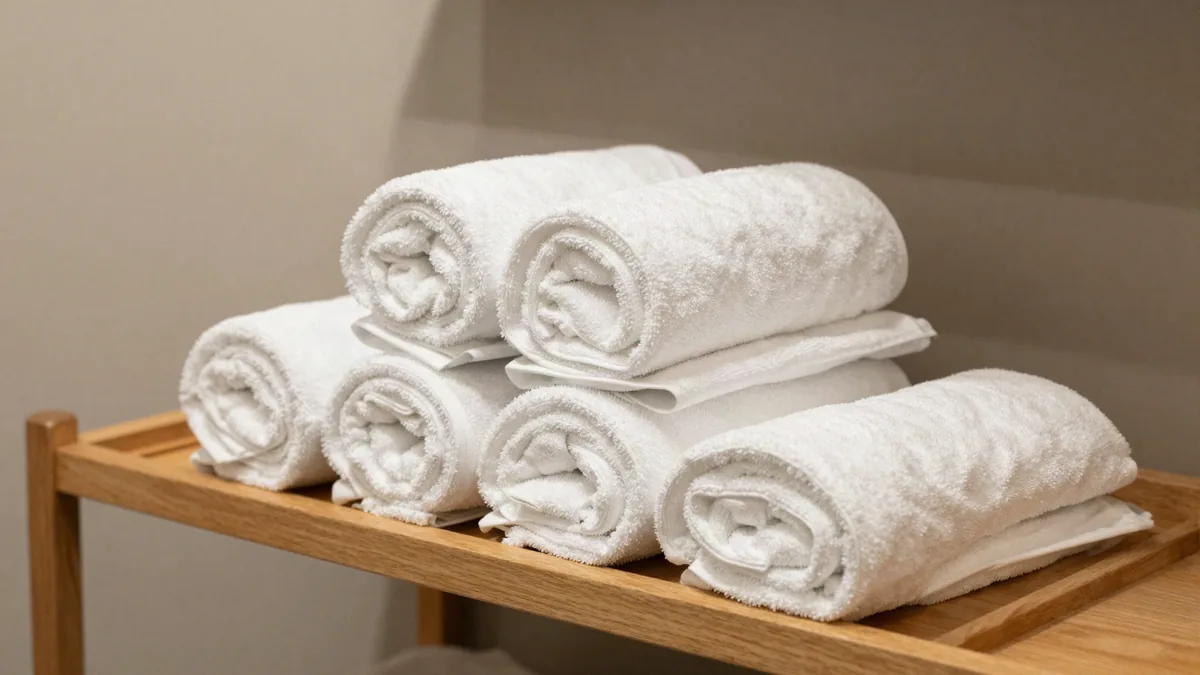
Salon and Spa Towel Service: Bleach Stains, Oil Fires and Colour Bleed
Bottom line: Salon towel bleach stains can't be reversed; replacing a towel costs $2 to $4, so the fix is preventing bleach contact with a no-bleach sort and staff training.
I've got a towel in my back office that looks like a burn victim. It started white, then someone at a salon soaked it in straight bleach to get out a stain that was never going to come out. That load of 40 towels cost that owner $160 to replace, and it did nothing to fix the root cause. The real issue is that salon staff think bleach is a magic eraser, so they use it on everything, then the towels come to me already compromised. By the time I see them, the fibers are damaged, the dyes are unstable, and the oil from massage products reacts with heat in my dryer. I've watched a pile of supposedly clean towels smoke because the oil residues weren't stripped properly. Commercial laundry in Texas
I once had a salon owner walk into my laundromat carrying a white garbage bag that looked like it had been used to mop up a crime scene. She opened it and said, "Can you fix these?" The towels inside started out white. They came out looking like a zebra that'd got caught in a paint spill — chlorine burns, brown oxidation spots, and one towel that had turned cotton-candy pink from a red dye that nobody admitted using.
That day I was just a laundromat owner doing wash-and-fold. Now I run towel routes for twelve salons and three spas out of the same 4,000-square-foot building, and I've learned more about chemistry than I ever did in high school. Salon towel service is a niche business that looks easy — dirty towel in, clean towel out — but it's got a way of exposing every flaw in your process. Let me tell you where it goes wrong, and how to handle it, based on real loads, not a Pinterest guide.
Why Salons Outsource Their Towel Laundry
A salon can blow through fifty to a hundred towels a day easily. Spas more. If you're washing them on site, you're paying for the machine, the water, the energy, the detergent, the labor, and the insurance premium. And you're burning a stylist's time that could be spent cutting hair. That's why the smart ones look for a pickup-and-delivery service. They want clean towels on a rack before the first appointment, and they want the dirty ones out of their way without thinking about it.
Most contracts we sign are per-pound, per-piece, or a flat weekly rate based on volume. I quote per pound when the towels are heavily soiled and harder to clean. Per piece when they're lighter — think salon color towels versus clinic-days spa towels. It's a model, not a fixed price. Depends on the plant, the water, and how many times they call you for 'one emergency towel' that turns out to be a suitcase.
One digression: the first spa I worked with asked if I'd also clean their floor mats. I said sure. Now I have a client that sends me microfiber with 400 thread count and candle wax melted in. You never know what a contract will evolve into.

Bleach Stains: The Silent Sheet Killer
Hair bleach is a strong oxidizer. It's used to lift colour from hair, and it doesn't care if the target is a strand or a terry loop. When a towel sits in a plastic bin for two hours with 6% hydrogen peroxide soaked in, the cotton starts to break down. You see it as those rust-coloured holes that appear after the wash. The towel looks clean, but it's thin and brittle at the core. A few more cycles and it tears.
The trick is to tackle the bleach before it gets a hold. I sort towels by service type — color service towels separate from shampoo towels. We use a high-pH detergent with a chlorine neutralizer, then a sour to get the pH back down. That's not home washing. That's industrial chemistry. And if you're wondering if you can do it in a domestic washer — sure, if you like buying towels every month. Real commercial machines handle the load and the temperature swings. We're never going to guarantee every towel comes back like new, because bleach damage is irreversible. But we can slow it down and get the stain out of the rest.
Note: I'm not saying this is a medical process. This is just towels. But standards matter. If you want a credential that tells salons you're serious, look into TRSA Hygienically Clean. It's about hygiene in the laundry process — not a health claim — but it proves you follow a system.
Oil Fires: Not an Urban Legend
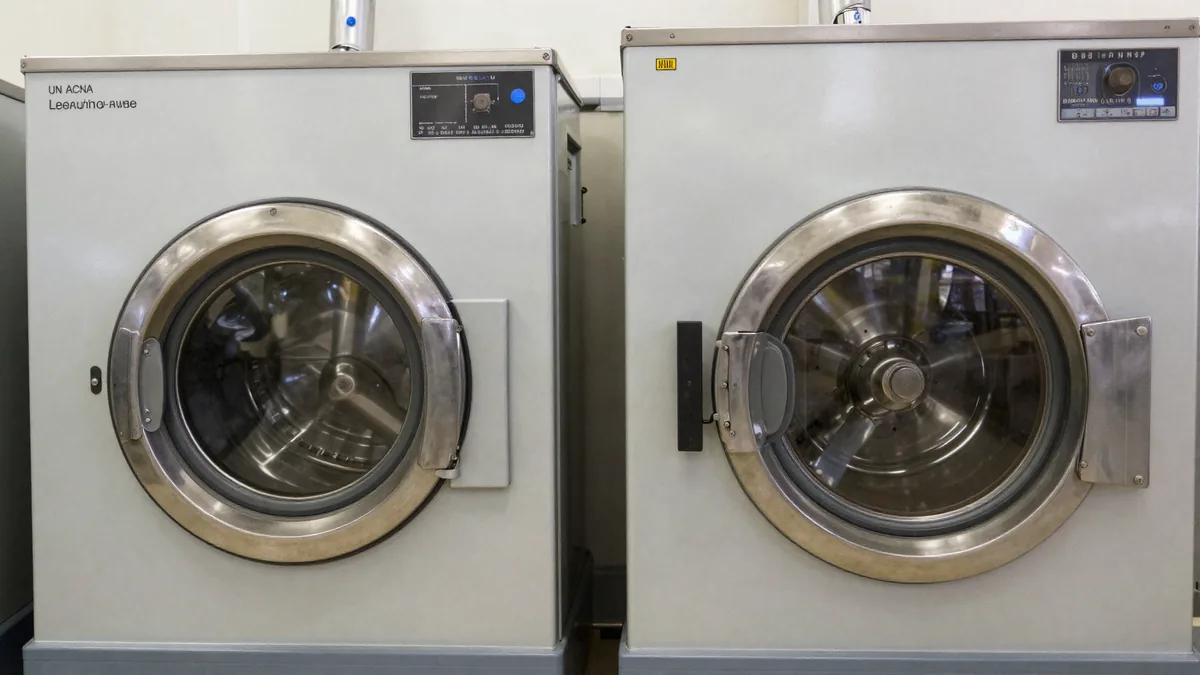
Here's the one that keeps me up at night. Massage oil, essential oils, even leave-in conditioner — they're all oils. When towels go through the wash, some of that oil stays trapped in the fibers. If you don't get it out with hot water and the right detergent, it accumulates. Then you put those towels in a dryer that heats to 180°F or more. The oil vaporizes, the lint gets oily, and you have the perfect recipe for a dryer fire. I've had a small one. Just a smoulder. But it's enough to scare you straight.
We wash spa towels on a separate cycle with hotter water and a boost of degreaser. We also inspect the lint screen after every load and clean the dryer duct every month. It's not glamorous. But it's the difference between running a business and running a fire drill. Call it an obsession if you want. I've seen someone lose a route because their dryers had a smoky smell. Not me, but someone.
You don't need to be a safety expert to understand the basics. Just be careful. And if you get a whiff of oil when the dryer is hot, stop the load and check the lint. That's not a suggestion. That's a life lesson.
Colour Bleed and the Tie-Dye Fiasco
Colour bleed is the most frustrating problem because it's preventable. A red towel from a color service sneaks into a white load and the next thing you know everything has a pink tint. Or a purple dye that wasn't washed out properly comes back to haunt you. I've seen towels turn lavender, peach, and a shade I call 'cheeky flamingo'.
Once you sort towels by color and service, you're halfway. We also use a colour-catching sheet in white loads for the first few minutes. And we're careful with wash temperature — hot water opens the fibre and releases dye, but too hot can set it. It's a balance. So we do a cold rinse first for dyed towels, then warm wash. That's not a guarantee. But it cuts the tie-dye incidents down to almost zero.
We used to do everything in a mixed load to save time. Now we have a strict segregation rule. The only time we mix is when a contract specifically allows for 'uniform' towels that are all white. And that's rare.
Making Salon Towel Service Work in a Laundromat
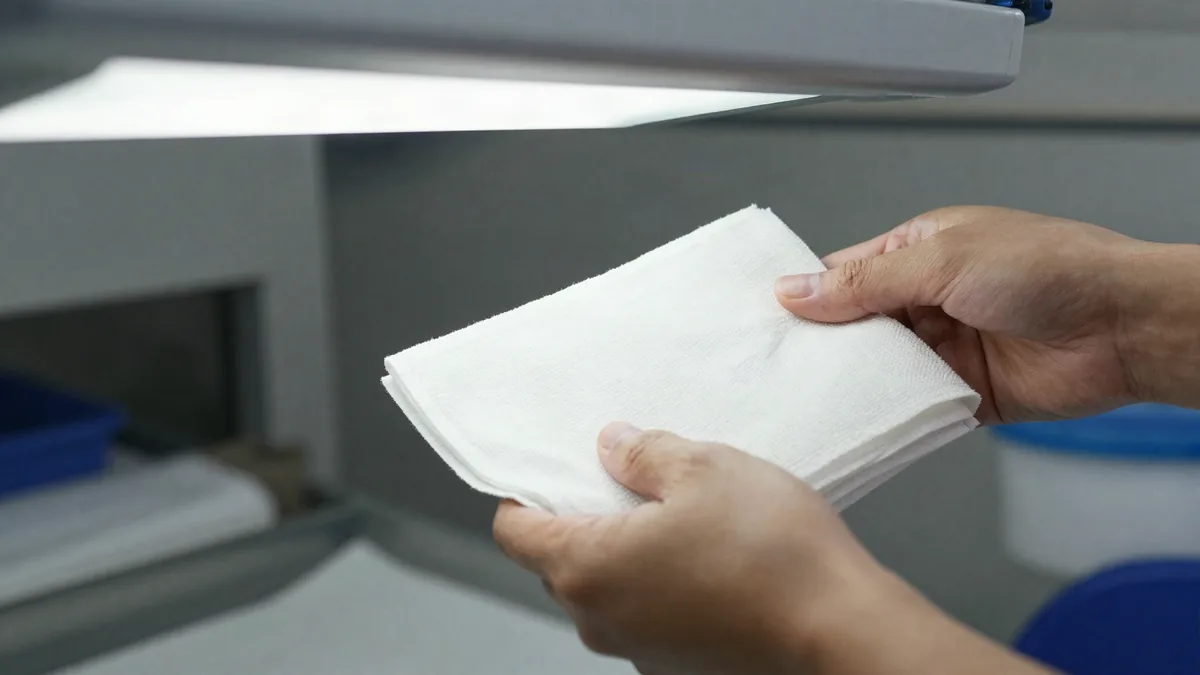
You don't need a dedicated facility to start. I run out of my laundromat, using commercial washers and dryers that are big enough to take a 60-lb load. Most routes are built around a few core contracts. I have one van, two drivers, and a route that covers a 25-mile radius. The key is density — if you're driving an hour between stops, you're losing money. Aim for a cluster of salons within a few miles.
Pricing is a model, not a number. I've seen uniform rental companies bundle it into a per-employee weekly rate, which is typically between $4 and $15 per employee per week. But that's for uniforms, not towels. For towels, I charge per pound or per piece. I have a minimum weekly order — any less than 100 pieces and it's not worth the pickup. Give or take. It depends on the plant and your overhead.
You also have to think about rotation. Salons need a constant supply. If you're off a day, they're scrambling. So you set up a schedule — three pickups a week, or every day if it's high-volume. You need backup machines and backup drivers. And you need to be honest about what you can handle before you take on a big chain. The money is good, but the margin for error is thin. I've learned that the hard way.
In-House vs. Commercial Towel Service
| Factor | In-House Laundering | Commercial Towel Service |
|---|---|---|
| Bleach stain risk | High: staff often use bleach on stains, ruining $2-4 towels | Low: sorters separate and use oxygen bleach only |
| Oil fire risk | Serious: lint and oil buildup can ignite in dryer | Managed: industrial washers strip oils and dryers run at lower temps |
| Color bleed control | Risky: reds or dark towels can run if mixed | Controlled: every load is sorted and tested for dye run |
| Cost per towel | $0.15-0.30 per wash, plus utilities and labor | $0.25-0.50 per use, all inclusive |
Frequently Asked Questions
What's the difference between a towel service and a linen service?
A towel service is a subcategory of linen service. The difference is scope — towels only versus the whole range of linens like sheets, tablecloths, and napkins. In a salon or spa context, towel service means we handle the full cycle: pickup, wash, sanitize, fold, and deliver. It's simpler for the client and easier for us to manage inventory.
Can I run a salon towel service from a regular laundromat?
Absolutely, if you have commercial washers and dryers big enough to take a 60-lb or larger load. You need hot water control, proper detergent injection, and the space to sort and fold. A standard home washer won't cut it. You also need a reliable van and a route. It's a viable add-on to an existing wash-and-fold business.
How much does salon towel service cost the client?
It depends. The two common pricing models are per-pound and per-piece. Heavily soiled towels are usually priced per pound; lighter ones per piece. Some operators charge a flat weekly rate based on estimated volume. Minimums help cover your pickup and delivery costs. As a baseline, uniform rental for a full service often runs $4-15 per employee per week, but towels aren't uniforms, so it's a different calculation.
Do I need any special certification for salon towel washing?
Not legally, but having a hygiene certification like TRSA Hygienically Clean can be a differentiator. It shows you follow a documented process for quality and hygiene. If you ever expand into healthcare, you'd need HLAC accreditation. But for salon towels, a good process and a clean facility are what your clients actually care about.