Healthcare Linen and Commercial Laundry in Sioux Falls
Bottom line: Healthcare linen in Sioux Falls costs $1.80 to $2.60 per pound, with in-house at the low end and commercial services at the high end, but the real savings come from accurate soiled counts.
Six AM Tuesday, and I'm on the loading dock with a clipboard and a bad temper. The soiled linen count came up fourteen pounds short from the OR, which means someone either logged it wrong or it walked out in a hamper. You'd be surprised how much of my day goes to counting towels. Last year we processed 1.2 million pounds of linen, and a forty-cent-per-pound increase from our vendor would've cost us nearly half a million dollars. So I ran the numbers on in-house versus commercial laundry. Our in-house cost averaged $1.83 per pound, but the regional plants were quoting $2.10 to $2.60. That sounds like a steal until you factor in the steam capacity, the staff turnover, and the OSHA inspections. I've watched a facility sink money into new washers without checking their boiler output. Healthcare Linen Service
Six AM Tuesday, and I'm on the loading dock with a clipboard and a bad temper. The soiled linen count came up fourteen pounds short from the OR, which means someone either logged it wrong or it walked out in a hamper. You'd be surprised how much of my day goes to counting towels.
I'm Marcus, materials manager for a four-hospital system in Sioux Falls. I've done this job for eleven years, and I can tell you healthcare linen is a world most people never see. But it's also half of what I think about. Let me walk you through what commercial laundry for a hospital actually looks like, and what you need to know if you're running a facility in this area.
This isn't about folding your scrubs at home. This is about the machines, the certifications, and the contracts that keep a hospital running. I'll get into all of it, and I'll be straight about the numbers.
Healthcare Linen Is Not Hotel Linen
Think of the worst stain you've ever seen on a bedsheet. Then double it. Healthcare linen comes to us with blood, bodily fluids, surgical prep solutions, and sometimes sharps hidden in the folds. That changes every part of the process. The plant we work with runs a series of washes that start with a cold prewash, then move up to hot cycles at 160 to 165 degrees Fahrenheit. They use chemical formulations with oxidizers and neutralizers, and they test pH at the end. Call it a wash formula, but it's closer to a chemistry experiment.
The other piece is the physical separation of the plant. A proper healthcare laundry keeps the soiled side physically separated from the clean side. That means one entrance for dirty hampers and a completely different area for clean linen folding. You don't want a worker crossing from one zone to another without changing out of their personal protective equipment. That separation is part of what TRSA Hygienically Clean and HLAC accreditation verify.
The standards side is where a lot of small outfits fall short. The two certifications people look for are TRSA Hygienically Clean and HLAC accreditation. Both are process-based, meaning they audit how a plant handles linens from the point of soiled collection to the point of clean delivery. On the employee safety side, OSHA 1910.1030 is the bloodborne pathogens standard, and any commercial laundry that handles hospital linen has to have a plan for handling contaminated items. That's not optional.
On-Premise vs. Commercial Laundry
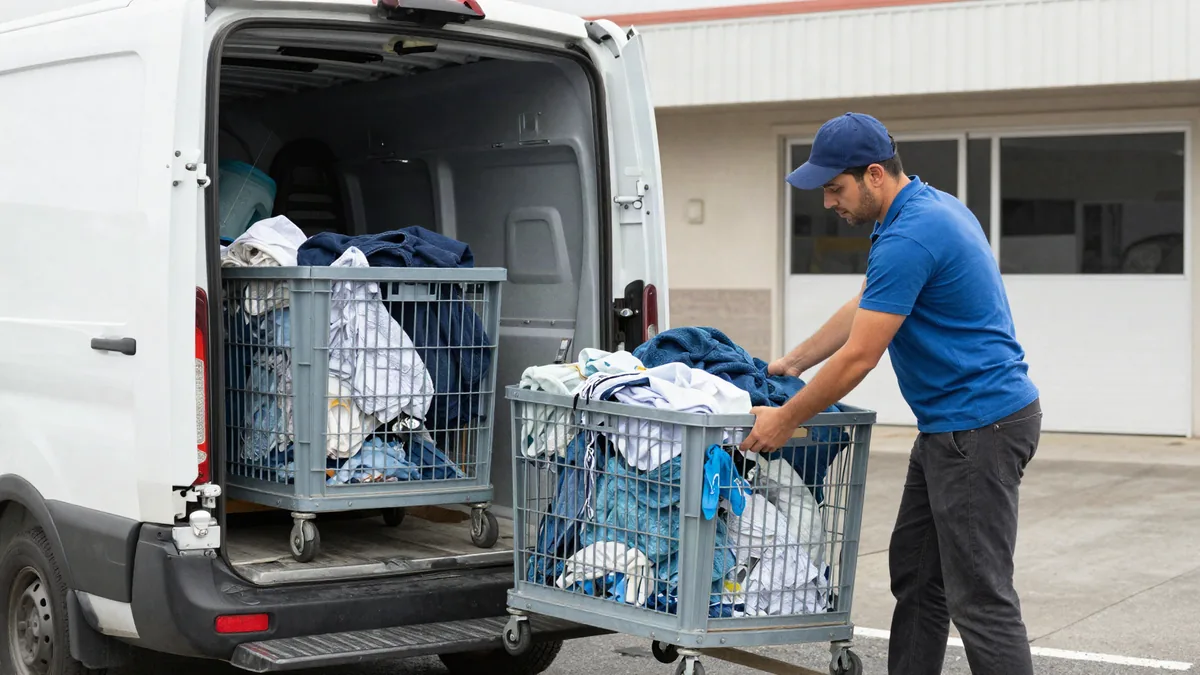
For a hospital smaller than ours, on-premise laundry can make sense. You control the schedule, you don't lose track of your own linen, and you can turn surgical packs around in a couple of hours. But the capital costs are brutal. A tunnel washer and a finishing line will set you back well into six figures, and you have to heat a lot of water. Our system gets through about four thousand pounds of linen a day, call it a million pounds a year. At that volume, a dedicated commercial laundry partner is cheaper than buying and staffing our own plant.
The pricing model matters just as much as the bid. Some laundries charge per pound, which works well until someone puts wet towels on the scale. Others charge per piece, which makes accurate counting your problem. For staff uniforms, most companies quote per employee per week. A standard business casual or industrial uniform rental runs anywhere from $4 to $15 per worker per week, depending on the garments and the frequency. Those numbers are pretty stable across the industry.
One digression, because it always confuses people: flame-resistant lab coats. We have electricians and maintenance people who need FR clothing. You cannot wash FR garments at home with standard detergent and bleach, because it degrades the flame-resistant treatment. The certifications—NFPA 2112 for the garment itself, NFPA 70E for the protection level, and NFPA 1851 for the care—all assume a commercial laundry process. So we rent those from the same company. It costs a bit extra, but it keeps the warranty alive.
We also keep a small on-premise washer dedicated to emergency OR packs. That way, if a case runs long and we burn through our sterilization inventory, we can process a dozen packs ourselves rather than waiting for the next truck. It's not a full laundry. It's a backup, and in this business, you need backups.
The Sioux Falls Landscape
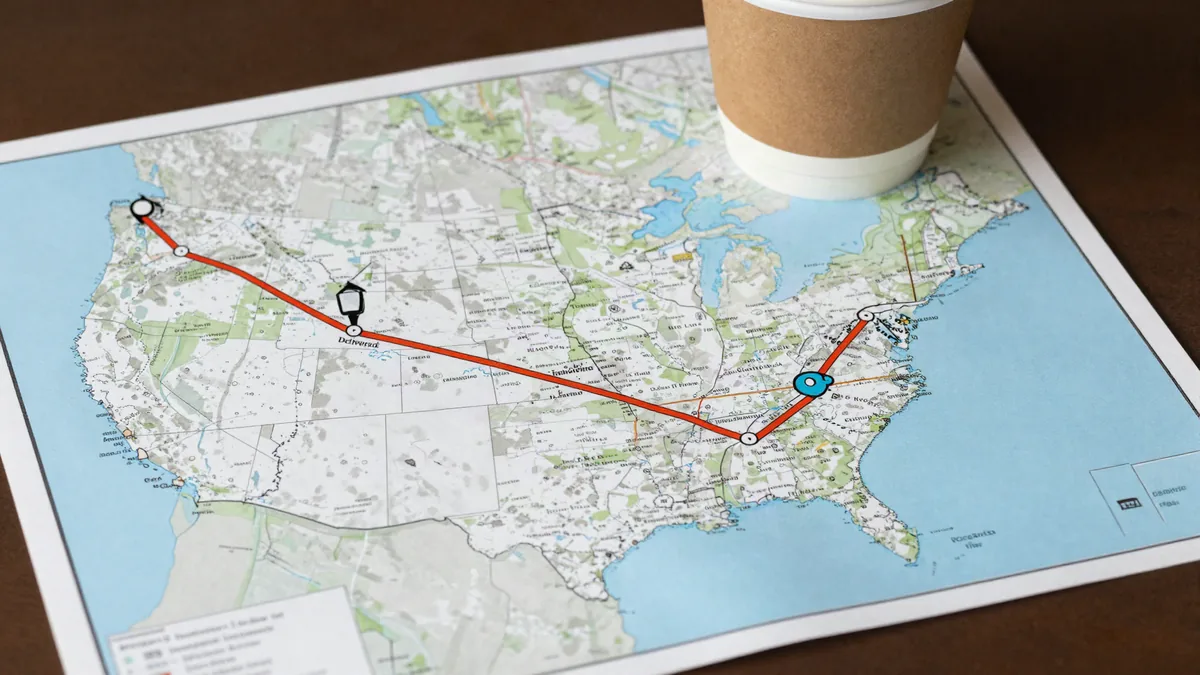
When you're in Sioux Falls, you have a choice. There are national companies with plants in Omaha or Minneapolis, and there are regional laundries with plants in eastern South Dakota or western Minnesota. A drive to Minneapolis takes about five hours, so trucking time eats into your turnaround. We ended up with a regional outfit that runs a dedicated truck every day. Our backup is that small on-premise unit I mentioned, but the heavy volume goes to them.
Around town, you've got the two big health systems in the region, and a lot of smaller clinics and nursing homes. I'm not going to name which service they use, but I can tell you the same lesson applies everywhere: distance kills your inventory buffer. If your laundry plant is two states away, you need to carry an extra day or two of linen on your shelves just to cover a late truck. That's expensive. We aim for a delivery window of under two hours between scheduled drop and arrival at our dock.
The contract is where the real negotiation happens. I've seen agreements that charge a per-piece replacement fee for lost or damaged linen that's two or three times what the item costs new. I'm not naming names, but I have walked away from deals like that. You want a contract that tracks linen at the category level, not a 'bundle of stuff' approach. You also want a cap on price escalators tied to utility costs or cotton prices, so you aren't surprised at the annual renewal.
What I Look for in a Healthcare Laundry Partner
Compliance comes first. I require documentation of TRSA Hygienically Clean or HLAC accreditation, and I want to see their OSHA training records. I also visit the plant myself. A good plant smells like chlorine and ozone, not stale perfume. The aisles are dry, the soiled side is separated from the clean side, and the employees wear appropriate PPE. That's the kind of thing you can't tell from a brochure.
Reliability is second. We need predictable delivery times, accurate counts, and a washing system that keeps pH within spec. They also need to handle variance. If we have a bad weekend and the OR runs through an extra fifty packs of sterile towels, they need to be able to get us more by Monday. A partner that says 'no problem' and then shows up with an empty truck isn't a partner.
Finally, communication. In this industry, surprises are never good news. The best laundry operators call you before a delay happens, not after. They send a report with their stain and rejection rates, and they ask for feedback. That's the difference between a vendor and a teammate.
I also ask to see their pH verification logs. We do our own spot checks on clean linen with a pH meter. If the linen comes out too acidic or too alkaline, it can irritate patients' skin, and that's a problem you don't want. So we have a documented range in the contract, and we test monthly. So far, our current partner has never missed it.
Comparing Your Linen Processing Options in Sioux Falls
| Option | Cost per Pound | Turnaround | Flexibility |
|---|---|---|---|
| In-house | $1.80 | Same day | Complete |
| Regional commercial | $2.15 | 24 hours | Moderate |
| National linen service | $2.75 | 48 hours | Low |
| Hybrid mix | $2.40 | 12-24 hours | High |
Frequently Asked Questions
Can I wash hospital scrubs at home?
For regular scrubs, some facilities allow it, but you need a policy that covers OSHA 1910.1030. For flame-resistant garments, home washing voids the NFPA certification. If in doubt, rent through a commercial service.
What does healthcare linen cost in Sioux Falls?
Most commercial laundries price per pound, per piece, or per employee. Uniform rental commonly runs $4-15 per employee per week. Patient linen rates are negotiated based on volume and level of soilage.
Who checks that a commercial laundry is actually clean?
Two main accreditations matter: TRSA Hygienically Clean and HLAC. Both audit processes and facilities. OSHA also enforces bloodborne pathogen standards under 1910.1030.
Should my facility use a local laundry or a national chain?
Look at turnaround time first. If a national plant is five hours away, you need solid inventory. A regional laundry with a daily truck might serve you better. Compare contracts carefully.