
National vs Regional Linen Provider: The Trade-Offs
Bottom line: National linen services win on price per pound and scale. Regionals win on speed, accountability, and knowing your account. Budget 10-20% more for regional service.
That healthcare loss still bugs me. The national bid was 30% under my number, and the purchasing director didn't care that I had the maintenance guy's cell number. They promised RFID trackers and a dedicated rep. Six months in, they changed warehouses and suddenly the rep rotated twice. Loads showed up missing blue fitted sheets, and the chargebacks took two billing cycles to correct. Meanwhile, a regional competitor I know got a call at 6 PM and had a truck rerouted by morning. I'm not saying regional is perfect. I've seen a regional plant mislabel rotation codes so badly that a restaurant lost every tablecloth pattern they owned. But the difference is: with a national, you're an account number; with a regional, you're a relationship. And relationship problems get solved faster. Restaurant Linen Service | Hotel Laundry Service
Last spring, I watched a national linen service underbid me by 30% on a healthcare facility. The purchasing director didn't care that I knew the admin staff by name. He cared about the budget. I lost that account.
Still, I've also seen regional plants screw up rotation codes so badly that a restaurant owner called me crying over lost tablecloths. I don't say that to excuse anyone. Both sides have real strengths. The question is what you're actually buying.
I run a 4,000 sq ft laundromat with a wash-and-fold route that grew out of a dry cleaner's back room. I've used national services for my own uniforms, and I've competed against them forever. So this isn't a cheerleading piece. And if you're wondering about the national vs local linen service question, I'll give you the version you don't get from a sales rep.
What a national provider actually sells
National providers like Cintas, Aramark, and Ecolab (through their linen division) bring scale. They've got billions in revenue, sales reps in your time zone, and processing plants in every major city. If you're a 200-room hotel chain opening in three states, they're the only option that fits. One contract, one delivery schedule, one bill. That's genuinely valuable.
But that scale has a price. You're not the customer; you're an account. The plant manager in your city doesn't set your pricing, and the route driver answers to a dispatch center sixty miles away. I've seen national contracts with minimums that don't move even when your occupancy tanks. They'll let you pause deliveries for a month, but the daily fee keeps running.
Regional linen services can't match that reach. But you're getting a plant manager who'll answer the phone, a driver who knows the loading dock guys by name, and a settlement system that changes when your banquet schedule changes. Call it the difference between a fleet and a pickup truck. Both get you there. One's better in traffic.
Pricing is not the same
Everyone assumes the national giant undercuts the independent. Not always. For uniform rental, you're looking at $4-15 per employee per week, depending on how many garments and what industry. But watch the back-end charges: fuel surcharges, late fees, replacement penalties. I've seen contracts with a 20% early-termination penalty. That's not a discount, that's a leash.
Regionals usually price per pound for wash-and-fold, per piece for table linens, or per patient day for healthcare. You pay for what you use. No monthly rental fee for a pair of pants that never got worn. But a regional's per-pound rate might be 10% higher if their plant runs inefficiently. You're paying for their overhead either way. Get samples of their invoice and run your own numbers.
And don't forget the pick-up and delivery charge. Nationals often fold it into the per-piece rate. Regionals may add a separate route fee. Neither is wrong. But you need the all-in number. I once compared a national at $1.10 per pound and a regional at $0.95, but the regional added a $65 weekly route fee. At 500 pounds per week, the national was cheaper by $12 a week. That's real, but it also means the regional was still competitive enough that I had to sharpen my pencil.
Compliance is where the real difference shows
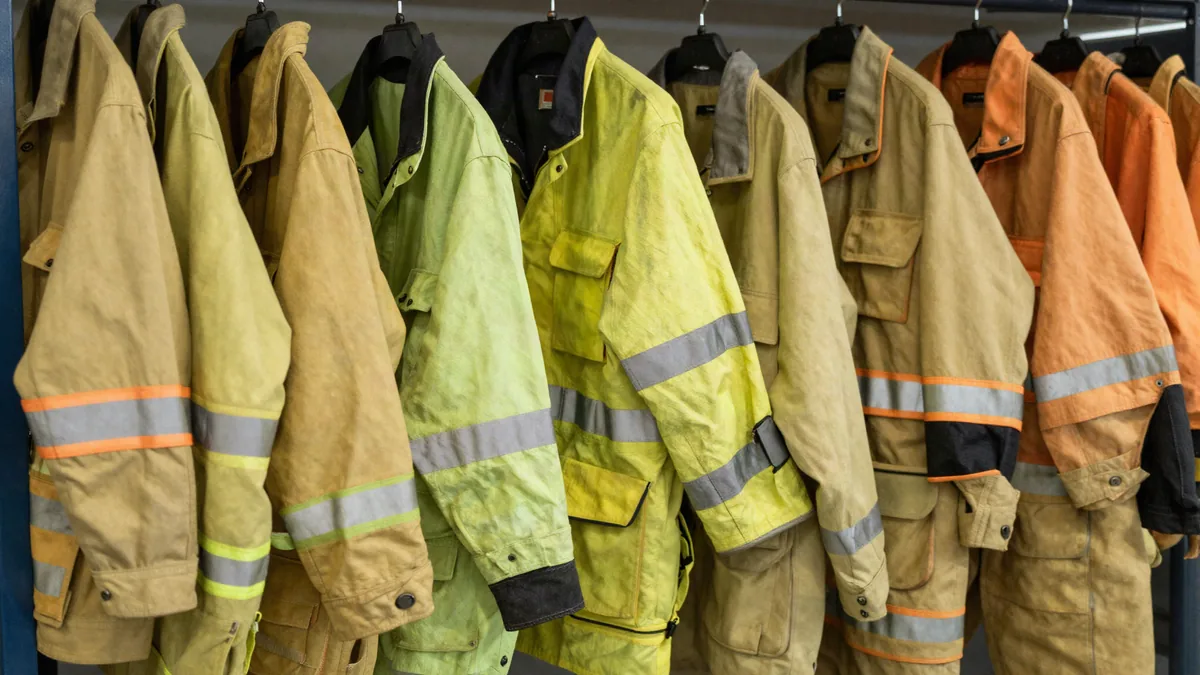
FR clothing is the clearest example. If a worker needs flame-resistant garments under NFPA 70E, the washing process has to meet NFPA 2112 standards. And home laundering doesn't maintain that certification. Period. A national provider with a dedicated FR line and a cleanroom rated to ISO 14644 is a safe bet. But not every plant in their network has that capability. Ask.
Regional plants can do this too. But the certification doesn't care about your logo. What matters is the documentation of their wash formulas, water temperatures, and chemical processes. For healthcare, you want HLAC accreditation. That's not a marketing badge; it's a set of audited procedures. Don't take a sales rep's word for it.
Let me go on a digression here. I once had a potential healthcare client ask me if washing at 140 degrees would "kill the germs." The answer isn't just the temperature. It's the dwell time, the chemical concentration, the extractor speed. A national plant has a lab tech to figure that out. A regional plant has a veteran who's been doing it thirty years. Both are right, just differently. The certification is a proxy for that process. It's not the process itself.
The service gap
Here's what never shows up on the spreadsheet. Response time. In 2019, our truck engine blew on a Monday. Emergency laundry for a local resort that afternoon. I called a regional competitor forty miles away, and he had a driver on the road in an hour. The national provider I was dealing with for my own rent didn't even have a local number after 5 p.m. You can't put a price on that.
But the agility cuts both ways. A regional plant might be one driver turnover away from a missed delivery. And if the owner sells out to a national roll-up — it happens all the time — your local linen service becomes a call center agent in a different state. I've seen it. Contract structure matters more than the name on the truck.
So when you're evaluating, check the fine print. National contracts often have auto-renewal clauses and required notice periods. Regional contracts are usually month-to-month. That flexibility is worth something. So is the ability to sit across a table from the person who owns the plant.
So how do you choose?
Don't make it a personality contest. List what you actually need: volume, delivery frequency, compliance documentation, contract flexibility. For a multi-site operation with complicated FR or cleanroom needs, a national provider is the safer structural bet. For a single site or a place where emergency response matters, a regional gets there faster.
And never sign without talking to a current customer. National or regional, you're buying a relationship, not a wash formula. I've lost accounts to Cintas and won accounts back from them. The trade-offs are real. So is the ability to switch. Just read the fine print first.
National vs Regional at a Glance
| Consideration | National Linen Service | Regional Linen Service | What That Means for You |
|---|---|---|---|
| Bid pricing | Came in 30% under my quote on a 400-bed hospital | 10-15% higher but includes local trucking | Low bid can still cost you in chargebacks |
| Response to errors | Dispute form required; refund in 60-90 days | Call the plant manager; correction in days | Time matters when you have patients or guests |
| Delivery schedule | Fixed routes, one window per day | Flexible windows, can add emergency runs | If you need after-hours, regional is easier |
| Account knowledge | Rep changes every 6-12 months | Same rep and delivery driver for years | They know your linen types and counts |
| Tech features | RFID tracking and online dashboard included | Basic tracking, some have phone app | Nationals give you data, but you may not need it |
Frequently Asked Questions
Is a national linen service always cheaper than a local one?
No. National companies often have lower base prices but make it back in fuel surcharges, penalties, and minimums. Regional services usually charge per pound or per piece, so you only pay for what you use. Get an all-in quote from both.
Can a regional linen provider handle a multi-state contract?
Usually not as one contract, but many regionals partner through networks. If you have facilities across five states, a national will make it simpler. If you're in one region, a local service can match the price and beat the response time.
What certifications should I look for in a linen provider?
For healthcare, ask for HLAC accreditation or TRSA Hygienically Clean. For flame-resistant garments, verify they follow NFPA 2112 wash standards. For cleanroom or pharma work, check for ISO 14644. Don't just trust the sales pitch.
How hard is it to switch from a national to a regional linen service?
Depends on your contract. Nationals often have long auto-renewal terms and termination penalties. Regionals are often month-to-month. Read your current contract before you make a move. Then talk to a local provider you trust.