Commercial Linen and Towel Service: Supply, Wash and Rotation
Commercial linen laundry service and commercial laundry sound like the same thing, and the confusion costs buyers money on both sides: linen service means the provider owns the sheets, towels and napery and rotates clean stock onto your site on a route, while wash-only laundry means you own the textiles and pay only for cleaning. Which model actually fits a given business changes the whole cost structure, not just the rate per pound. This page covers what a linen service includes item by item, how rotation and par stock work in practice, how quality and rag-out get managed over the life of a stock cycle, who is on the hook when items go missing, and how the calculation differs across the industries that buy it. Read this before requesting a linen quote and you will know which questions the sales rep is hoping you do not ask.
Linen supply versus wash-only: the distinction that changes your bill
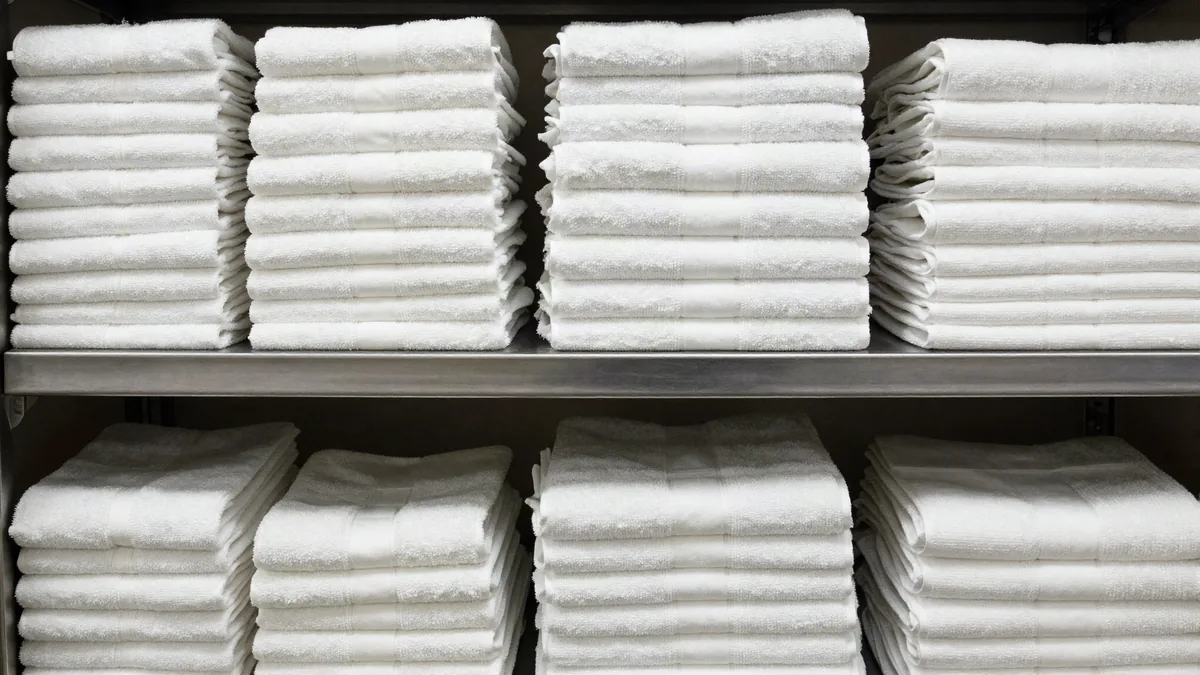
With linen supply, the provider owns the physical stock -- sheets, towels, tablecloths -- and rotates clean items in on a route while collecting soiled ones, billing for the rental and the laundering together as one service. With wash-only laundry, you buy and own the stock yourself and pay the provider only to clean and return it. Supply removes your upfront capital cost and shifts replacement risk to the provider's replacement-charge clause; wash-only keeps full control over stock quality and pattern in your own hands but requires you to fund and manage inventory yourself. Neither model is universally cheaper -- the right choice depends on how much capital you would rather not tie up in linen sitting in a closet, versus how much control you want over exactly what shows up on the shelf.
What is included in a linen service
The item categories below make up the bulk of a typical linen service contract, though the exact mix depends heavily on which industry is buying. Full detail on what a specific contract should itemize is covered in what's actually included in a linen service, which is worth checking line by line against a specific quote before you assume a category is covered.
Flatwork: sheets, duvet covers, pillowcases
Bed linen is the highest-volume category in hospitality contracts and typically the cheapest per pound to process, since it is heavy, uniform in shape and needs no individual finishing beyond a standard flatwork ironer pass. Thread count and fabric weight vary the rental rate meaningfully between a budget property and a full-service resort even at identical volume. Duvet covers and other shaped flatwork items sit slightly outside this pattern, since their shape adds a small amount of handling the flat sheets and pillowcases around them do not require.
Terry: bath, pool, gym and salon towels
Towel rotation moves fast relative to flatwork because terry sees heavier daily use and wears through pile depth measurably sooner. Weight class -- a thin gym towel versus a plush spa towel -- changes both the rental rate and how many wash cycles the item survives before it gets pulled from rotation for thinning or graying. Gyms and pool operations in particular should expect a shorter useful life per towel than a hotel bath towel sees, purely on wash-frequency grounds, and price that into their expected replacement cost.
Napery: tablecloths, napkins, aprons
Restaurant napery carries heavier and harder soil than hospitality flatwork -- grease, wine, sauce -- and stains that do not lift on the first wash cycle often get pulled for a second treatment rather than returned visibly marked. Aprons and chef coats frequently price separately from bulk tablecloths and napkins within the same contract, since they are usually finished and counted as individual pieces rather than bulk-weighed alongside flat napery.
Mats, mops and microfibre
Entrance mats, wet mops and microfibre cleaning cloths are commonly bundled into a linen service contract as a convenience add-on, rotated on the same route schedule as textiles even though they serve a facilities-maintenance function rather than a hospitality or healthcare one. Bundling saves a second vendor relationship but is worth pricing separately to confirm it is not padding the base rate. Ask whether mats and mops are billed under the same per-pound rate as textiles or under a distinct facilities-service rate card, since the two are not always the same on a combined invoice.
How rotation and par stock work
A linen service holds a par level at your site -- enough clean stock to cover usage between route visits plus a buffer for a delayed pickup -- and swaps soiled items for clean ones on each stop rather than washing and returning the exact same pieces. That is what makes the model work on a fixed schedule even though wash time varies: the stock in rotation is always one cycle ahead of what is actually on your shelf, so a route visit never has to wait on that week's wash to finish before delivering clean replacements. The par level itself is a negotiated number, not a fixed industry standard, and it should be revisited any time your usage pattern changes meaningfully rather than left at whatever figure the contract started with.
Quality: thread count, rag-out and when stock is retired
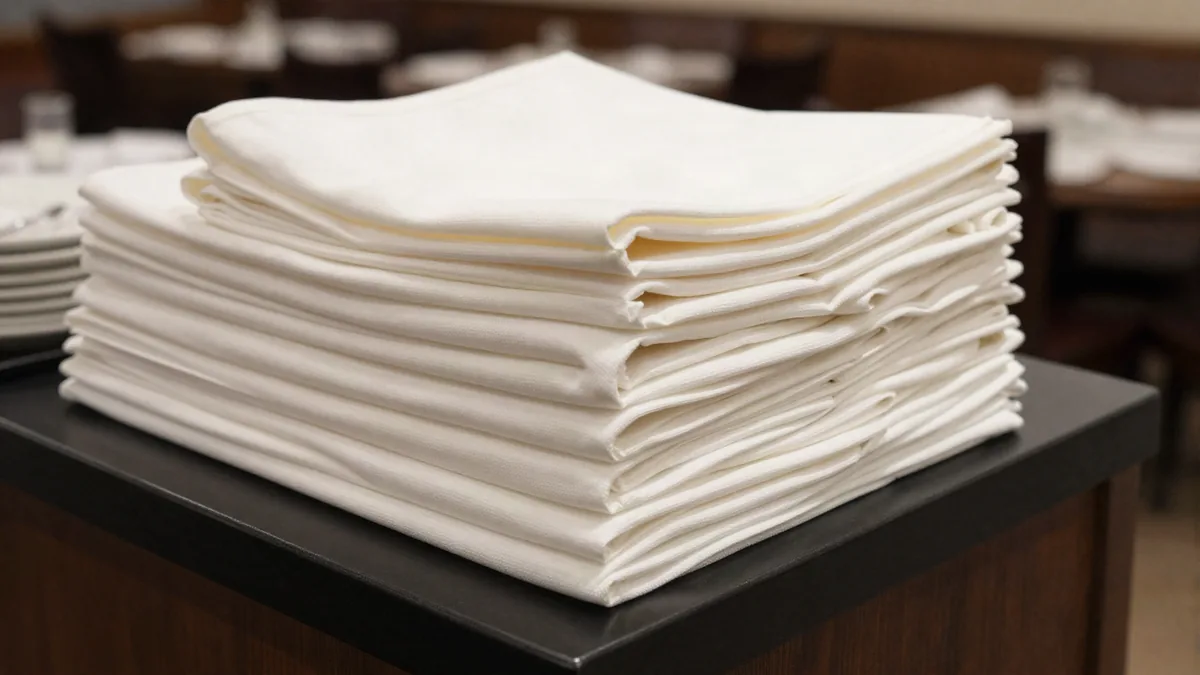
Rented stock degrades gradually through repeated wash cycles -- thinning fabric, graying whites, fraying hems -- and providers pull items from rotation on a condition basis rather than a fixed calendar schedule, typically somewhere between 50 and 150 cycles depending on item type and the wash formula used. Ask for the provider's stock-age or rag-out policy in writing rather than trusting a verbal assurance of "we replace worn items regularly" -- a policy you can point back to is the only real leverage when delivered linen looks visibly tired. Photograph and date a sample of stock at contract signing if quality is a concern; it gives you a concrete baseline to compare against a year in, rather than relying on memory alone.
Loss, damage and replacement charges
In nearly every rental contract, the customer is responsible for items that do not come back -- lost, stolen, or damaged beyond the provider's normal wear allowance -- billed at a replacement rate fixed in the agreement. That rate is one of the most common sources of invoice disputes precisely because it gets set at signing and rarely revisited, so linen loss and replacement charges is worth reading before you agree to a number buried in an appendix. A count discrepancy caught and reported the same week is far easier to resolve amicably than one that surfaces for the first time on a quarterly invoice review.
Linen supply by industry
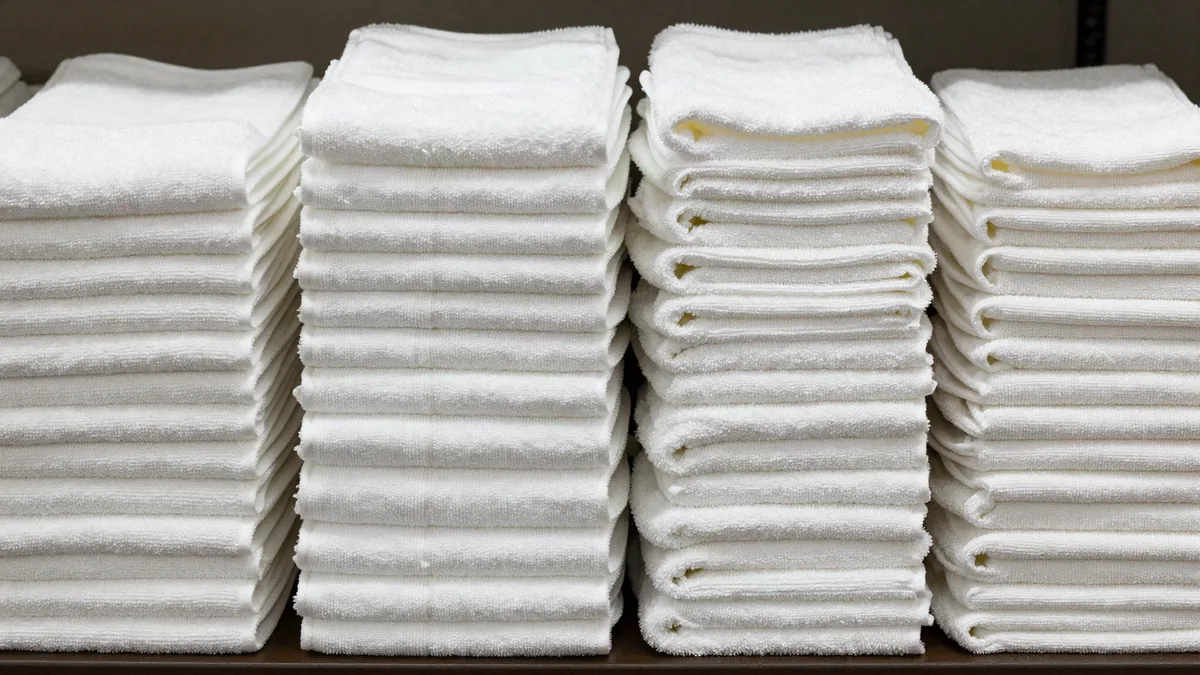
Hotels run the highest-volume flatwork and terry programs and typically get the most competitive per-pound rates as a result, covered in depth on the hotel laundry service hub. Restaurants run napery-heavy programs with higher soil levels, detailed on the restaurant linen service hub. Healthcare facilities run under a distinct compliance standard entirely, covered on the healthcare linen service hub -- each industry's item mix and soil profile changes both the rate and the provider requirements enough that a generic linen quote rarely fits any of them well. Start from the hub that matches your business rather than a generic linen search, since the specific certifications and item categories that matter differ meaningfully between the three.
Choosing between renting linen and owning it
Renting makes sense when you want predictable weekly cost, no upfront capital outlay, and someone else managing replacement decisions -- the trade-off is an ongoing rental cost that, over several years, can exceed what the same stock would have cost to buy outright. Owning makes sense when you have the capital, want full control over fabric quality and brand-specific pattern, and are prepared to manage your own replacement cycle. Linen rental versus buying your own walks through the actual cost-of-goods math side by side rather than leaving it as a philosophical preference. In practice, most single-site independent operators rent, and most large multi-property groups with in-house laundering capability own -- the decision tracks scale more closely than it tracks any single line-item cost comparison.
Find a linen service in your state
Route coverage for linen supply is local in the same way wash-only commercial laundry is, so the fastest path to a real quote is through the industry hub that matches your business rather than a generic search: hotels and resorts through the hospitality hub, restaurants and food service through the restaurant hub, and hospitals and clinics through the healthcare hub referenced above. Each hub breaks providers down by the regions they actually route into, which is the detail a state-level or national search on its own will not surface. Starting from the industry hub also means the shortlist you build is already pre-filtered for providers with real experience in your category, rather than a generic list you have to qualify yourself from scratch.
Frequently asked questions
What is the difference between linen supply and a commercial laundry?
With linen supply the provider owns the linen and rotates clean stock in each route day. With a commercial laundry you own the linen and pay to have your own items washed and returned. Supply removes your capital cost; wash-only keeps control of quality and stock with you.
What does a commercial linen service include?
Typically the linen itself, laundering, delivery and collection on a fixed route, replacement of worn stock, and a par level held at your site. Loss and damage beyond normal wear is billed separately.
How often is rented linen replaced?
Providers rag out stock on a condition basis rather than a fixed schedule, usually after somewhere between 50 and 150 wash cycles depending on the item and the wash formula. You should be able to ask for and receive a stock-age policy in writing.
Who is responsible for lost linen?
The customer, in almost every contract. Missing items are billed at a replacement rate set in the agreement. Check that rate before signing — it is one of the most common sources of invoice disputes.