Towel Service for Gyms, Studios, Salons and Spas
Gyms, studios, salons, spas and barbershops all buy the same basic product -- a commercial towel service -- but the reasons a towel program fails are almost completely different between the two buyer types. A gym's towel problem is volume and odour: getting enough clean terry through a member-facing station during peak class hours without it coming back smelling used. A salon's towel problem is chemical damage: bleach, developer and hair dye attacking towel fiber and color in ways a gym towel never encounters. This guide treats them together because they shop the same vendor category, but splits the actual buying criteria, since a contract written for one will miss what actually matters to the other.
Why gyms and salons are the same buyer with different failure modes
Both categories buy weekly or twice-weekly commercial towel service, both care about turnaround and par levels, and both are member- or client-facing in a way that makes a towel shortage or a visibly stained towel an immediate, visible service failure rather than a back-of-house problem. Where they diverge is the chemistry the towels are exposed to before they ever reach the laundry. A gym towel's enemy is bacterial and fungal load from sweat and skin contact, which is an odour and hygiene problem solved mostly through wash formula and turnaround speed. A salon towel's enemy is bleach, peroxide developer and hair dye, which is a fiber-damage and colour problem that no amount of turnaround speed fixes, because the damage happens at the client's chair, not in the wash.
Gym and fitness towel service
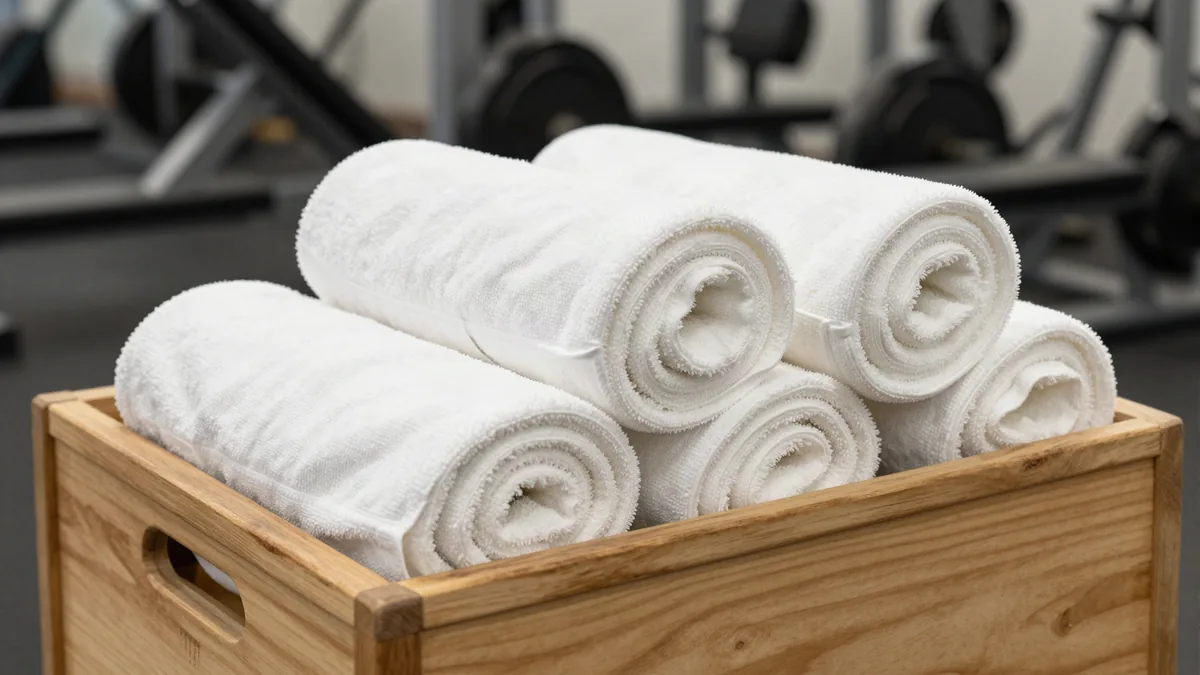
Gym towel programs are sized around class schedules and member headcount rather than square footage, and the two failure modes that actually drive complaints are running out of clean towels at a peak class time and towels coming back with a lingering odour a normal cycle should have removed.
Par levels and turnaround for a member-facing towel programme
Most gyms run a towel-per-visit model rather than a fixed daily count, which means par level should be built from peak-hour visit volume, not average daily visits -- a gym that averages 150 daily visits but sees 60 of them in a single evening spin block needs towel stock sized for that hour, not the daily average. Gym towel service par levels covers how to translate a class schedule into an actual par count and turnaround requirement, which is a more useful sizing method than the generic per-member ratios some vendors quote by default.
Odour: what causes it and what a wash formula should do
Lingering odour after a wash almost always means the formula is not breaking down the bacterial biofilm that builds up in terry loop from repeated sweat exposure, not that the towel was not washed at all -- a towel can look and smell clean straight out of the dryer and still redevelop odour within an hour of a member's next workout if the biofilm was not actually removed. Enzymatic pre-treatment and adequate wash temperature address the biofilm directly; softener use should be minimized on gym towels specifically, since softener coats fiber in a way that can trap rather than release odour-causing residue.
Sizing terry for class schedules and peak hours
A studio running back-to-back classes needs towel turnover between sessions, not just a daily restock, since a 6pm and a 7pm class pulling from the same depleted stock is a common and avoidable failure. Boutique studios with tight class schedules should size for the two or three heaviest-booked classes of the week specifically, rather than an average across the full weekly schedule, and should build in a buffer for drop-in members who show up without a reservation and were not part of the base headcount used to set par.
Salon, spa and barbershop towel service
Salon towel programs face a chemical exposure problem gym towels never see, and the three recurring failure modes -- colour transfer, bleach damage and oil saturation -- each need a different fix from the vendor's wash process, not just a faster turnaround.
Colour bleed and dye transfer
Dark towels used to blot or wrap hair during a color service can bleed dye into lighter towels in the same wash load if a laundry does not sort by colour category as carefully as a salon sorts its own stock. This is one of the more common disputes between salons and towel vendors -- a batch of towels coming back with faint colour transfer that the salon reads as a wash-process failure but the vendor may attribute to a hair dye that transferred before the towel was ever collected. Sorting policy should be spelled out in the service agreement, not assumed.
Bleach and developer damage
Bleach and peroxide developer weaken cotton fiber on contact, well before a towel ever reaches the laundry, and no wash formula reverses that damage -- it can only avoid making it worse. Salon towel service in California is a useful reference for how salons in a high-volume color market typically separate their bleach-exposed towel stock from general-use towels specifically to slow the replacement cycle on the rest of the inventory. Salons that do not separate the two categories tend to see their entire towel stock degrade at the rate of their most bleach-exposed towels, which shortens the effective life of towels that were never near a color bowl.
Oil-soaked towels and the spontaneous combustion risk
Towels saturated with certain massage and treatment oils can undergo spontaneous combustion in a dryer or even in a stored laundry pile if oxidizing oils generate enough heat while densely packed with limited airflow -- a genuine fire risk, not a theoretical one. Salon and spa towel service covers which treatment oils carry the highest risk and how a spa should be storing and transporting oil-soaked towels before pickup, since the exposure window between treatment and laundry collection is where most incidents actually happen, not inside the wash itself.
Med spas, tattoo studios and where the rules change
Med spas performing injectables, laser treatments or minor procedures, and tattoo studios handling open skin, both cross into territory closer to healthcare linen handling than standard salon towel service, even though neither is regulated as a healthcare facility in most states. Blood and bodily fluid exposure, even minor and infrequent, changes what a towel vendor should be doing with soiled linen -- bagging and handling closer to universal precautions than a standard salon's colour-sorting process. Many general towel vendors are not set up for this and either decline the account or quietly under-deliver on the handling standard a med spa or tattoo studio actually needs. A facility in this category should ask a prospective vendor directly whether it has any healthcare-adjacent accounts already, since that experience translates more directly than years serving standard hair salons.
What a weekly towel contract should cost
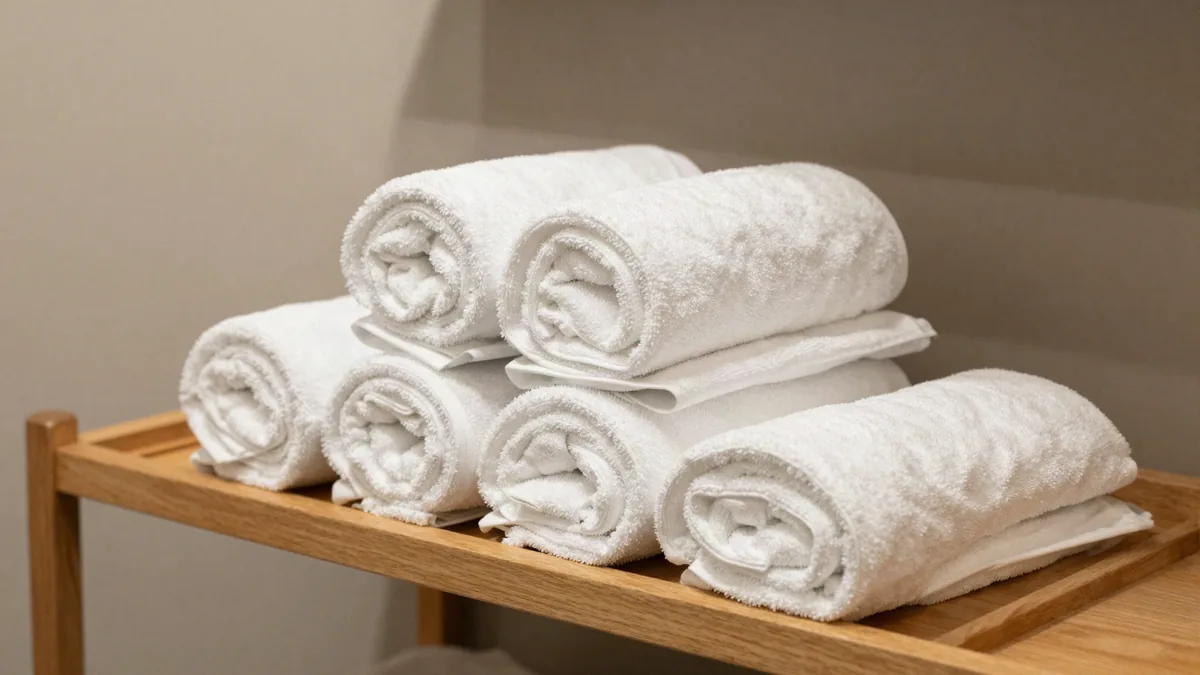
Weekly towel contracts for a small studio or single-chair salon commonly run in the low hundreds of dollars a month, scaling up with towel count and turnaround frequency rather than square footage. Twice-weekly service costs meaningfully more than once-weekly, and the jump is usually worth it for any location that would otherwise run short mid-week rather than at the end of the service period. Bleach-exposed and oil-exposed towel categories, priced separately by vendors who track replacement cost by category, typically carry a modest premium over general-use towels because the effective replacement cycle is shorter. A quote that does not break out these categories separately is worth questioning, since it usually means the vendor is averaging replacement cost across all customers rather than pricing this specific location's actual exposure.
Choosing between renting towels and owning them
Renting towels through a laundry service removes replacement purchasing and inventory management from the business entirely, at the cost of a per-use or weekly fee that, over several years, usually exceeds what buying towels outright would have cost. Owning towels and paying a laundry only for processing costs less over time but requires the business to manage its own replacement purchasing and to absorb the upfront capital cost, which is a bigger ask for a new studio or salon still building cash flow. The rental model tends to win for new or smaller operations; owned stock tends to win for established locations with steady volume and the cash flow to buy ahead.
Gym and salon towel providers by state
Turnaround frequency, minimum order size and bleach-category pricing all vary by market and by vendor. Gym towel service and salon towel service break the directory down by state for fitness and beauty businesses comparing providers directly, once the par level, chemical exposure and contract questions above are settled.
Questions gym and salon owners ask
How often should gym towels be replaced?
Most gyms replace terry every six to twelve months under regular commercial wash cycles, sooner if chlorine from a pool or hot tub is in the mix. The clearest replacement signal is thinning loop and reduced absorbency rather than visible staining, since a towel can look fine and still have lost most of its functional life.
Can a salon use the same towels for hair color and other services?
It is not recommended without separating stock by exposure category. Towels used for bleach and color services degrade faster and risk transferring dye to other towels in the wash, so most salons keep a distinct set for color work rather than rotating every towel through every service type.
How many towels does a small gym need per member?
Sizing by peak-hour visits works better than a per-member ratio, since usage concentrates heavily around class times rather than spreading evenly through the day. A studio should count towels needed for its two or three busiest sessions of the week and staff its par level to that number, not the daily average.
Do spas need special handling for massage oil towels?
Yes. Oil-saturated towels can generate enough heat to combust if densely packed with poor airflow before laundering, so they should be stored loosely and separately from other soiled linen rather than bagged tightly with the rest of the shift's towels.